• HOME
  • NEWS
  • EXPLORE
    • CAREER
      • Companies
      • Jobs
    • EVENTS
    • iGEM
      • News
      • Team
    • PHOTOS
    • VIDEO
    • WIKI
  • BLOG
  • COMMUNITY
    • FACEBOOK
    • INSTAGRAM
    • TWITTER
Monday, May 11, 2026
BIOENGINEER.ORG
No Result
View All Result
  • Login
  • HOME
  • NEWS
  • EXPLORE
    • CAREER
      • Companies
      • Jobs
        • Lecturer
        • PhD Studentship
        • Postdoc
        • Research Assistant
    • EVENTS
    • iGEM
      • News
      • Team
    • PHOTOS
    • VIDEO
    • WIKI
  • BLOG
  • COMMUNITY
    • FACEBOOK
    • INSTAGRAM
    • TWITTER
  • HOME
  • NEWS
  • EXPLORE
    • CAREER
      • Companies
      • Jobs
        • Lecturer
        • PhD Studentship
        • Postdoc
        • Research Assistant
    • EVENTS
    • iGEM
      • News
      • Team
    • PHOTOS
    • VIDEO
    • WIKI
  • BLOG
  • COMMUNITY
    • FACEBOOK
    • INSTAGRAM
    • TWITTER
No Result
View All Result
Bioengineer.org
No Result
View All Result
Home NEWS Science News Health

Botox cousin can reduce malaria in an environmentally friendly way

Bioengineer by Bioengineer
June 28, 2019
in Health
Reading Time: 2 mins read
0
IMAGE
Share on FacebookShare on TwitterShare on LinkedinShare on RedditShare on Telegram

IMAGE

Credit: Geoffrey Masuyer/Stockholm University

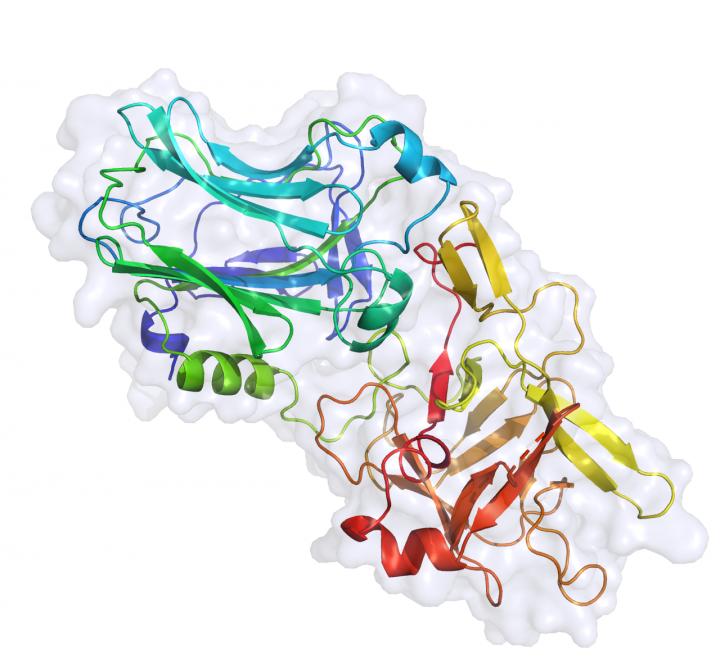
Researchers at the universities in Stockholm and Lund, in collaboration with researchers from the University of California, have found a new toxin that selectively targets mosquitos. This can lead to innovative and environmentally friendly approaches to reduce malaria. The results are presented in an article published in Nature Communications.

Botox (Botulinum neurotoxins) and the toxin causing tetanus belong to the same family of proteins and are among the most toxic substances known. Previously this family of toxins has been believed to only target vertebrates such as humans, mice and birds. But now, researchers have found a toxin which targets the group of mosquitoes that are responsible for transmitting malaria.

“We have discovered a neurotoxin, PMP1, that selectively targets malaria mosquitos, demonstrating that this family of toxins have a much broader host spectrum than previously believed”, says Pål Stenmark of Stockholm University and Lund University. He leads the joint research group from the two Swedish universities that has discovered the new neurotoxin in close collaboration with Sarjeet Gill’s research group at the University of California.

“PMP1 makes it possible to reduce the prevalence of malaria in a new and environmentally friendly way. Because these toxins are proteins, they do not leave any artificial residues as they decompose. PMP1 may also be developed into biological insecticides designed to target other selected disease vectors or pests”, Pål Stenmark says.

Today, insecticides and mosquito nets treated with insecticides are the main means of combating the spread of malaria, but new methods of combating malaria mosquitoes must be developed constantly as mosquitoes become resistant to most toxins over time.

“We found PMP1 in a bacterium from two threatened habitats: a mangrove swamp in Malaysia and the forest floor in Brazil. It shows just how important it is to protect these treasure chests of biological diversity”, Pål Stenmark says.

###

The article “A neurotoxin that specifically targets Anopheles mosquitoes” is published in Nature Communications. https://www.nature.com/articles/s41467-019-10732-w

For more information, please contact
Pål Stenmark, Department of Biochemistry and Biophysics, Stockholm University, and the Department of Experimental Medical Science, Lund University. Phone: +46 73-984 12 16, e-mail: [email protected]

Malaria
Malaria is one of the most common and serious diseases in the world. It is caused by unicellular parasites which are spread by some mosquitoes. Every year, about half a million people die of the disease, most of them children in Africa. Around 200 million people suffer from malaria.
Source: World Health Organization (WHO)

Media Contact
Pål Stenmark
[email protected]

Related Journal Article

http://dx.doi.org/10.1038/s41467-019-10732-w

Tags: BiochemistryBiologyDisease in the Developing WorldEpidemiologyToxicology
Share12Tweet8Share2ShareShareShare2

Related Posts

Medicaid Expansion Reduces Mortality in Young Adults with Kidney Failure

May 11, 2026

CRISPR Technology Shows Promise in Inhibiting Hepatitis E Virus

May 11, 2026

Mapping Ocular Bioenergetics: Insights into TCA Cycle Intermediates and Gender Differences in Eye Tissues

May 11, 2026

Telemedicine Does Not Drive Higher Medical Utilization or Health Care Costs, Study Finds

May 11, 2026
Please login to join discussion

POPULAR NEWS

  • Research Indicates Potential Connection Between Prenatal Medication Exposure and Elevated Autism Risk

    841 shares
    Share 336 Tweet 210
  • New Study Reveals Plants Can Detect the Sound of Rain

    728 shares
    Share 290 Tweet 182
  • Salmonella Haem Blocks Macrophages, Boosts Infection

    62 shares
    Share 25 Tweet 16
  • Breastmilk Balances E. coli and Beneficial Bacteria in Infant Gut Microbiomes

    57 shares
    Share 23 Tweet 14

About

We bring you the latest biotechnology news from best research centers and universities around the world. Check our website.

Follow us

Recent News

Humans and Zebra Finches Share Similar Speech Learning Techniques #ASA190

New Study Uncovers How Fungal Parasites Attack Strawberries and Raspberries

City of Hope Researchers to Present Groundbreaking Immunotherapy and Precision Medicine Advances Across Multiple Cancer Types at ASCO 2026

Subscribe to Blog via Email

Enter your email address to subscribe to this blog and receive notifications of new posts by email.

Join 82 other subscribers
  • Contact Us

Bioengineer.org © Copyright 2023 All Rights Reserved.

Welcome Back!

Login to your account below

Forgotten Password?

Retrieve your password

Please enter your username or email address to reset your password.

Log In
No Result
View All Result
  • Homepages
    • Home Page 1
    • Home Page 2
  • News
  • National
  • Business
  • Health
  • Lifestyle
  • Science

Bioengineer.org © Copyright 2023 All Rights Reserved.