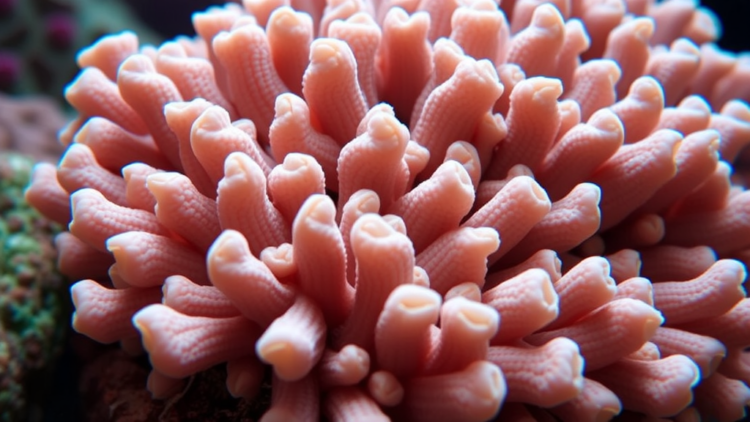
On the reefs surrounding Sepanggar Island, off the coast of Sabah in Malaysian North Borneo, a bushy soft coral sways in the current, its eight-tentacled polyps filtering plankton from the water. To divers, the organism known as Litophyton is an attractive part of the reef seascape. To a team of Malaysian researchers, it is a chemical factory that has barely been inventoried. In a new open-access study published in the journal Blue Biotechnology, scientists from Universiti Malaysia Sabah and collaborating institutions report the first detailed look at the antioxidant activity and metabolite profile of a Litophyton species collected from these waters, uncovering dozens of molecules with documented links to oxidative stress defense, inflammation control, and even neuroprotection.
The genus Litophyton, which belongs to the octocoral order Alcyonacea, comprises nearly 100 species distributed across tropical and temperate seas. Colonies can grow up to 80 centimeters tall and appear in pale olive-green, yellow, and grey shades, with a central stalk radiating branches in a characteristic bushy form. Chemically, the genus has earned a reputation as a treasure trove: more than 200 metabolites have been identified from Litophyton species worldwide, including steroids, terpenoids, and meroterpenes, some of which display cytotoxic, antiviral, and antimicrobial properties. Recent work on Litophyton brassicum from the South China Sea described meroterpenes with antibacterial activity against pathogenic strains, while other species have yielded compounds capable of inhibiting HIV protease. Yet the authors note that comprehensive antioxidant evaluation and metabolite profiling of specimens from North Borneo, one of the world’s most biodiverse marine regions, remained conspicuously absent from the literature.
To close that gap, the team obtained collection permits from the Sabah Biodiversity Centre and gathered specimens by scuba diving on July 23 and 24, 2024. Species identity was confirmed molecularly rather than by morphology alone: DNA was extracted from 25 milligrams of homogenized coral tissue, and the 18S ribosomal RNA gene was amplified using the EukA and EukB primer pairs under a standardized polymerase chain reaction protocol. The resulting sequences were compared against the NCBI database to verify that the organism was indeed a member of Litophyton. This molecular confirmation matters in a genus where visual identification can be deceptive and where synonymies, such as the historical merging of Nephthea into Litophyton, have complicated comparisons across older studies.
Back at the Borneo Marine Research Institute, the researchers cleaned the coral of symbiotic animals, cut it to increase surface area, and subjected it to methanol maceration for 72 hours at 27 degrees Celsius with shaking at 120 revolutions per minute, repeating the process with fresh solvent to ensure exhaustive extraction. After rotary evaporation of the combined filtrates, the procedure yielded a crude extract corresponding to 2.82 percent of the starting material. That modest yield is typical for soft coral extraction, but the chemical diversity packed into it proved far more interesting than its mass.
Antioxidant capacity was measured with two complementary radical-scavenging assays. In the DPPH assay, which tracks the bleaching of a stable purple radical at 517 nanometers, the extract showed an IC50 value of 42.63 plus or minus 2.98 milligrams per milliliter, meaning that concentration was needed to neutralize half of the radicals present. The ABTS assay, which generates a green radical cation monitored at 734 nanometers, returned a notably better IC50 of 24.53 plus or minus 2.55 milligrams per milliliter. The authors place these numbers in context: a methanol-dichloromethane extract of the related Nephthea from Sulawesi showed far stronger activity, while an ethyl acetate fraction of the same genus was far weaker. The comparison underscores how extraction solvent, chemical composition, and environment jointly shape the antioxidant signature of these animals.
Quantifying the classical antioxidant compound classes produced a revealing result. Total phenolic content came in at just 0.017 milligrams of gallic acid equivalents per gram, while total flavonoid content reached 0.129 milligrams of quercetin equivalents per gram. Both values are low, which fits the known chemistry of the genus: Litophyton species predominantly manufacture terpenoids, particularly sesquiterpenes, rather than the polyphenols that dominate antioxidant activity in plants. Intriguingly, the flavonoid measurement exceeded the phenolic measurement, and qualitative screening confirmed the presence of both flavonoids and phenolic flavonoids. The researchers argue that the extract’s measurable radical-scavenging capacity cannot be attributed to phenolics alone; alkaloids, steroids, saponins, tannins, and terpenoids, all detected in the qualitative screen, are also recognized contributors to antioxidant potential. Anthraquinones and anthocyanosides, by contrast, were absent.
Fourier-transform infrared spectroscopy added a structural layer to the analysis. The spectrum displayed a broad hydroxyl stretch near 3335 wavenumbers, consistent with alcohols and phenolic compounds; a sharp carbon-hydrogen stretch at 2925 wavenumbers typical of aliphatic hydrocarbons; a peak near 1981 wavenumbers in the triple-bond region, suggestive of alkynes or nitriles though possibly an overtone band; a strong carbonyl signal at 1731 wavenumbers characteristic of aldehydes and ketones; and an alkene-related carbon-carbon double-bond stretch at 1643 wavenumbers. Because the sample was a crude extract rather than a purified compound, the fingerprint region below 1500 wavenumbers was excluded from interpretation, but the functional groups identified align well with a mixture rich in fatty acids, terpenoids, and oxygenated organics.
The centerpiece of the study is the liquid chromatography-quadrupole Orbitrap mass spectrometry profiling, run in both positive and negative ionization modes and analyzed with Compound Discoverer software against the mzCloud and ChemSpider databases. Positive mode revealed 57 metabolites spanning a striking range of chemical classes: fatty acids led at 17 percent, followed by fatty amides at 13 percent and aromatic compounds at 9 percent, with amino acids, terpenoids, and heterocyclic compounds each at 7 percent, and alkaloids and steroids at 6 percent. Negative mode detected 18 metabolites dominated by purines at 29 percent, followed by aromatics at 22 percent and fatty amides at 17 percent. Among the identified molecules were several with well-documented antioxidant credentials: trigonelline, an alkaloid known to scavenge reactive oxygen species and confer neuroprotection in models of Alzheimer’s disease; citral, a monoterpenoid that neutralizes free radicals and modulates antioxidant enzymes; acetyl-L-carnitine, which upregulates glutathione defenses; arachidonic acid, a precursor of redox-regulating eicosanoids; and docosahexaenoic acid, the omega-3 fatty acid that raises intracellular glutathione and exhibits anti-inflammatory effects. Pinolenic acid, creatine, jasmone, and dehydroepiandrosterone also appeared, the latter drawing attention for reported anticancer properties, while negative-mode compounds such as adenine, nipecotic acid, isoleucine, and anatabine carry antioxidant, antimicrobial, and anti-inflammatory resumes of their own.
The authors are careful to frame the findings within their limits. The work relied on crude extracts, in vitro assays, and specimens from a single location and season, so the results cannot yet be generalized across the genus or the region. Still, the implications are considerable. A soft coral once valued mainly for its ornamental appeal emerges as a plausible source of natural antioxidant agents for functional foods, nutraceuticals, and pharmaceuticals, and the researchers point specifically to aquaculture, where such compounds could support disease management and strengthen seafood security. The next steps they propose are the classic progression of marine drug discovery: isolation and characterization of pure metabolites, mechanistic and synergy studies to explain how the observed activity arises from the mixture, standardized extraction protocols to improve yield and reproducibility, and sustainable harvesting or cultivation strategies that protect the reefs that produce these molecules in the first place. For now, the waters of North Borneo have added a new entry to the growing catalogue of marine organisms whose chemistry may one day translate into medicine.
Subject of Research: Antioxidant activity and metabolite profiling of the marine soft coral Litophyton sp. from Sepanggar Island, North Borneo, Malaysia
Article Title: Elucidation of antioxidant activity and metabolite profiling of the marine soft coral Litophyton sp.
Article References: Fauzi, F. A., Yong, Y. S., Tan, J. K., Chong, E. T. J., Ringgit, G., Siddiquee, S., Tayyab, M., Shapawi, R., & Shah, M. D. (2026). Elucidation of antioxidant activity and metabolite profiling of the marine soft coral Litophyton sp.. Blue Biotechnology, 3(1), Article 1. https://doi.org/10.1186/s44315-026-00052-2
Image Credits: AI Generated
DOI: 10.1186/s44315-026-00052-2
Keywords: Litophyton, soft coral, antioxidant, metabolomics, LC-MS, North Borneo, marine natural products, DPPH assay, ABTS assay, fatty acids, trigonelline, bioprospecting
Cite Scienmag News
APA MLA Chicago
Bethany Barker. (September 13, 2026). Borneo Soft Coral Reveals Antioxidant Chemistry in Deep Metabolite Scan. Scienmag. https://scienmag.com/borneo-soft-coral-reveals-antioxidant-chemistry-in-deep-metabolite-scan/
Bethany Barker. “Borneo Soft Coral Reveals Antioxidant Chemistry in Deep Metabolite Scan.” Scienmag, 13 September 2026, https://scienmag.com/borneo-soft-coral-reveals-antioxidant-chemistry-in-deep-metabolite-scan/. Accessed 13 September 2026.
Bethany Barker. “Borneo Soft Coral Reveals Antioxidant Chemistry in Deep Metabolite Scan.” Scienmag. September 13, 2026. https://scienmag.com/borneo-soft-coral-reveals-antioxidant-chemistry-in-deep-metabolite-scan/
Copy citation Download RIS
Tags: ABTS assayantioxidantantioxidant compounds in Borneo soft coralbioactive terpenoids from Litophytonbioprospectingcoral metabolites with anti-inflammatory effectscoral-derived neuroprotective moleculesdeep metabolite scan of octocoral speciesDeep-sea coral metabolite discoveryDPPH assayfatty acidsLC-MSLitophytonLitophyton species chemical profilingmarine antioxidant chemistry in Malaysian reefsmarine biotechnology and drug discovery from coralmarine natural productsmarine natural products for oxidative stressMetabolomicsNorth Borneosoft coraltrigonellinetropical reef coral chemical diversitytropical soft coral bioactive compound research