• HOME
  • NEWS
  • EXPLORE
    • CAREER
      • Companies
      • Jobs
    • EVENTS
    • iGEM
      • News
      • Team
    • PHOTOS
    • VIDEO
    • WIKI
  • BLOG
  • COMMUNITY
    • FACEBOOK
    • INSTAGRAM
    • TWITTER
Monday, May 11, 2026
BIOENGINEER.ORG
No Result
View All Result
  • Login
  • HOME
  • NEWS
  • EXPLORE
    • CAREER
      • Companies
      • Jobs
        • Lecturer
        • PhD Studentship
        • Postdoc
        • Research Assistant
    • EVENTS
    • iGEM
      • News
      • Team
    • PHOTOS
    • VIDEO
    • WIKI
  • BLOG
  • COMMUNITY
    • FACEBOOK
    • INSTAGRAM
    • TWITTER
  • HOME
  • NEWS
  • EXPLORE
    • CAREER
      • Companies
      • Jobs
        • Lecturer
        • PhD Studentship
        • Postdoc
        • Research Assistant
    • EVENTS
    • iGEM
      • News
      • Team
    • PHOTOS
    • VIDEO
    • WIKI
  • BLOG
  • COMMUNITY
    • FACEBOOK
    • INSTAGRAM
    • TWITTER
No Result
View All Result
Bioengineer.org
No Result
View All Result
Home NEWS Science News Health

Born to be wild: Fungal highways let bacteria travel in exchange for thiamine

Bioengineer by Bioengineer
September 24, 2020
in Health
Reading Time: 2 mins read
0
IMAGE
Share on FacebookShare on TwitterShare on LinkedinShare on RedditShare on Telegram

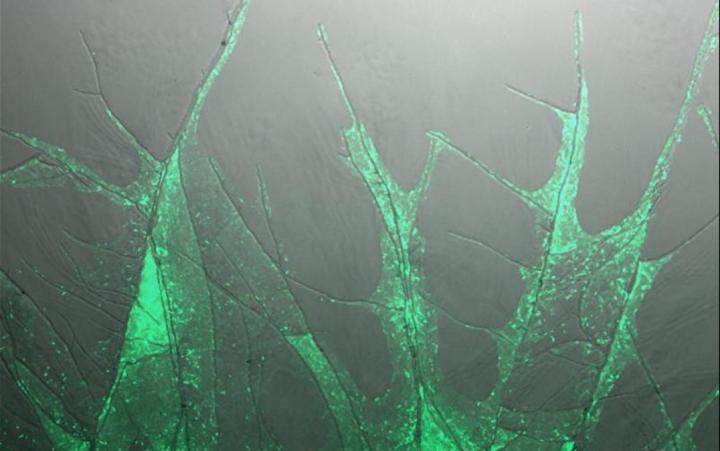
Researchers from the University of Tsukuba find a mutualistic growth mechanism between a filamentous fungus and a bacterium that allows the bacterium to travel in exchange for thiamine
IMAGE

Credit: University of Tsukuba

Tsukuba, Japan – Tiny organisms head out on the highway, looking for adventure like they’ve ridden straight out of the 1960s rock hit, “Born to Be Wild.” Researchers from Japan have discovered that while perhaps not as thrill-seeking, bacteria do indeed travel on fungal highways and pay a toll in return.

In a study published this month in Life Science Alliance, researchers from the University of Tsukuba have revealed a mutual bacterial-fungal relationship that lets bacteria travel in exchange for thiamine.

Thiamine (vitamin B1) is essential to the health of almost all living organisms, and is synthesized by bacteria, plants, fungi and some protozoans. Free thiamine is scarce in the environment, and organisms appear to have developed numerous ways of obtaining it.

“Some species have developed mutually beneficial strategies that allow them to coexist,” says lead author of the study Professor Norio Takeshita. “But few strategies that satisfy the need for nutrients and physical niches have been documented. So, we examined the interaction of a fungus and a bacterium to investigate strategies that meet those needs.”

To do this, the researchers used transcriptomic analyses (i.e., examining all the RNA molecules of an organism), as well as genetic, molecular mass and imaging methods, including live imaging. Stable isotope labeling was used to investigate thiamine transfer from bacteria to the fungus.

“The bacteria cultured with the fungus traveled along fungal filaments using their flagella,” explains Professor Nozomu Obana, senior author. “They dispersed farther with the expansion of the fungal colony than they would have otherwise, suggesting that the fungal filaments supply space for bacteria to migrate, disperse and multiply.”

The fungus in this study is a type that can synthesize thiamine on its own, but used thiamine produced by the bacteria. Because these bacteria synthesize thiamine extracellularly, neighboring bacteria and fungi in nature could uptake it and use it, saving them the cost of synthesizing it themselves.

“We’re proposing a new mutualistic growth mechanism in bacterial-fungal interactions, in which the bacteria move along the fungal highway and pay thiamine as a toll to the growing fungal filaments,” says Professor Takeshita.

This research and future studies will contribute to an understanding of selective microbial communication, and live imaging could be used to screen for affinities between bacteria and fungi. Research in this area could be applied to a range of settings from fermentation, biomass degradation, and the promotion of plant growth, as well as plant and human pathogenesis.

###

The article, “Fungal mycelia and bacterial thiamine establish a mutualistic growth mechanism,” was published in Life Science Alliance at DOI:10.26508/lsa.202000878

Media Contact
Naoko Yamashina
[email protected]

Related Journal Article

http://dx.doi.org/10.26508/lsa.202000878

Tags: BacteriologyBiochemistryBioinformaticsBiologyCell BiologyEcology/EnvironmentGeneticsMicrobiologyMolecular BiologyNutrition/Nutrients
Share12Tweet8Share2ShareShareShare2

Related Posts

Tinengotinib Alone or with Atezolizumab in Tumors

May 11, 2026

Fear of Falling and Activity Affect Elderly Life Quality

May 11, 2026

New Post-Hoc Analysis Explores Daily Oral Orforglipron Use in Adults Over 65 with Obesity, Regardless of Diabetes Status

May 11, 2026

Evaluating Digoxin Use in Patients with Symptomatic Rheumatic Heart Disease

May 10, 2026
Please login to join discussion

POPULAR NEWS

  • Research Indicates Potential Connection Between Prenatal Medication Exposure and Elevated Autism Risk

    840 shares
    Share 336 Tweet 210
  • New Study Reveals Plants Can Detect the Sound of Rain

    728 shares
    Share 290 Tweet 182
  • Salmonella Haem Blocks Macrophages, Boosts Infection

    61 shares
    Share 24 Tweet 15
  • Breastmilk Balances E. coli and Beneficial Bacteria in Infant Gut Microbiomes

    57 shares
    Share 23 Tweet 14

About

We bring you the latest biotechnology news from best research centers and universities around the world. Check our website.

Follow us

Recent News

Tinengotinib Alone or with Atezolizumab in Tumors

Fear of Falling and Activity Affect Elderly Life Quality

Transforming Jellyfish Bycatch into a Valuable Collagen Source for Cosmetics and Biotechnology

Subscribe to Blog via Email

Enter your email address to subscribe to this blog and receive notifications of new posts by email.

Join 82 other subscribers
  • Contact Us

Bioengineer.org © Copyright 2023 All Rights Reserved.

Welcome Back!

Login to your account below

Forgotten Password?

Retrieve your password

Please enter your username or email address to reset your password.

Log In
No Result
View All Result
  • Homepages
    • Home Page 1
    • Home Page 2
  • News
  • National
  • Business
  • Health
  • Lifestyle
  • Science

Bioengineer.org © Copyright 2023 All Rights Reserved.