• HOME
  • NEWS
  • EXPLORE
    • CAREER
      • Companies
      • Jobs
    • EVENTS
    • iGEM
      • News
      • Team
    • PHOTOS
    • VIDEO
    • WIKI
  • BLOG
  • COMMUNITY
    • FACEBOOK
    • INSTAGRAM
    • TWITTER
Friday, April 17, 2026
BIOENGINEER.ORG
No Result
View All Result
  • Login
  • HOME
  • NEWS
  • EXPLORE
    • CAREER
      • Companies
      • Jobs
        • Lecturer
        • PhD Studentship
        • Postdoc
        • Research Assistant
    • EVENTS
    • iGEM
      • News
      • Team
    • PHOTOS
    • VIDEO
    • WIKI
  • BLOG
  • COMMUNITY
    • FACEBOOK
    • INSTAGRAM
    • TWITTER
  • HOME
  • NEWS
  • EXPLORE
    • CAREER
      • Companies
      • Jobs
        • Lecturer
        • PhD Studentship
        • Postdoc
        • Research Assistant
    • EVENTS
    • iGEM
      • News
      • Team
    • PHOTOS
    • VIDEO
    • WIKI
  • BLOG
  • COMMUNITY
    • FACEBOOK
    • INSTAGRAM
    • TWITTER
No Result
View All Result
Bioengineer.org
No Result
View All Result
Home NEWS Science News Health

Bonobo: great ape with a tiny voice

Bioengineer by Bioengineer
October 23, 2018
in Health
Reading Time: 2 mins read
0
Share on FacebookShare on TwitterShare on LinkedinShare on RedditShare on Telegram
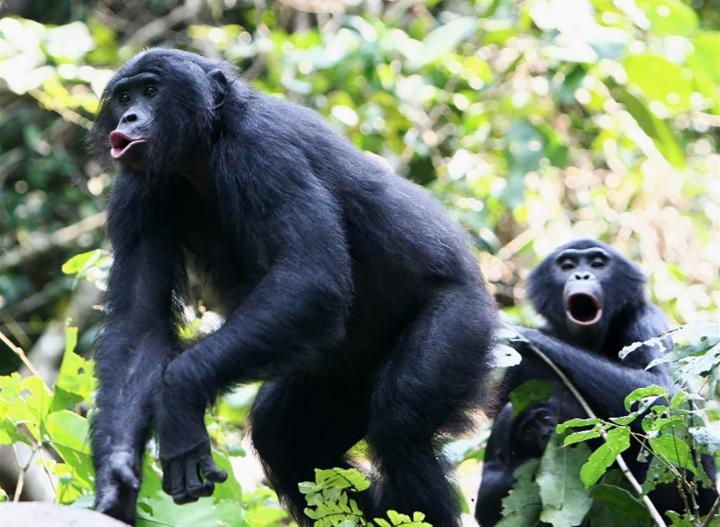
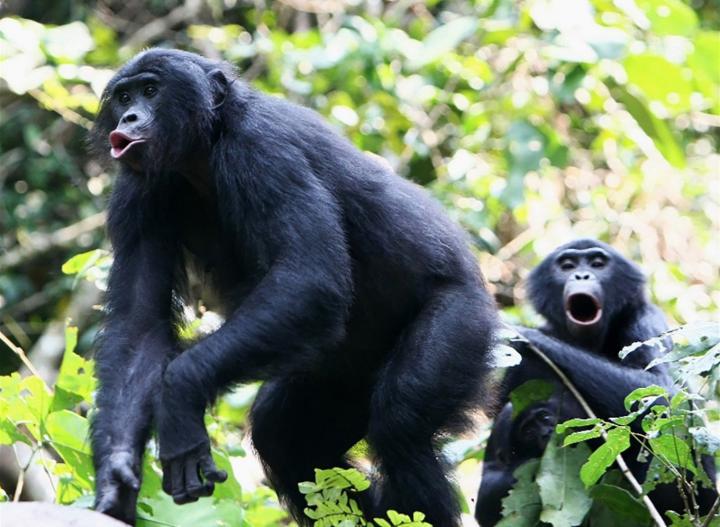
IMAGE

Credit: Cédric Girard-Buttoz, LuiKotale, D.R. Kongo

We can easily see whether someone is large or small, but we can also hear it in the pitch of their voice. For a long time, research on the accoustic communication in humans and animals has accepted the paradigm predicting a causal relationship between body size and voice pitch. Meanwhile, evidence from a large number of animal species has revealed that this relation does not always apply. Various animal species, including chimpanzees, have mechanisms that enable them to produce sounds that are lower than expected for their body size making them sound larger than they actually are – a common phenomenon in animal communication.

Scientists from the Max Planck Institute for Evolutionary Anthropology have now shown that bonobos are the only example were the mismatch in sound production runs counter to exaggerating body size. Given that bonobos and chimpanzees overlap in body size and mass, this difference is rather unexpected. The researchers explored morphological structures of the larynx, the sound producing organ of mammalian species. A close look at the vibrating parts of the larynx revealed that the differences in voice correspond with vocal fold length: those of chimpanzees are twice as long as those of bonobos.

Important to note is that bonobos are exceptional in other ways. Highly unusual compared to most other species is that females can dominate males. Bonobos are also very tolerant towards in-group – and especially out-group – bonobos as compared to their sister species chimpanzees. "Thus, one possible explanation for the high voice of both male and female bonobos, is that it signals tolerance to in-group and out-group bonobos, facilitating non-aggressive interactions between them," concludes Gottfried Hohmann of the Max Planck Institute for Evolutionary Anthropology and senior author of the study.

###

Media Contact

Sandra Jacob
[email protected]
49-341-355-0122

http://www.eva.mpg.de

Related Journal Article

http://dx.doi.org/10.1016/j.cub.2018.09.030

Share12Tweet7Share2ShareShareShare1

Related Posts

Redox Rhythms Boost Fitness by Modulating Aging

April 17, 2026

Soft Robotics Revolutionize Cardiovascular Medicine

April 17, 2026

Medication Changes Linked to Rehab Success in Elderly

April 17, 2026

Nanobody Restores Activity of F508del CFTR Protein

April 17, 2026
Please login to join discussion

POPULAR NEWS

  • Scientists Investigate Possible Connection Between COVID-19 and Increased Lung Cancer Risk

    62 shares
    Share 25 Tweet 16
  • NSF funds machine-learning research at UNO and UNL to study energy requirements of walking in older adults

    100 shares
    Share 40 Tweet 25
  • Boosting Breast Cancer Risk Prediction with Genetics

    47 shares
    Share 19 Tweet 12
  • Popular Anti-Aging Compound Linked to Damage in Corpus Callosum, Study Finds

    46 shares
    Share 18 Tweet 12

About

We bring you the latest biotechnology news from best research centers and universities around the world. Check our website.

Follow us

Recent News

Giant Magellan Telescope Partners with Coquimbo Regional Government to Advance Chile’s Astronomy Industry

Biopolymer Microenvironment Enables High-Current CO2 Conversion

Visible Islam Influences Muslim Immigrants’ Integration

Subscribe to Blog via Email

Enter your email address to subscribe to this blog and receive notifications of new posts by email.

Join 79 other subscribers
  • Contact Us

Bioengineer.org © Copyright 2023 All Rights Reserved.

Welcome Back!

Login to your account below

Forgotten Password?

Retrieve your password

Please enter your username or email address to reset your password.

Log In
No Result
View All Result
  • Homepages
    • Home Page 1
    • Home Page 2
  • News
  • National
  • Business
  • Health
  • Lifestyle
  • Science

Bioengineer.org © Copyright 2023 All Rights Reserved.