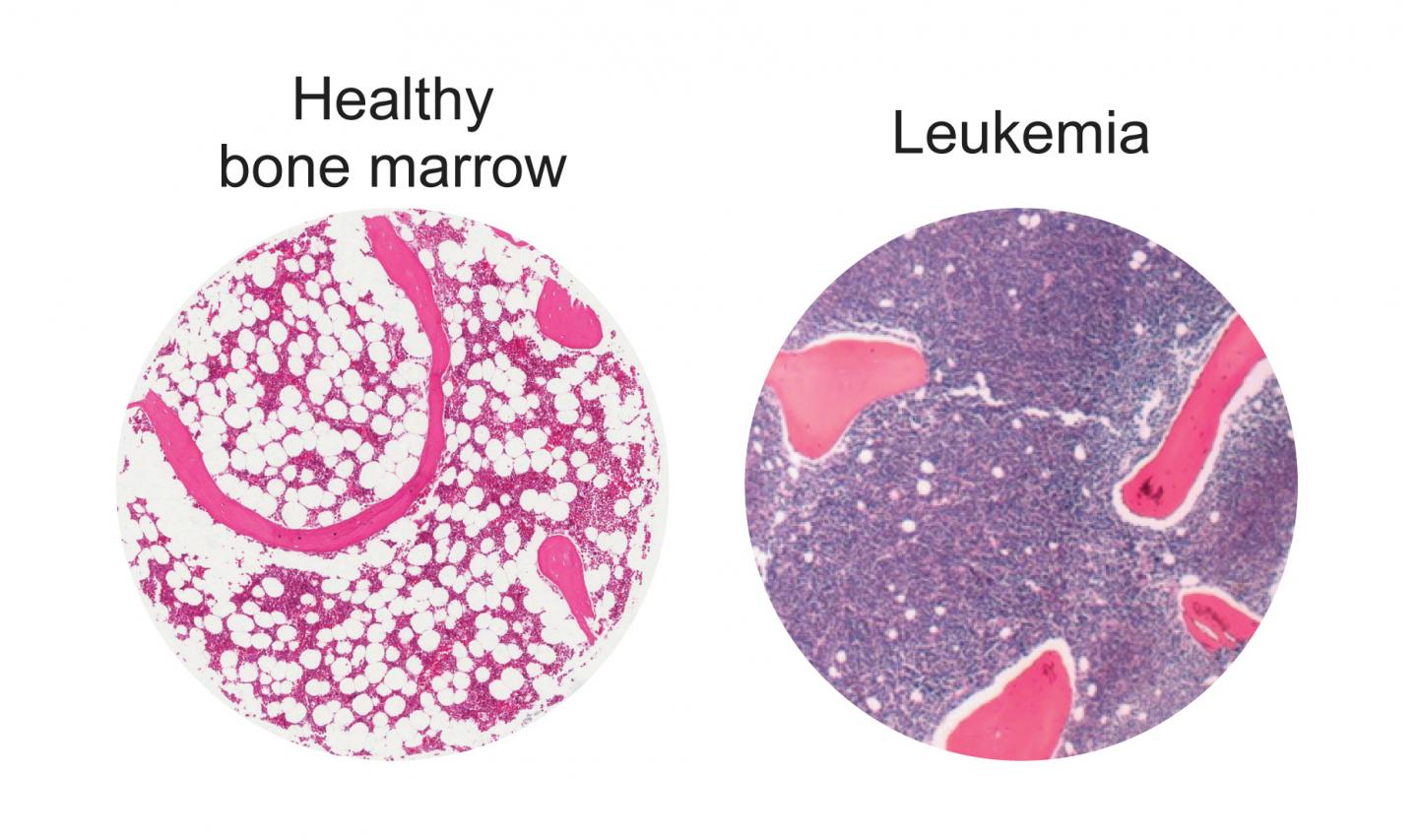
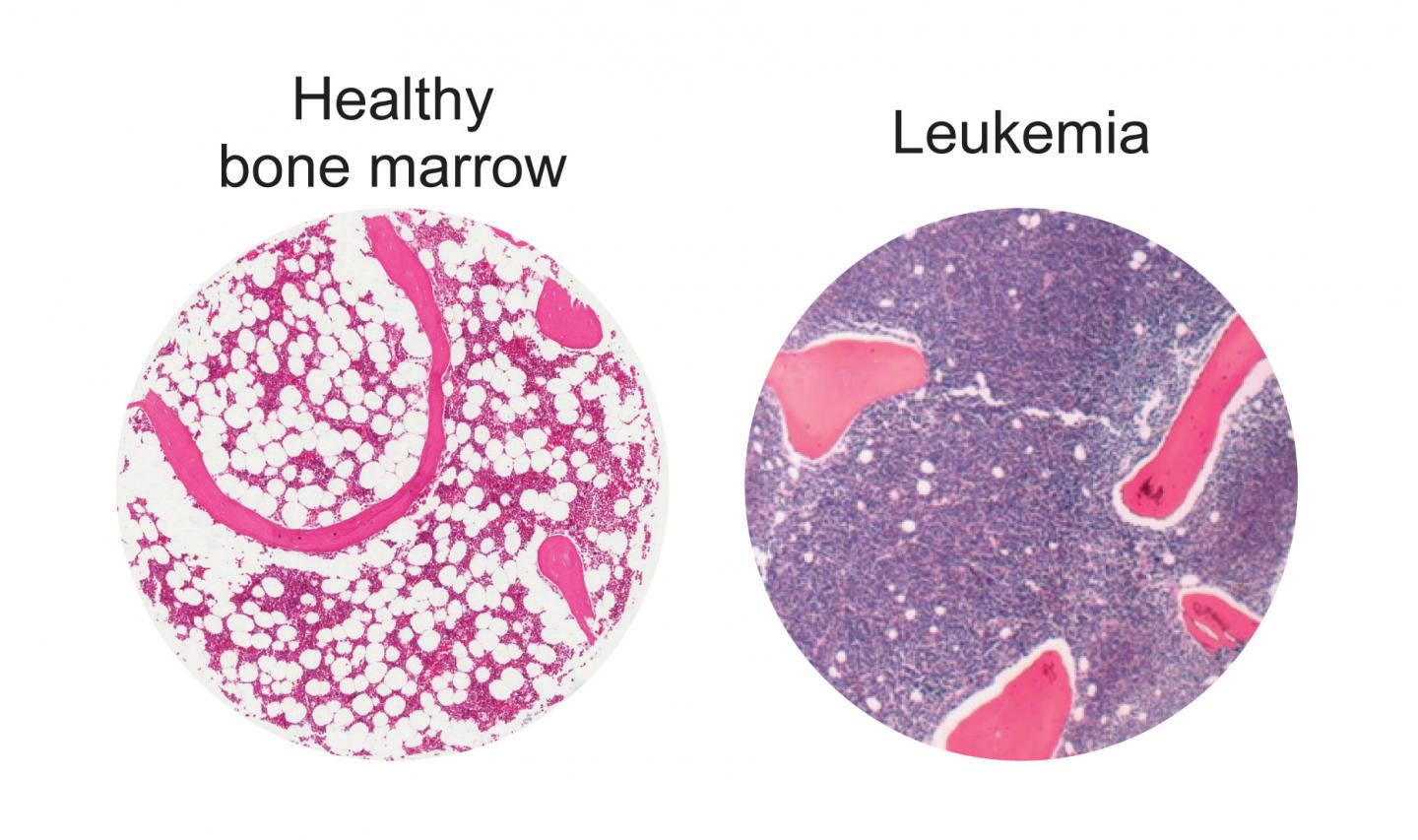
Credit: Image courtesy McMaster University
Hamilton, Ont. (Oct. 16, 2017) – Killing cancer cells indirectly by powering up fat cells in the bone marrow could help acute myeloid leukemia patients, according to a new study from McMaster University.
Researchers with the McMaster Stem Cell and Cancer Research Institute found that boosting adipocytes, or fat cells, located in the bone morrow suppressed cancerous leukemia cells but – in a surprise to the research team — induced the regeneration of healthy blood cells at the same time.
The production of healthy red blood cells is critical for those with acute myeloid leukemia but is sometimes overlooked as conventional treatments focus on killing the leukemia cells alone. Patients with this disease suffer from anemia and infection due to the failure of healthy blood production, all of which are leading causes of hospitalization and death from the disease.
The study was published today in the journal Nature Cell Biology.
"Our approach represents a different way of looking at leukemia and considers the entire bone marrow as an ecosystem, rather than the traditional approach of studying and trying to directly kill the diseased cells themselves," said Allison Boyd, postdoctoral fellow with the research institute and first author of the study.
"These traditional approaches have not delivered enough new therapeutic options for patients. The standard-of-care for this disease hasn't changed in several decades."
The McMaster-led study was conducted over the past three and half years and started from observations of leukemia patients. This led to the collection of bone marrow samples from larger cohorts of patients with the Ottawa Hospital Research Institute, as well as those from Western University and Hamilton Health Sciences, for the next steps of investigation. This included detailed study and imaging of individual leukemia cells compared to healthy cells residing in the bone marrow, which revealed the effects of targeting fat cells.
A drug commonly used to moderate diabetes that induces fat cell production in the bone marrow was used and was found to help foster red blood cell production as well as suppress leukemic disease.
"The focus of chemotherapy and existing standard-of-care is on killing cancer cells but instead we took a completely different approach which changes the environment the cancer cells live in," said Mick Bhatia, director and senior scientist with the McMaster Stem Cell and Cancer Research Institute, who led the group that performed the study.
"This not only suppressed the "bad" cancer cells, but also bolstered the "good" healthy cells allowing them to regenerate in the new drug-induced environment."
"The fact that we can target one cell type in one tissue using an existing drug makes us excited about the possibilities of testing this in patients."
"We can envision this becoming a potential new therapeutic approach that can either be added to existing treatments or even replace others in the near future. The fact that this drug activates blood regeneration may provide benefits for those waiting for bone marrow transplants by activating their own healthy cells."
###
Funding for the study came from the Canadian Cancer Society Research Institute and the Marta and Owen Boris Foundation.
Editors: Pictures of researchers of the McMaster Stem Cell and Cancer Research Institute and illustrations related to this study are available upon request.
For more information, please contact:
Tina Depko
Communications Coordinator
Faculty of Health Sciences
McMaster University
[email protected]
905-525-9140, ext. 22196
Media Contact
Tina Depko
[email protected]
905-525-9140 x22196
@mcmasteru
Related Journal Article
http://dx.doi.org/10.1038/ncb3625