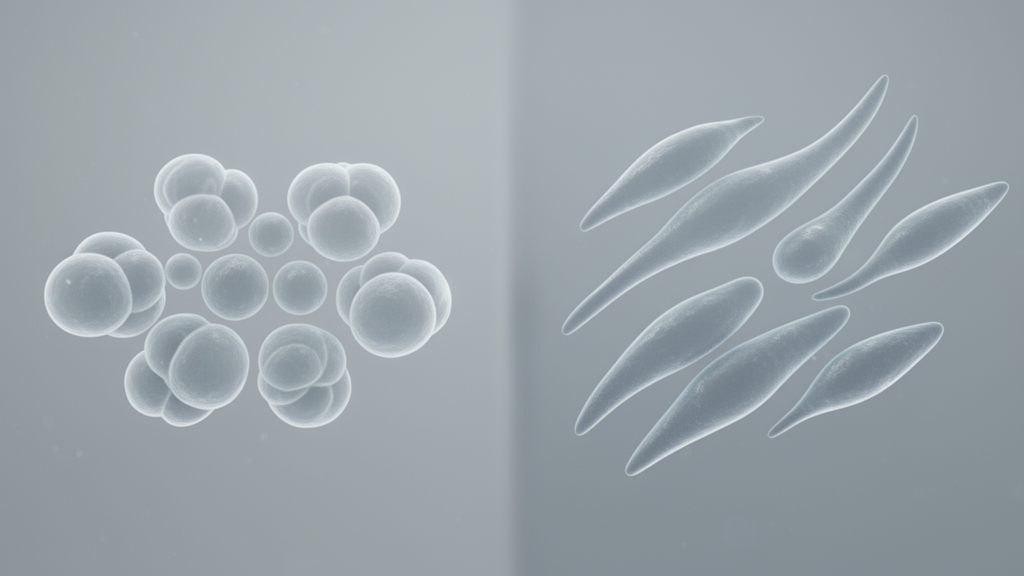
UC Riverside evolutionary biologist Bryan Jennings has proposed a new theoretical framework suggesting that changes in overall body size, rather than interspecific competition for resources, may drive the earliest physical differences between emerging species. Published in the Evolutionary Journal of the Linnean Society, the study introduces a mechanism known as disassociational scaling, which explains how physical traits such as beak size, tail length, and body proportions can begin to diverge when a population evolves a different body size. This initial divergence is proposed to occur before closely related species come into contact and begin competing for ecological resources, fundamentally shifting the proposed sequence of events in adaptive radiation.
The theory addresses a specific gap in the prevailing framework for adaptive radiation, the evolutionary process in which a common ancestor gives rise to multiple closely related species that occupy different ecological niches. Darwin’s finches of the Galápagos Islands remain one of the best-known examples of this phenomenon. Traditional explanations of adaptive radiation emphasize competition between species after they come into contact, a process known as character displacement. Jennings argues that while competition can drive increasingly pronounced differences in traits, an earlier process can initiate that divergence before competition becomes a significant factor.
Jennings’s theory focuses on scaling, defined as the relationship between an organism’s overall size and the size and shape of its individual traits. As an organism grows, different traits generally do not grow at the same rate. A human baby’s head, for example, is relatively large compared with its body and becomes proportionally smaller as the individual matures. In lizards, Jennings found that body girth shows this pattern as well, whereas other traits, such as tail length, can become proportionally larger as body size increases. This differential growth rate creates a complex relationship between overall body size and specific morphological features.
Initially, Jennings hypothesized that when a population evolves a different body size, associated traits would change proportionally according to simple geometric scaling. However, his subsequent analysis of a larger dataset led him to a different conclusion. The data showed evidence of a more extreme decoupling between trait development and body-size evolution. Jennings calls this broader process disassociational scaling. Under this model, a population that evolves a larger or smaller body size can experience a substantial change in the proportions of its traits, with geometric scaling being just one form of this broader category.
According to the model, this initial change can produce a functional deficit in a trait, such as a tail not working as well as it could. Natural selection can then act over longer evolutionary periods to fine-tune the trait and restore or improve its functionality. Jennings calls this second stage re-adaptation. The distinction is important because it shifts the proposed sequence of events. Rather than competition being responsible for the initial divergence of traits, competition can occur later, during the process of refining differences that have already emerged. In other words, competition between species is not necessary for the initial divergence.
Jennings developed his theory in 2020 while revisiting data from his doctoral research on pygopodid lizards, a group of snake-like lizards found primarily in Australia and New Guinea. Pygopodids have elongated bodies and greatly reduced limbs. Two of their traits, tail length and body girth, are important for locomotion and escaping predators, making them useful traits for studying the relationship between body form and function. During the COVID-19 pandemic, Jennings also revisited influential work on geometric scaling and evolutionary form, including research by evolutionary biologist Stephen Jay Gould, leading him to wonder if geometric scaling could describe the earliest stages of evolutionary divergence.
To test the idea more rigorously, Jennings obtained funding to conduct research in Australia. During a 40-day trip in 2023, he visited six museums and collected measurements from more than 1,000 preserved lizard specimens, including body length, body girth, and tail length. He followed this with a visit to the Museum of Comparative Zoology at Harvard University to measure lizards in its collection. The expanded dataset allowed him to examine differences between populations and among closely related species. His analysis provided support for his model’s second stage, re-adaptation, while evidence from the initial stage led him to revise his original hypothesis.
The data suggested that the initial divergence was often more extreme than geometric scaling alone would predict. This led Jennings to replace geometric scaling as the first step of the model with disassociational scaling, which encompasses several ways the development of a trait can become unlocked from changes in overall body size. Jennings’s proposed mechanism could have implications for understanding how adaptive radiation begins. If changes in body size produce substantial changes in the proportions of traits, those changes could sometimes result in trait combinations that allow a population to exploit a different ecological resource. He calls this proposed process niche scaling when it occurs in the context of adaptive radiation.
Under this scenario, populations could begin developing differences that correspond to different ecological niches before they live together and compete for the same resources. Competition could subsequently refine those differences through natural selection. This differs from the conventional sequence in which competition is viewed as a major driver of the initial divergence in ecological traits. Jennings said his theory is intended to complement, rather than replace, established findings about adaptive radiation. He does not dispute the role of competition and natural selection in shaping species differences, but proposes that an important part of the story occurs earlier, when one population first begins diverging from another.
Jennings emphasized that additional studies will be needed to determine how widespread these mechanisms are in nature. He noted that his theory more fully accounts for beak evolution in the iconic Darwin’s finches and antler evolution in the enigmatic, extinct Irish elk. However, scientists still need to determine how widespread disassociational scaling and niche scaling are across different groups of organisms. The study provides a new perspective on the early stages of evolutionary divergence, highlighting the role of body size changes in initiating trait differences before interspecific competition plays a significant role.
Subject of Research: Evolutionary theory of trait divergence driven by body size scaling
Article Title: Body size, not competition, may kickstart evolution
Article References: Body size, not competition, may kickstart evolution. Original publication (Bibliographic details unavailable.)
Image Credits: AI Generated
DOI: Not provided
Keywords: evolution, adaptive radiation, body size, scaling, trait divergence, natural selection, pygopodid lizards, ecological niches, morphology, UC Riverside, Body, size
News Source: Gavin Prescott. (November 9, 2026). Body Size Changes May Initiate Evolutionary Divergence. Scienmag.