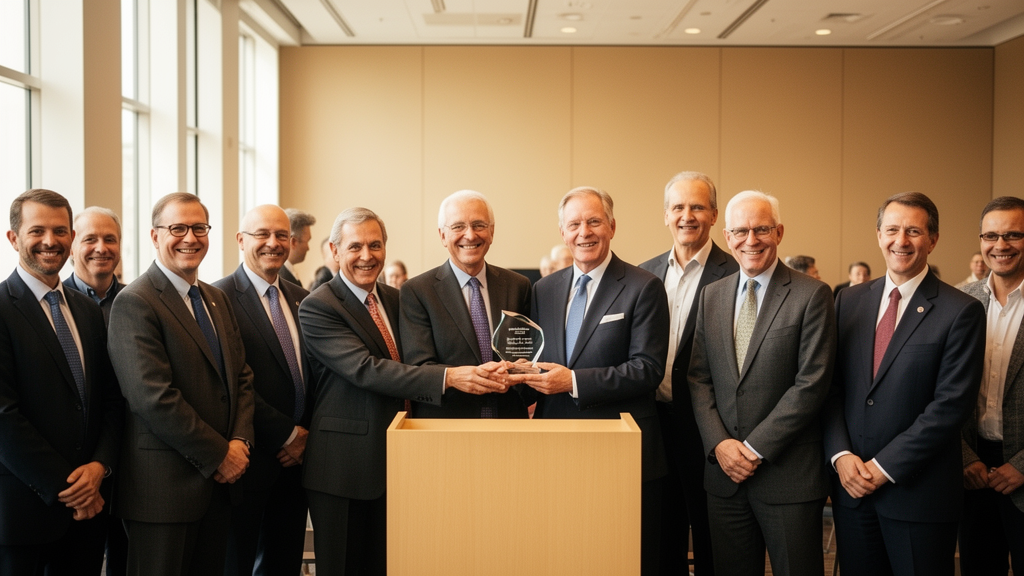
The academic publishing ecosystem depends on a workforce that rarely appears on the bylines of the papers it helps to shape. Editors, associate editors, and editorial board members screen thousands of submissions each year, recruit peer reviewers, adjudicate disagreements between authors and referees, and make the final calls on what enters the scientific record. Springer Nature, one of the largest scholarly publishers in the world, has long recognized that this labor is largely invisible to the research communities it serves. Its annual Editor of Distinction Awards are designed to change that, and the 2026 cycle has now singled out a substantial group of editors connected to BMC Geriatrics, the open-access journal covering aging, health, and care of older adults.
The awards program is structured around distinct categories that reflect different dimensions of editorial work. For 2026, two of those categories are represented among the BMC Geriatrics honorees: the Springer Nature Editorial Contribution Award and the Springer Nature Author Service Award. Each award carries its own criteria, and the publisher’s announcements make clear that the distinctions are not merely ceremonial. They are tied to measurable aspects of how a journal operates, from the rigor of manuscript assessment to the quality of the experience that authors have while their work moves through peer review.
The Editorial Contribution Award, the first of the two categories, is given for meticulous assessment of submissions and rigorous management of the peer review process. In practical terms, this means the editors being honored are the ones who safeguard the scientific accuracy of the published record. Before a manuscript ever reaches a reviewer, an editor must judge whether the research question is sound, whether the methods are appropriate, and whether the data support the conclusions the authors wish to draw. After reviews return, the editor weighs sometimes conflicting assessments, requests revisions, and decides whether the revised manuscript meets the journal’s standards. It is a role that blends subject-matter expertise with a kind of quality control that has become only more important as submission volumes grow and as concerns about research integrity intensify across science.
For a geriatrics journal, that quality control carries particular weight. Research on aging populations spans clinical medicine, nursing, rehabilitation, epidemiology, public health, and social science, and the methodological pitfalls differ across those fields. Studies involving older adults raise specific challenges, including multimorbidity, polypharmacy, cognitive impairment, and the ethical complexities of consent in vulnerable populations. An editor who can rigorously assess submissions across that breadth of topics provides a service not only to the journal but to clinicians and researchers who rely on the published literature to inform care for older people. The 2026 Editorial Contribution Award list for BMC Geriatrics reflects that breadth, with honorees whose work touches geriatric medicine, nursing science, rehabilitation, epidemiology, and health services research.
The list of Editorial Contribution Award recipients is long and international. Among the thirty editors named are A R M Saifuddin Ekram, Agnieszka Wiśniowska-Szurlej, Antoine Christiaens, Bart Spaetgens, Chang Dae Lee, Chen Pao-Huan, Ellen Freiberger, Esma Nur Kolbasi Dogan, Francesco Curcio, Gu Eon Kang, Guogui Huang, Hui-Chuan Hsu, Javier Jerez-Roig, Jonathan K. L. Mak, Kazuhiro Miyata, Koen Milisen, Krystal Warmoth, Padmore Adusei Amoah, Qingsong Chang, Seyedeh Saleheh Mortazavi, Shanshan Shen, Shirin Vellani, Silvia Giovannini, Stefano Cacciatore, Takashi Mori, Tino Prell, Tsuyoshi Harada, Xue-Qiang Wang, Yang Zhao, and Zeynep Şahiner. The geography alone tells a story about modern science: the honorees are affiliated with institutions spanning East Asia, South Asia, the Middle East, Europe, and beyond, underscoring that gerontology and geriatrics research is a genuinely global enterprise and that the editorial workforce sustaining it is equally distributed.
Several names on the list will be familiar to readers of the aging research literature. Ellen Freiberger has published extensively on physical activity and frailty in older adults. Koen Milisen is a leading figure in geriatric nursing research in Belgium. Silvia Giovannini and Stefano Cacciatore are known for clinical work in geriatric medicine and rehabilitation in Italy. Tino Prell has contributed to research on movement disorders and aging in Germany. Javier Jerez-Roig has worked on epidemiological questions in aged care, and Jonathan K. L. Mak on physical function and aging has been widely cited. Their presence on an editorial award list illustrates a common pattern in scholarly publishing: active researchers take on editorial duties alongside their own laboratories and clinics, contributing hours of unpaid or lightly compensated labor to the functioning of the journals their communities depend on.
The second category, the Springer Nature Author Service Award, shifts the focus from the integrity of the published record to the experience of the people submitting to it. This award recognizes exceptional service in improving the author experience and ensuring that the peer review process is efficient, constructive, and fair. Anyone who has submitted a manuscript to a journal knows how much these qualities matter. Slow decisions can stall careers and delay the dissemination of findings. Unconstructive or hostile reviews can discourage early-career researchers and degrade the quality of revisions. Editors who communicate clearly, set reasonable timelines, guide reviewers toward useful feedback, and explain decisions transparently can transform what is often an anxious process into a genuinely collaborative one.
The 2026 Author Service Award honorees for BMC Geriatrics include Alex Smithson, Bart Spaetgens, Bartłomiej K. Sołtysik, Chang Dae Lee, Chen Pao-Huan, Cheng Lei, Dario Calafiore, Dongshan Zhu, Fan Yang, Fengjuan Hu, Franziska Saxer, Gustave Mabiama, Hao Luo, Hui-Chuan Hsu, Ippei Chiba, Jaehoon Seol, Javier Jerez-Roig, Jonathan K. L. Mak, Kazuhiro Miyata, Krystal Warmoth, Lisa Kouladjian Odonnell, Luís Sousa, Monika Pathania, Peng Nie, Shiou Liang Wee, Shirin Vellani, Tsuyoshi Harada, Xuewen Wang, Yanfeng Jiang, and Yeji Hwang. Notably, several editors appear on both lists, including Bart Spaetgens, Chang Dae Lee, Chen Pao-Huan, Hui-Chuan Hsu, Javier Jerez-Roig, Jonathan K. L. Mak, Kazuhiro Miyata, Krystal Warmoth, Shirin Vellani, and Tsuyoshi Harada. That overlap is telling. The best editors, the awards suggest, are those who can hold two things in balance at once: uncompromising rigor about the science and genuine attentiveness to the authors whose careers and findings depend on a fair hearing.
In its announcement, the journal framed the awards as a celebration of editors’ dedication to their journals and research communities. The publisher highlighted the range of contributions that editorial teams make beyond manuscript decisions: developing networks for authors and peer reviewers, helping authors improve their papers, and advocating for their journal communities. These functions have become increasingly significant as open-access publishing models, of which BMC Geriatrics was an early pioneer, have reshaped the economics and expectations of scholarly communication. In a fully open-access journal, the community of authors and reviewers is not just a source of content but the constituency that sustains the journal financially and intellectually. Editors who cultivate that community are, in a real sense, stewarding the infrastructure of their fields.
The 2026 Editor of Distinction Awards also arrive at a moment when the workload and responsibilities of academic editors are under scrutiny. Peer review remains the gatekeeping mechanism of science, yet it runs overwhelmingly on volunteer labor, and journals across publishers have reported rising submission volumes, growing difficulties in recruiting reviewers, and heightened expectations around research integrity, data availability, and reporting standards. Recognizing editorial excellence is one response to that pressure: it signals that publishers see editorial work as skilled, consequential labor rather than an administrative afterthought. For the sixty editors honored in connection with BMC Geriatrics this year, the awards offer public acknowledgment of contributions that usually go unrecorded. For the research community in geriatrics and gerontology, they offer a reminder that behind every published paper on aging stands a chain of people, from reviewers to handling editors, whose judgment and care determine whether the record of science remains trustworthy.
Subject of Research: Springer Nature Editor of Distinction Awards 2026 recognizing BMC Geriatrics editors for peer review and author service
Article Title: Springer Nature Editor of Distinction Awards 2026
Article References: Springer Nature Editor of Distinction Awards 2026. (n.d.). Original publication
Image Credits: AI Generated
DOI: Not provided
Keywords: Springer Nature, BMC Geriatrics, Editor of Distinction Awards, peer review, academic publishing, geriatrics, gerontology, editorial awards, open access, author experience, research integrity, aging research
News Source: Ophelia Keating. (October 9, 2026). BMC Geriatrics Honors Standout Editors in Springer Nature 2026 Awards. Scienmag.