• HOME
  • NEWS
  • EXPLORE
    • CAREER
      • Companies
      • Jobs
    • EVENTS
    • iGEM
      • News
      • Team
    • PHOTOS
    • VIDEO
    • WIKI
  • BLOG
  • COMMUNITY
    • FACEBOOK
    • INSTAGRAM
    • TWITTER
Sunday, July 12, 2026
BIOENGINEER.ORG
No Result
View All Result
  • Login
  • HOME
  • NEWS
  • EXPLORE
    • CAREER
      • Companies
      • Jobs
        • Lecturer
        • PhD Studentship
        • Postdoc
        • Research Assistant
    • EVENTS
    • iGEM
      • News
      • Team
    • PHOTOS
    • VIDEO
    • WIKI
  • BLOG
  • COMMUNITY
    • FACEBOOK
    • INSTAGRAM
    • TWITTER
  • HOME
  • NEWS
  • EXPLORE
    • CAREER
      • Companies
      • Jobs
        • Lecturer
        • PhD Studentship
        • Postdoc
        • Research Assistant
    • EVENTS
    • iGEM
      • News
      • Team
    • PHOTOS
    • VIDEO
    • WIKI
  • BLOG
  • COMMUNITY
    • FACEBOOK
    • INSTAGRAM
    • TWITTER
No Result
View All Result
Bioengineer.org
No Result
View All Result
Home NEWS Science News

Bluetooth technology, the best ally to detect COVID-19 cases through smartphone contact tracing

Bioengineer by Bioengineer
June 8, 2020
in Science News
Reading Time: 2 mins read
0
IMAGE
Share on FacebookShare on TwitterShare on LinkedinShare on RedditShare on Telegram

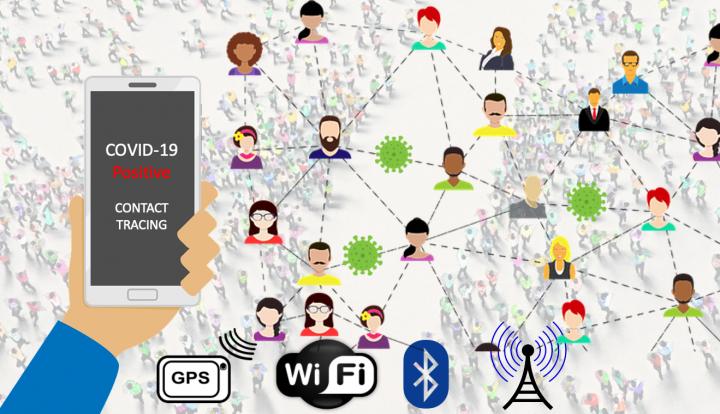
Smartphone contact tracing would be ‘extremely’ useful in a new outbreak of the pandemic
IMAGE

Credit: @UPV

“Tracers have been and are essential to manage the pandemic. Today, the tracing is done by hand and this work is slow and inaccurate. However, as we have seen, technology can be highly useful: contact tracing with smartphones and smartclocks help find out who has been in contact with an infected person, thanks to the use of localization and communication technologies, such as GPS, cell phone networks, Wi-Fi and Bluetooth,” explains Enrique Hernández Orallo, researcher at the Networking Research Group-DISCA of the Universitat Politècnica de València.

In their study, UPV researchers assessed the effectiveness of each one of these technologies. In order to do that, they designed an epidemiological mathematical model which allowed them to study its efficiency and impact–in terms of number of persons that must enter in self-quarantine from the results obtained. “Bluetooth is the most suitable technology because it allows tracers to detect contacts within a range of 2-3 meters. Those contacts are considered by epidemiological models as a contact capable of passing the infection. Therefore, it helps to reduce the number of false contacts, and also allows them to be more efficient when establishing which people must self-quarantine,” explains Enrique Hernández Orallo.

“Extremely useful” in a possible new outbreak

Since the infection rate of COVID is extremely high, the contact tracing technology must be accurate and perform a quick search. However, in order to do it more effectively, a significant percentage of the population must install the contact tracing application on their smart devices.

“These strict requirements make contact tracing based on smartphones quite inefficient to contain the infection propagation during the first outbreak of the virus. However, in the case of a new outbreak of the pandemic, with a percentage of the population immune, or in combination with other less strict measures that reduce the spread of the virus (such as social distancing), contact tracing based on smartphones could be extremely useful, even if only a part of the population–less than 60%–would be willing to use it. In any case, Bluetooth will be the most suitable tool to do the tracing,” concludes Enrique Hernández-Orallo.

###

Media Contact
Luis Zurano Conches
[email protected]

Related Journal Article

http://dx.doi.org/10.1109/ACCESS.2020.2998042

Tags: Software EngineeringTechnology/Engineering/Computer Science
Share12Tweet8Share2ShareShareShare2

Related Posts

YEARS Algorithm Enhances Pulmonary Embolism Diagnosis in Cancer Patients

July 12, 2026

Diverse Symptom Burdens and Care Needs in Older Ischemic Stroke Patients

July 12, 2026

KAIST Creates AI to Detect Early Cerebrovascular Disease Signs at Home

July 12, 2026

Anthropometric Traits and Metabolic Biomarkers Linked to Pancreatic Cancer Risk

July 12, 2026
Please login to join discussion

POPULAR NEWS

  • Detection of EDCs in Breast Milk and Infant Urine Up to Six Months Highlights Early Exposure Risks

    77 shares
    Share 31 Tweet 19
  • New Drug Candidate Developed at McMaster Shows Potential for Treating Brain Cancer

    58 shares
    Share 23 Tweet 15
  • KTU Researchers Explore Ultrasound’s Role in Enhancing Blood Flow Beyond Diagnostics

    53 shares
    Share 21 Tweet 13
  • 高齢者の骨粗鬆症治療の持続性比較

    51 shares
    Share 20 Tweet 13

About

We bring you the latest biotechnology news from best research centers and universities around the world. Check our website.

Follow us

Recent News

YEARS Algorithm Enhances Pulmonary Embolism Diagnosis in Cancer Patients

Diverse Symptom Burdens and Care Needs in Older Ischemic Stroke Patients

KAIST Creates AI to Detect Early Cerebrovascular Disease Signs at Home

Subscribe to Blog via Email

Enter your email address to subscribe to this blog and receive notifications of new posts by email.

Join 85 other subscribers
  • Contact Us

Bioengineer.org © Copyright 2023 All Rights Reserved.

Welcome Back!

Login to your account below

Forgotten Password?

Retrieve your password

Please enter your username or email address to reset your password.

Log In
No Result
View All Result
  • Homepages
    • Home Page 1
    • Home Page 2
  • News
  • National
  • Business
  • Health
  • Lifestyle
  • Science

Bioengineer.org © Copyright 2023 All Rights Reserved.