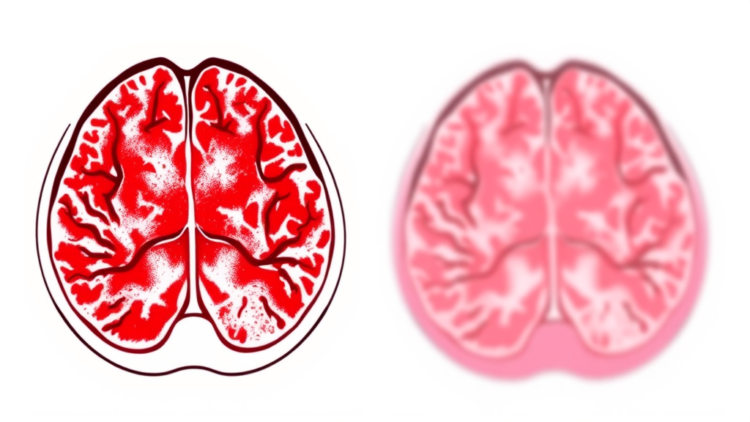
A single blood draw may one day help clinicians gauge not only whether a patient is declining cognitively, but also which biological processes are driving the damage. That is the central implication of a new retrospective observational study published in European Geriatric Medicine, in which researchers analyzed circulating immune-related proteins in 506 participants drawn from the Alzheimer’s Disease Neuroimaging Initiative (ADNI). The cohort spanned the full clinical spectrum of the disease: 53 cognitively normal individuals, 352 people living with mild cognitive impairment, and 101 with Alzheimer’s dementia. Rather than examining individual blood proteins in isolation, the team grouped them into five biologically coherent pathway scores—complement–acute-phase, endothelial-associated, extracellular matrix remodeling, myeloid, and interleukin—and asked whether these aggregated signatures tracked with cognition, daily function, clinical severity, and structural brain measures on magnetic resonance imaging.
The approach reflects a broader shift in Alzheimer’s research. Over the past decade, proteomic technologies have matured to the point where dozens of low-abundance signaling proteins can be measured reliably in plasma, and studies increasingly suggest that the peripheral immune system carries a readable imprint of inflammatory events unfolding inside the brain. The complement cascade—a phylogenetically ancient arm of innate immunity that tags cellular debris and synapses for removal—has drawn particular attention. Mouse work published in Science in 2016 showed that complement activation and microglia can drive early synapse loss in Alzheimer’s models, and subsequent human genetics and single-cell studies have reinforced links between complement signaling, microglial states, and neurodegeneration. Endothelial proteins, meanwhile, speak to the health of the cerebral vasculature and the blood–brain barrier, structures long suspected of failing early in the disease.
To build the pathway scores, the investigators used plasma proteins from the quality-controlled Rules-Based Medicine multiplex dataset available through ADNI. Each protein was standardized, and proteins belonging to the same biological program were combined into a single composite metric. The outcomes they examined were clinically grounded and widely used: the Mini-Mental State Examination (MMSE) for global cognition, the Clinical Dementia Rating Sum of Boxes (CDR-SB) for disease severity, and the Functional Activities Questionnaire (FAQ) for independence in instrumental daily activities. Structural outcomes were normalized hippocampal volume and normalized whole-brain volume derived from MRI. Crucially, every multivariable model was adjusted for age, sex, education, and APOE ε4 carrier status—the strongest common genetic risk factor for late-onset Alzheimer’s—reducing the chance that the associations merely reflected demographics or genetic predisposition.
The results were strikingly pathway-specific. Complement–acute-phase scores were significantly higher in participants with dementia than in cognitively normal individuals after correction for multiple comparisons (β = 0.314, 95% CI 0.118 to 0.511; FDR q = 0.018). More importantly, the same score tracked clinical impairment across the continuum. Higher complement–acute-phase values were associated with lower MMSE scores (β = −0.859, FDR q < 0.001), higher CDR-SB scores (β = 0.622, FDR q < 0.001), and higher FAQ scores (β = 2.473, FDR q < 0.001), meaning that elevated complement and acute-phase activity consistently accompanied worse cognition, greater clinical severity, and reduced functional independence. No other pathway score showed this breadth of association with the clinical phenotypes.
The endothelial-associated score told a different, complementary story. Rather than mapping onto cognitive test performance, this vascular-linked signature was associated with lower normalized hippocampal volume (β = −1.47 × 10⁻4, FDR q = 0.028). The hippocampus, a seahorse-shaped structure deep in the temporal lobe, is among the earliest and most severely affected regions in Alzheimer’s disease, and its shrinking on MRI is one of the best-established imaging correlates of memory decline. A plasma readout that correlates with hippocampal atrophy is therefore a potentially valuable bridge between blood-based testing and neuroimaging, suggesting that endothelial dysfunction or blood–brain barrier compromise may be registering in the bloodstream as the memory circuit erodes.
Technically, the false discovery rate (FDR) correction deserves emphasis. In multiplex proteomics, researchers test many proteins or scores simultaneously, and unadjusted associations are often statistical noise. By applying FDR correction, the authors ensured that the surviving signals—the dementia difference in complement–acute-phase score and the endothelial association with hippocampal volume—were unlikely to be chance findings. The separation between pathways is also meaningful: the fact that complement–acute-phase proteins aligned with clinical scales while endothelial proteins aligned with a structural measure suggests that these plasma signatures are not interchangeable proxies of general inflammation, but rather capture distinct facets of Alzheimer’s biology.
The findings fit into a converging literature. Earlier ADNI-based proteomic studies, including work on plasma clusterin by Thambisetty and colleagues, reported associations between individual inflammatory proteins and disease severity, hippocampal metabolism, and brain atrophy. More recent blood biomarker research has shown that plasma measures can predict amyloid and tau pathology, cognitive decline, and brain atrophy over time. Meanwhile, vascular studies led by Montagne and colleagues demonstrated that APOE4 carriers experience early blood–brain barrier breakdown that predicts cognitive decline, and a human brain vascular atlas has mapped Alzheimer’s risk mediators in brain endothelial cells. The new study extends this tradition by organizing dozens of proteins into mechanistically interpretable pathway composites and testing them against both clinical and imaging outcomes in the same cohort.
The study has limitations that temper interpretation. It is cross-sectional and retrospective, so the associations demonstrate correlation rather than causation; elevated complement–acute-phase proteins could contribute to neurodegeneration, mark it, or arise secondarily from the disease process itself. The cohort, while large by proteomic standards, reflects ADNI’s recruitment population, and pathway scores were constructed from a fixed multiplex panel rather than untargeted proteomics, which may miss relevant biology. The authors note that data were obtained from ADNI and are available with permission to researchers, and the work was supported by the Princess Nourah Bint Abdulrahman University Researchers Supporting Project. Corresponding author Saud S. Alharbi led the formal analysis and conceptualization, with contributions from investigators across multiple Saudi institutions.
Even so, the clinical implications are compelling. As disease-modifying therapies for Alzheimer’s enter routine use, clinicians need accessible tools to stratify patients, monitor progression, and identify which biological processes dominate in a given individual. Plasma-based pathway signatures could eventually complement the growing panel of blood biomarkers—amyloid and tau fragments, neurofilament light, and glial fibrillary acidic protein—by adding an immune dimension that current markers do not capture. A complement–acute-phase score linked to clinical impairment and an endothelial score linked to hippocampal integrity hint at a future in which a routine blood test reveals not just the presence of Alzheimer’s disease, but its mechanism—informing whether a patient might benefit most from anti-amyloid treatment, vascular protection, or, one day, therapies targeting the complement cascade itself.
Subject of Research: Plasma neuroimmune protein pathway signatures as blood biomarkers of clinical impairment and hippocampal atrophy across the Alzheimer’s disease continuum
Article Title: Plasma neuroimmune pathway signatures are associated with clinical impairment and lower MRI-derived hippocampal volume across the Alzheimer’s disease continuum
Article References: Alruwaili, M., Alanazi, M. F., Almohaimeed, H. M., Alharbi, S. S., Alruwais, N., Elkordy, E. A., & Alshuhri, M. S. (2026). Plasma neuroimmune pathway signatures are associated with clinical impairment and lower MRI-derived hippocampal volume across the Alzheimer’s disease continuum. European Geriatric Medicine. https://doi.org/10.1007/s41999-026-01604-w
Image Credits: AI Generated
DOI: 10.1007/s41999-026-01604-w
Keywords: Alzheimer’s disease, plasma biomarkers, neuroinflammation, complement pathway, hippocampal volume, cognitive impairment, ADNI, proteomics, innate immunity, blood-brain barrier, MRI, dementia
Cite Scienmag News
APA
MLA
Chicago
Cassandra Pierce. (September 12, 2026). Blood Proteins Reveal Distinct Immune Signatures of Alzheimer’s Impairment and Shrinkage of the Hippocampus. Scienmag. https://scienmag.com/blood-proteins-reveal-distinct-immune-signatures-of-alzheimers-impairment-and-shrinkage-of-the-hippocampus/
Cassandra Pierce. “Blood Proteins Reveal Distinct Immune Signatures of Alzheimer’s Impairment and Shrinkage of the Hippocampus.” Scienmag, 12 September 2026, https://scienmag.com/blood-proteins-reveal-distinct-immune-signatures-of-alzheimers-impairment-and-shrinkage-of-the-hippocampus/. Accessed 12 September 2026.
Cassandra Pierce. “Blood Proteins Reveal Distinct Immune Signatures of Alzheimer’s Impairment and Shrinkage of the Hippocampus.” Scienmag. September 12, 2026. https://scienmag.com/blood-proteins-reveal-distinct-immune-signatures-of-alzheimers-impairment-and-shrinkage-of-the-hippocampus/
Copy citation
Download RIS
Tags: ADNIAlzheimer’s diseaseAlzheimer’s disease neuroimaging initiativeAlzheimer’s disease biomarkersblood biomarkers for cognitive declineblood-based immune signaturesblood-brain barriercirculating immune proteinscognitive impairmentcomplement pathwaydementiahippocampal volumehippocampal volume reductionimmune pathway scores in dementiainflammatory pathways and Alzheimer’s progressioninnate immunityMRIneuroinflammationneuroinflammation in Alzheimer’speripheral immune system and brain healthplasma biomarkersproteomic analysis in neurodegenerationProteomicsstructural MRI in Alzheimer’s