• HOME
  • NEWS
  • EXPLORE
    • CAREER
      • Companies
      • Jobs
    • EVENTS
    • iGEM
      • News
      • Team
    • PHOTOS
    • VIDEO
    • WIKI
  • BLOG
  • COMMUNITY
    • FACEBOOK
    • INSTAGRAM
    • TWITTER
Thursday, October 29, 2026
BIOENGINEER.ORG
No Result
View All Result
  • Login
  • HOME
  • NEWS
  • EXPLORE
    • CAREER
      • Companies
      • Jobs
        • Lecturer
        • PhD Studentship
        • Postdoc
        • Research Assistant
    • EVENTS
    • iGEM
      • News
      • Team
    • PHOTOS
    • VIDEO
    • WIKI
  • BLOG
  • COMMUNITY
    • FACEBOOK
    • INSTAGRAM
    • TWITTER
No Result
View All Result
Bioengineer.org
No Result
View All Result
Home NEWS Science News Health

Blood metabolites may flag who will develop Chagas heart disease

by
October 29, 2026
in Health
Reading Time: 2 mins read
0
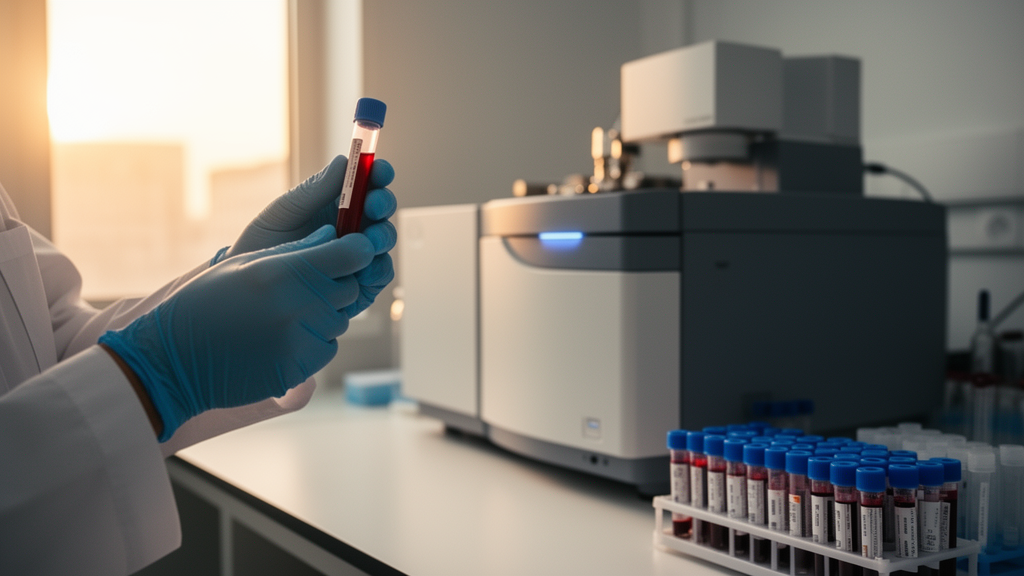
Blood metabolites may flag who will develop Chagas heart disease

Blood metabolites may flag who will develop Chagas heart disease

Share on FacebookShare on TwitterShare on LinkedinShare on RedditShare on Telegram

Chagas disease, caused by the protozoan parasite Trypanosoma cruzi, affects an estimated 10.5 million people worldwide and remains a leading cause of infectious cardiomyopathy in Latin America. One of the most frustrating aspects of managing the infection is its unpredictability: although the parasite persists for life without treatment, only 20 to 30 percent of chronically infected individuals ever move from an asymptomatic state to clinically significant cardiac disease. Clinicians currently have no reliable way to know which patients fall into that minority, and existing antiparasitic drugs are limited by toxicity and variable efficacy.

A new metabolomics study published in Nature Communications reports that circulating small molecules measured in serum may change that picture. The research set out to identify biomarkers capable of predicting progression from asymptomatic infection to cardiac Chagas disease, with the goal of improving clinical risk stratification and supporting the development of new therapies.

The team used untargeted liquid chromatography–mass spectrometry profiling, running samples across complementary chromatographic platforms to capture as broad a chemical landscape as possible. They then applied univariate statistics, machine learning feature selection, and receiver operating characteristic analysis to sift candidate biomarkers out of the resulting data, and validated the leading candidates with targeted analysis.

The search yielded eight individual metabolite biomarkers and 45 combinatorial panels predictive of progression status. Notably, 10 of those panels met the sensitivity and specificity criteria laid out in a target product profile for Chagas disease treatment-response biomarkers, a benchmark suggesting the panels could perform well enough for real clinical use.

The key implication is that metabolites measured at a single baseline time point can predict future cardiac disease progression, rather than merely reflecting damage that has already occurred.

The findings also carry weight for drug development. Because current antiparasitic therapies are limited by toxicity and variable efficacy, the authors note that reliable biomarkers capable of predicting disease progression would support therapeutic development.

The authors describe the work as a foundation for clinically deployable prognostic tools in chronic Chagas disease. The authors describe the work as a foundation for clinically deployable prognostic tools in chronic Chagas disease, and the article notes that this version is subject to further edits and will be replaced by the final Version of Record.

Subject of Research: Serum metabolite biomarkers predicting progression to cardiac Chagas disease

Article Title: Small molecule biomarkers predictive of Chagas disease progression

Article References: Liu, Z., Godinho, J., Laro, J. A., DeToy, K., Vucetic, S., Edens, J. R., Condori, J., Duque, C., Saucedo, G. D., Verastegui, M., Carballo-Jimenez, P., Mercado-Saavedra, B. N., Tinajeros, F., Málaga-Machaca, E. S., Marcus, R., Gilman, R. H., Bowman, N. M., & McCall, L.-I. (2026). Small molecule biomarkers predictive of Chagas disease progression. Nature Communications. https://doi.org/10.1038/s41467-026-78899-7

Image Credits: AI Generated

DOI: 10.1038/s41467-026-78899-7

Keywords: Chagas disease, Trypanosoma cruzi, metabolomics, biomarkers, cardiomyopathy, machine learning, ROC analysis, prognosis, Latin America, serum biomarkers, Small, molecule

News Source: Frances Kline. (October 29, 2026). Blood metabolites may flag who will develop Chagas heart disease. Scienmag.

Tags: biomarkerscardiomyopathyChagas diseaseLatin AmericaMachine LearningMetabolomicsmoleculeprognosisROC analysisserum biomarkerssmallTrypanosoma cruzi
Share12Tweet7Share2ShareShareShare1

Related Posts

Rare Genetic Syndrome Unmasked at 31 After Diabetes, Gout, and Hypogonadism

Rare Genetic Syndrome Unmasked at 31 After Diabetes, Gout, and Hypogonadism

October 29, 2026
Computational Tools Take Center Stage in Designing Nanoparticle Cancer Drug Delivery

Computational Tools Take Center Stage in Designing Nanoparticle Cancer Drug Delivery

October 29, 2026

Shortened Eight-Item Scale May Help Detect Demoralization in Hospital Patients

October 29, 2026

Expert Panel Issues Guidelines for Cheek Swelling After Hyaluronic Acid Fillers

October 29, 2026

POPULAR NEWS

  • Simulations Show Greening Could Cool Japan's Fukuyama Station Square by Nearly 0.6°C

    Simulations Show Greening Could Cool Japan’s Fukuyama Station Square by Nearly 0.6°C

    29 shares
    Share 12 Tweet 7
  • Benign Tumor at a Lung Surgery Port Site Fooled Doctors Into Fearing Cancer Recurrence

    29 shares
    Share 12 Tweet 7
  • Genetic Study Links Panic Disorder Liability to Lower Blood Triglyceride Levels

    29 shares
    Share 12 Tweet 7
  • New Bayesian Model Extracts Shared Microbial Signals Across Heterogeneous Studies

    29 shares
    Share 12 Tweet 7

About

We bring you the latest biotechnology news from best research centers and universities around the world. Check our website.

Follow us

Recent News

Rare Genetic Syndrome Unmasked at 31 After Diabetes, Gout, and Hypogonadism

Tiny transparent fish yields first whole-body single-cell atlas of an adult vertebrate

Computational Tools Take Center Stage in Designing Nanoparticle Cancer Drug Delivery

Subscribe to Blog via Email

Enter your email address to subscribe to this blog and receive notifications of new posts by email.

Join 85 other subscribers
  • Contact Us

Bioengineer.org © Copyright 2023 All Rights Reserved.

Welcome Back!

Login to your account below

Forgotten Password?

Retrieve your password

Please enter your username or email address to reset your password.

Log In
No Result
View All Result
  • Homepages
    • Home Page 1
    • Home Page 2
  • News
  • National
  • Business
  • Health
  • Lifestyle
  • Science

Bioengineer.org © Copyright 2023 All Rights Reserved.