


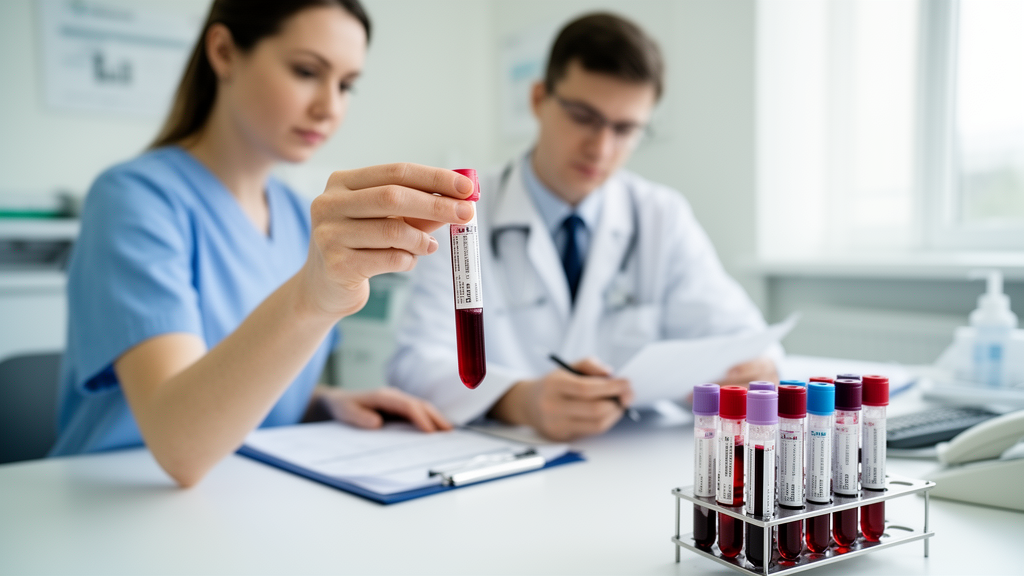
Women undergoing surgery for uterine fibroids may carry measurable clues about their perioperative course in routine blood work, according to a retrospective cohort study published in BMC Women’s Health. The research examined two preoperative indices—the prognostic nutritional index (PNI) and the systemic immune-inflammation index (SII)—and their associations with estimated blood loss, operative time and length of hospital stay in 9,303 patients.
The SII, an inflammation marker derived from blood cell counts, showed the most consistent relationship with intraoperative outcomes. After multivariable adjustment, higher SII was associated with both greater estimated blood loss and longer operative time. Compared with patients whose SII was 352.86 or lower, those in the 498.55–716.66 range had 1.65 times the odds of blood loss exceeding 500 milliliters, and those above 716.66 had 1.81 times the odds. For the milder threshold of blood loss above 200 milliliters, the corresponding odds ratios were 1.29 and 1.62. Higher SII was also linked to operative times beyond 120 and 150 minutes, with odds ratios of 1.28 and 1.42 for the highest category.
Restricted cubic spline analyses reinforced these findings, revealing positive nonlinear associations between SII and both blood loss and operative time. In other words, the relationship was not strictly linear but trended upward across the range of inflammation values, with risk rising as SII increased.
The nutritional index told a different story. Relative to patients with PNI of 48.25 or below, those in the 48.25–51.25, 51.25–54.15 and above-54.15 categories had progressively lower odds of staying in hospital longer than the median, with odds ratios of 0.83, 0.55 and 0.40. The same graded pattern appeared for stays above the 75th percentile, with odds ratios of 0.77, 0.55 and 0.43. This inverse association with length of stay held steady across different outcome definitions and in the spline analyses.
The authors concluded that preoperative SII was more consistently associated with blood loss and operative time, whereas PNI showed its strongest and most consistent link with length of hospital stay. They also cautioned that although the associations were statistically significant, some effect sizes were modest and their clinical relevance remains uncertain. The indices may add information about a patient’s preoperative condition, but the team emphasized that their clinical utility requires further evaluation and external validation before any routine use in practice.
Subject of Research: Associations between preoperative immunonutritional indices and perioperative outcomes in uterine fibroid surgery
Article Title: Preoperative immunonutritional status and perioperative outcomes among women undergoing surgery for uterine fibroids: a retrospective cohort study
Article References: Liu, X., Yang, S., Wang, J., & Hu, T. (2026). Preoperative immunonutritional status and perioperative outcomes among women undergoing surgery for uterine fibroids: a retrospective cohort study. BMC Women's Health. https://doi.org/10.1186/s12905-026-05033-6
Image Credits: AI Generated
DOI: 10.1186/s12905-026-05033-6
Keywords: uterine fibroids, immunonutrition, prognostic nutritional index, systemic immune-inflammation index, blood loss, operative time, hospital stay, retrospective cohort study, gynecologic surgery, BMC Women's Health, Preoperative, immunonutritional
News Source: Ophelia Keating. (October 29, 2026). Blood markers before fibroid surgery linked to bleeding and recovery length. Scienmag.



