How rapeseed could be used as a protein source for human nutrition
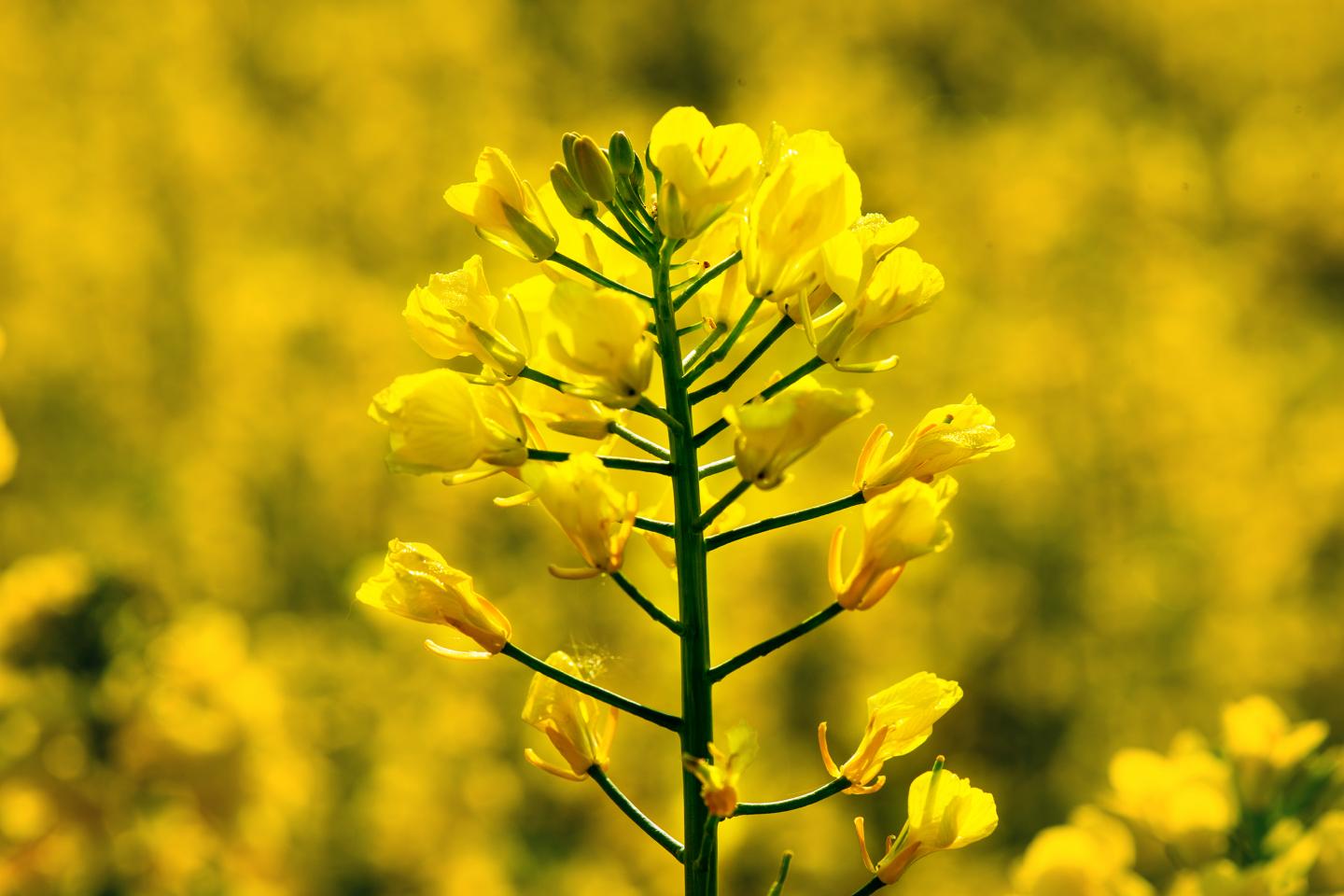
Credit: Andreas Heddergott / TUM
Rapeseed doesn’t just contain oil but high-quality protein, too. However, protein extracts from rapeseed have an intense, bitter off-taste. A team led by food chemist Thomas Hofmann has now identified the substance that is pivotal for the bitter taste. This is a first step towards developing rapeseed for the human protein supply.
According to the Food and Agriculture Organization of the United Nations (FAO), the demand for food will approximately double by 2050 due to the growing world population. “Bottlenecks are to be expected in this context, particularly in protein supply,” says Thomas Hofmann, who heads the Chair of Food Chemistry and Molecular Sensory Science at the Technical University of Munich (TUM).
According to Hofmann, who is also Director of the Leibniz-Institute for Food Systems Biology, it is therefore important to develop new plant protein sources for human nutrition. And rapeseed is a good local source.
Rapeseed contains high-quality protein
Rapeseed doesn’t just contain oil but high-quality protein too, which contains many essential amino acids. Worldwide around 1.12 million tons of crude protein are produced annually from rapeseed oil. Although farmers have long used this so-called rapeseed cake as a protein feed for animals, it has not played a role as a protein source in human nutrition so far.
One reason is that the accompanying substances contained in rapeseed strongly impair the taste of the obtained protein isolates. These substances include, for example, very bitter-tasting secondary plant constituents. Hofmann and his team therefore looked into the issue of which bitter substances cause the rapeseed protein’s unpleasant bad taste.
The key substance that makes rapeseed protein taste bitter
The researchers investigated three different protein isolates using mass spectrometric analysis methods and taste tests. The first isolate was an extract of all the proteins contained in rapeseed meal. The second isolate predominantly contained cruciferin and the third napin, which are the rapeseed’s two main storage proteins. All three isolates had a protein content of 80 to 90 percent.
As the investigations show for the first time, a compound called kaempferol 3-O-(2”’-O-sinapoyl-ß-sophoroside) is the key substance that makes protein extracts from rapeseed inedible. The cruciferin isolate in particular contained a large amount of this bitter substance with 390 milligrams per kilogramme. The rapeseed meal and napin isolate had less than a tenth of the quantity, but still tasted bitter in the sensory test.
Starting point for new processes
“Since we now know the cause of the bitter off-taste, it is much easier to develop suitable technological processes or breeding strategies that can be used to produce tasty, protein-rich foods from rapeseed,” said co-author Corinna Dawid, who heads the Phytometabolomics research group at TUM.
###
Further information:
The research project was funded by the Federal Ministry of Education and Research (BMBF) as part of the RaPEQ project (031B0198D). The project partner was the Pilot Pflanzenöltechnologie e.V. research institute in Magdeburg.
Publication:
C. Hald, C. Dawid, R. Tressel, T. Hofmann:
Kaempferol 3-O-(2”’-O-sinapoyl-β-sophoroside) causes the undesired bitter taste of canola/rapeseed protein isolates
J Agric Food Chem, 67: 372-378, DOI: 10.1021/acs.jafc.8b06260
Media Contact
Andreas Battenberg
[email protected]
49-892-891-0510
Original Source
https:/
Related Journal Article
http://dx.