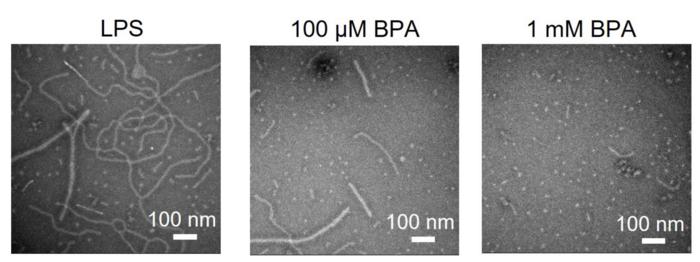
The “hygiene hypothesis” posits that allergic asthma can be triggered by a childhood environment that is too clean and sterile. One studied mechanism underlying this relationship is the influence of microbial lipopolysaccharides (LPS), which train the immune system. In the absence of LPS, Toll-like receptors in the human body will become more sensitive, which can lead to an exaggerated allergic response to triggers such as house dust mites. Mingliang Fang and colleagues explored how the environmental pollutant bisphenol A (BPA), a widespread plasticizer, interacts with LPS. Using various biophysical, molecular, and computational approaches, the authors found that BPA binds to the lipid A component of LPS, significantly inactivating it. Specifically, BPA bends the conformations of O-antigen polysaccharides via hydrogen bonding and makes hydrophobic contacts with the lipid A moiety, disrupting Toll-like receptor 4 binding to LPS. In mice, this inactivation destroys the immunostimulatory activity of LPS, increasing susceptibility to house dust mite-induced allergic asthma. Mice given LPS and BPA develop damaged lungs and higher levels of immune-response cells in the lungs than mice given LPS alone. The authors also extract chemicals from 15 house dust samples and successfully use them to neutralize 50% of the LPS added to the chemicals. According to the authors, the results may help public health officials design interventions to address immune disorders accompanying urbanization.
Credit: Wang et al.
The “hygiene hypothesis” posits that allergic asthma can be triggered by a childhood environment that is too clean and sterile. One studied mechanism underlying this relationship is the influence of microbial lipopolysaccharides (LPS), which train the immune system. In the absence of LPS, Toll-like receptors in the human body will become more sensitive, which can lead to an exaggerated allergic response to triggers such as house dust mites. Mingliang Fang and colleagues explored how the environmental pollutant bisphenol A (BPA), a widespread plasticizer, interacts with LPS. Using various biophysical, molecular, and computational approaches, the authors found that BPA binds to the lipid A component of LPS, significantly inactivating it. Specifically, BPA bends the conformations of O-antigen polysaccharides via hydrogen bonding and makes hydrophobic contacts with the lipid A moiety, disrupting Toll-like receptor 4 binding to LPS. In mice, this inactivation destroys the immunostimulatory activity of LPS, increasing susceptibility to house dust mite-induced allergic asthma. Mice given LPS and BPA develop damaged lungs and higher levels of immune-response cells in the lungs than mice given LPS alone. The authors also extract chemicals from 15 house dust samples and successfully use them to neutralize 50% of the LPS added to the chemicals. According to the authors, the results may help public health officials design interventions to address immune disorders accompanying urbanization.
Journal
PNAS Nexus
Article Title
A missing jigsaw within the hygiene hypothesis: Low-dose bisphenol A exposure attenuates lipopolysaccharide-induced asthma protection
Article Publication Date
7-Nov-2023