• HOME
  • NEWS
  • EXPLORE
    • CAREER
      • Companies
      • Jobs
    • EVENTS
    • iGEM
      • News
      • Team
    • PHOTOS
    • VIDEO
    • WIKI
  • BLOG
  • COMMUNITY
    • FACEBOOK
    • INSTAGRAM
    • TWITTER
Sunday, August 16, 2026
BIOENGINEER.ORG
No Result
View All Result
  • Login
  • HOME
  • NEWS
  • EXPLORE
    • CAREER
      • Companies
      • Jobs
        • Lecturer
        • PhD Studentship
        • Postdoc
        • Research Assistant
    • EVENTS
    • iGEM
      • News
      • Team
    • PHOTOS
    • VIDEO
    • WIKI
  • BLOG
  • COMMUNITY
    • FACEBOOK
    • INSTAGRAM
    • TWITTER
  • HOME
  • NEWS
  • EXPLORE
    • CAREER
      • Companies
      • Jobs
        • Lecturer
        • PhD Studentship
        • Postdoc
        • Research Assistant
    • EVENTS
    • iGEM
      • News
      • Team
    • PHOTOS
    • VIDEO
    • WIKI
  • BLOG
  • COMMUNITY
    • FACEBOOK
    • INSTAGRAM
    • TWITTER
No Result
View All Result
Bioengineer.org
No Result
View All Result
Home NEWS Science News Health

Bird bacteria is key to communication and mating

Bioengineer by Bioengineer
October 29, 2019
in Health
Reading Time: 2 mins read
0
IMAGE
Share on FacebookShare on TwitterShare on LinkedinShare on RedditShare on Telegram

IMAGE

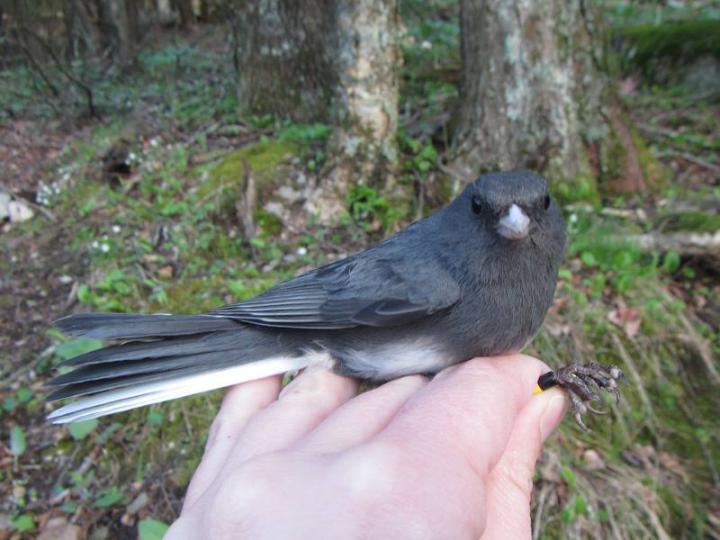
Credit: Nicole M. Gerlach


Birds use odor to identify other birds, and researchers at Michigan State University have shown that if the bacteria that produce the odor is altered, it could negatively impact a bird’s ability to communicate with other birds or find a mate.

Smell is a basic sense vital for the survival of humans and animals. It warns of danger, aids in finding food, and even helps communicate and find a mate. But if something interferes with the ability to smell, or more precisely with the smell itself, there can be consequences.

The researchers discovered that scents emitted by songbirds are produced by certain bacteria in preen glands. These bacteria identify a bird to other birds. If the bacteria is removed or changed, the bird will not express the correct information. The results have been published in a new paper in the Journal of Experimental Biology.

“This is the same process as in humans. We each have bacteria on our bodies that create smells like armpit odor that is unique to each person,” said Danielle Whittaker, lead author and managing director of the BEACON Center for the Study of Evolution in Action. “The odors produced by birds are unique to them and allow other birds to gain crucial information regarding the mating process. Alter that bacteria and the bird could be less attractive to potential mates.”

Birds communicate with odors to determine the stage of reproduction process, quality or hormonal state of a potential mate. Like humans putting on deodorant or perfume, birds preen by rubbing their bill over the preen gland and then rubbing the oil over their feathers and body.

The researchers injected antibiotics directly in the preen gland of dark-eyed juncos, which changed both the bacterial communities and the odors. They also cultured bacteria directly from the preen oil and measured the odors produced by the bacteria alone, which included the same odors present in preen oil.

“Bacteria can change for a number of reasons, including from the environment, infections, hormones or social interactions,” Whittaker said. “This is the same for humans. Our personal smells are impacted by our microbiomes. Take antimicrobial products for instance. They seem like a great idea for staying clean, until you realize they can negatively change your microbiome. The same thing goes for birds and other animals.”

###

MSU co-authors include doctoral student Osama Alian and Kevin Theis (now at Wayne State University.) Wayne State University and Indiana University also contributed to this study. This research was funded by BEACON and the National Science Foundation.

(Note for media: Please include a link to the original paper in online coverage: https://jeb.biologists.org/content/222/20/jeb202978)

Media Contact
Jessi Adler
[email protected]
517-355-6469

Original Source

https://go.msu.edu/HRP

Related Journal Article

http://dx.doi.org/10.1242/jeb.202978

Tags: BacteriologyBiologyBiomedical/Environmental/Chemical EngineeringEcology/EnvironmentEnvironmental HealthMicrobiology
Share12Tweet8Share2ShareShareShare2

Related Posts

PARP1 Drives Neuropathic Pain Through GPX4-Dependent Ferroptosis in Injured Mice’s Sensory Neurons

August 15, 2026

Genome-wide skin pQTL map reveals genetic regulators and mechanisms underlying skin disorders

August 15, 2026

Levistilide A Drives Ferroptosis via RNF40-HSP90α Axis, Suppressing Colorectal Cancer Lung Metastasis

August 15, 2026

Sintilimab, IBI305, and Chemotherapy Show Promise in First-Line Advanced Gastric and GEJ Adenocarcinoma

August 15, 2026
Please login to join discussion

POPULAR NEWS

  • PARP1 Drives Neuropathic Pain Through GPX4-Dependent Ferroptosis in Injured Mice’s Sensory Neurons

    29 shares
    Share 12 Tweet 7
  • Strubbelig–NHL3 Receptor Complex Helps Arabidopsis Respond to Cellulose Deficiency

    29 shares
    Share 12 Tweet 7
  • Bombyx mori Satellitome Analysis Reveals Evolutionary Stability, Dispersed Chromosomal Organization, Transposon Origins

    29 shares
    Share 12 Tweet 7
  • Genome-wide skin pQTL map reveals genetic regulators and mechanisms underlying skin disorders

    29 shares
    Share 12 Tweet 7

About

We bring you the latest biotechnology news from best research centers and universities around the world. Check our website.

Follow us

Recent News

PARP1 Drives Neuropathic Pain Through GPX4-Dependent Ferroptosis in Injured Mice’s Sensory Neurons

Strubbelig–NHL3 Receptor Complex Helps Arabidopsis Respond to Cellulose Deficiency

Bombyx mori Satellitome Analysis Reveals Evolutionary Stability, Dispersed Chromosomal Organization, Transposon Origins

Subscribe to Blog via Email

Enter your email address to subscribe to this blog and receive notifications of new posts by email.

Join 85 other subscribers
  • Contact Us

Bioengineer.org © Copyright 2023 All Rights Reserved.

Welcome Back!

Login to your account below

Forgotten Password?

Retrieve your password

Please enter your username or email address to reset your password.

Log In
No Result
View All Result
  • Homepages
    • Home Page 1
    • Home Page 2
  • News
  • National
  • Business
  • Health
  • Lifestyle
  • Science

Bioengineer.org © Copyright 2023 All Rights Reserved.