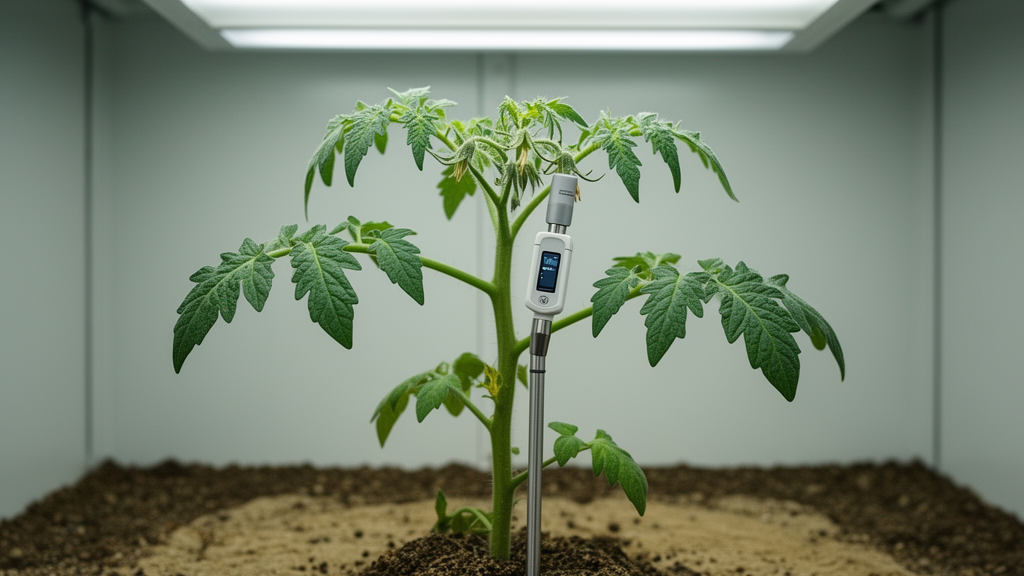
An organic electrochemical transistor sensor called Bioristor continuously monitored physiological responses in tomato and helped distinguish commercial varieties and experimental lines according to their tolerance of drought and combined drought–heat stress. The two case studies, reported in Plant Methods, suggest that the device could support genotype selection by revealing how plant responses change over time rather than relying only on conventional phenotyping measurements.
In the first case study, researchers used Bioristor to monitor three commercial tomato varieties—Mariner, Faber and Red Setter—throughout drought and recovery. The sensor-derived measurements enabled robust classification of the varieties by stress tolerance. Their analysis also constructed indices that captured differences in the temporal dynamics of physiological responses, particularly those associated with water and ion transport.
The second case study applied Bioristor to a panel of tomato introgression lines under drought and combined drought–heat stress. Continuous, real-time monitoring characterized the lines’ physiological responses to each treatment and supported classification according to stress tolerance. By recording the onset, progression, acclimation and recovery of responses, the system exposed genotype-specific patterns that the authors said were not captured by conventional phenotyping approaches.
Both studies demonstrate Bioristor’s potential as a high-resolution functional phenotyping tool for early genotype classification and plant breeding. The research examined tomato in two case studies involving drought, recovery and combined drought–heat treatments. Within that scope, continuous in vivo monitoring supplied detailed information about physiological behavior and generated indices that improved discrimination among the tested varieties and introgression lines, positioning the sensor as a potential complement to genomic and automated phenotyping platforms.
Subject of Research: Use of an organic electrochemical transistor sensor to monitor drought and drought–heat responses in tomato for genotype selection.
Article Title: In vivo monitoring of dynamic drought responses in tomato using Bioristor to support varietal selection
Article References: Marchetti, E., Palermo, N., Vurro, F., Cotti, G., Acién, J. M., Gonzalez-Guzman, M., Arbona, V., Beretta, M., Bettelli, M., Marmiroli, N., Zappettini, A., & Janni, M. (2026). In vivo monitoring of dynamic drought responses in tomato using Bioristor to support varietal selection. Plant Methods. https://doi.org/10.1186/s13007-026-01606-6
Image Credits: AI Generated
DOI: 10.1186/s13007-026-01606-6
Keywords: Bioristor, tomato, drought stress, heat stress, plant phenotyping, crop breeding, in vivo sensors, organic electrochemical transistors, introgression lines, stress tolerance, vivo, monitoring
News Source: Alan Morgan. (October 22, 2026). Bioristor tracks tomato responses to drought and combined heat stress. Scienmag.