Credit: ATS
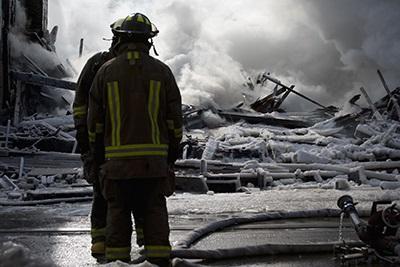
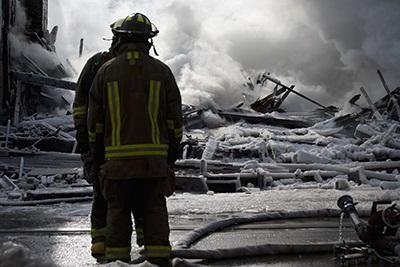
Oct. 31, 2017–Blood biomarkers appear to be an early-warning signal for the accelerated loss of lung function and airway obstruction in firefighters who responded to the World Trade Center disaster, according to new research published online in the Annals of the American Thoracic Society.
In "Blood Leukocyte Concentrations, FEV1 Decline, and Airflow Limitation: a 15-year Longitudinal Study of WTC-exposed Firefighters," researchers report on a study of 9,434 firefighters conducted from Sept. 11, 2001, to Sept. 10, 2016.
In the aftermath of 9/11, New York City fire department rescue and recovery workers exposed to the caustic dust at the site experienced high rates of lung injury and excessive loss of lung function. After 2002, lung function stabilized in a majority of those exposed, but some firefighters continuing to lose lung function at an accelerated rate while some improved, according to the authors.
"We have previously observed some of our patients were doing worse than others and performed this study because we wanted to understand factors that increased the risk for excessive lung function loss," said senior study author Michael D. Weiden, MS, MD, associate professor of medicine and environmental medicine at New York University and a New York City Fire Department medical officer. "These findings could motivate future research to find other treatments for this group with ongoing lung injury."
The study goal was to determine if these different trajectories were associated with blood concentrations of eosinophils and neutrophils, two types of immune cells that play a role in many respiratory diseases and are routinely measured during medical evaluations.
The study found:
- 12.7 percent of participants experienced accelerated FEV1 loss (>64 ml/year loss beyond expected), while 8.3 percent showed improvement in FEV1, the maximum amount of air that can be exhaled in one second.
- Both higher blood eosinophil (?300 cells/μl) and neutrophil (?4,500 cells/μl) concentrations were associated with accelerated FEV1 decline.
- 4,500 cells/μl were associated with a higher risk of accelerated FEV1
- Higher eosinophil, but not neutrophil, concentrations were also associated with airflow obstruction, defined as FEV1/FVC (Forced Vital Capacity, the air that can be expelled from the lungs after the deepest breath)
- Individuals with accelerated FEV1 decline were more than four times as likely to have airflow obstruction as those who had expected FEV1 decline.
- In a subset of firefighters (4,303) who had blood counts before 9/11, there was an association between elevated eosinophil and neutrophil levels before 9/11 and afterwards, and those higher levels before 9/11 were associated with accelerated FEV1 decline.
The study adjusted for several factors, including age, race, length of Ground Zero exposure and smoking. There were significant interactions between smoking, eosinophil and neutrophil concentrations and FEV1 decline.
"After 9/11, about one in eight firefighters who worked at the World Trade Center had accelerated loss of lung function over the next 15 years," Dr. Weiden said. "Even in those who had never smoked we found that accelerated loss of lung function increased their risk of airway obstruction and COPD."
The authors said that this study may not be generalizable to another population exposed to caustic dust because of the massive nature of the exposure and the fact that the firefighters were overwhelmingly white men who had been healthy.
###
Share via Twitter
"Blood biomarkers may be early-warning signal for #lung problems in #9/11 firefighters."
Follow Us
ATS – @atscommunity
AJRCCM – @AnnalsATSEditor
About the Annals of the American Thoracic Society (AnnalsATS)
The AnnalsATS is a peer-reviewed journal published by the American Thoracic Society. The Journal delivers up-to-date and authoritative coverage of adult and pediatric pulmonary and respiratory sleep medicine and adult critical care. The scope of the Journal encompasses content that is applicable to clinical practice, the formative and continuing education of clinical specialists and the advancement of public health. Editor: David Lederer, MD, MS, associate professor of medicine and epidemiology and associate division chief for clinical and translational research at Columbia University.
About the American Thoracic Society
Founded in 1905, the American Thoracic Society is the world's leading medical association dedicated to advancing pulmonary, critical care and sleep medicine. The Society's 15,000 members prevent and fight respiratory disease around the globe through research, education, patient care and advocacy. The ATS publishes three journals, the American Journal of Respiratory and Critical Care Medicine, the American Journal of Respiratory Cell and Molecular Biology and the Annals of the American Thoracic Society.
The ATS will hold its 2017 International Conference, May 19-24, in Washington, DC, where world-renowned experts will share the latest scientific research and clinical advances in pulmonary, critical care and sleep medicine.
Media Contact
Dacia Morris
[email protected]
212-315-8620
@atscommunity
http://www.thoracic.org