• HOME
  • NEWS
  • EXPLORE
    • CAREER
      • Companies
      • Jobs
    • EVENTS
    • iGEM
      • News
      • Team
    • PHOTOS
    • VIDEO
    • WIKI
  • BLOG
  • COMMUNITY
    • FACEBOOK
    • INSTAGRAM
    • TWITTER
Thursday, June 11, 2026
BIOENGINEER.ORG
No Result
View All Result
  • Login
  • HOME
  • NEWS
  • EXPLORE
    • CAREER
      • Companies
      • Jobs
        • Lecturer
        • PhD Studentship
        • Postdoc
        • Research Assistant
    • EVENTS
    • iGEM
      • News
      • Team
    • PHOTOS
    • VIDEO
    • WIKI
  • BLOG
  • COMMUNITY
    • FACEBOOK
    • INSTAGRAM
    • TWITTER
  • HOME
  • NEWS
  • EXPLORE
    • CAREER
      • Companies
      • Jobs
        • Lecturer
        • PhD Studentship
        • Postdoc
        • Research Assistant
    • EVENTS
    • iGEM
      • News
      • Team
    • PHOTOS
    • VIDEO
    • WIKI
  • BLOG
  • COMMUNITY
    • FACEBOOK
    • INSTAGRAM
    • TWITTER
No Result
View All Result
Bioengineer.org
No Result
View All Result
Home NEWS Science News

Biofuel produced by microalgae

Bioengineer by Bioengineer
February 28, 2017
in Science News
Reading Time: 2 mins read
0
Share on FacebookShare on TwitterShare on LinkedinShare on RedditShare on Telegram
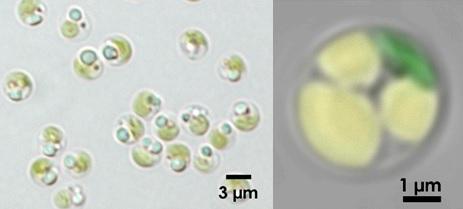
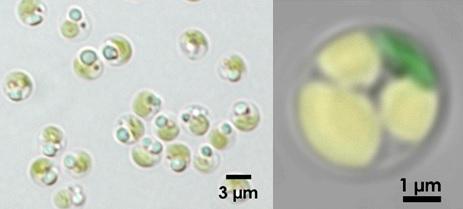
IMAGE

Credit: Tokyo Institute of Technology

In the modern society, energy generation heavily relies on fossil fuels, which, however, lead to environmental pollution and depletion of non-renewable resources. Photosynthetic organisms such as plants and green algae can transform atmospheric carbon dioxide into carbon storage molecules, especially oils such as triacylglycerols (TAGs), which can be used as biofuels. In this context, microalgae provide advantages of high oil content and growth in extreme environments, including high salinity, temperature, or pH.

Nannochloropsis (Figure 1) is a genus of microalgae which can accumulate TAGs up to 50% of dry weight; however, the mechanisms underlying their oleaginous trait are largely unknown.

Scientists from Tokyo Institute of Technology lead by Professor Hiroyuki Ohta have addressed this problem by investigating lipid metabolism in Nannochloropsis oceanica. TAGs are synthesized in the extraplastidic Kennedy pathway through sequential addition of three fatty acyl moieties to the glycerol backbone. Among the participating enzymes, the scientists focused on four lysophosphatidic acid acyltransferases (LPATs 1-4) responsible for the addition of fatty acids at position 2.

They found that phylogenetically, LPAT1 and LPAT2 belong to different subfamilies, while LPAT3 and LPAT4 have a close evolutionary relationship. Accordingly, these enzymes appeared to have distinct functional activities as revealed by using mutant strains of N. oceanica lacking either one or two of the four LPATs. Thus, LPAT1 was found to mainly participate in the synthesis of membrane lipids, while LPAT4 was responsible for TAG biosynthesis, and LPAT2 and LPAT3 contributed to both processes (Figure 2).

LPATs were labeled with fluorescent tags and their intracellular location was examined using confocal microscopy. While LPAT1 and LPAT2 showed a typical ER localization pattern, LPAT3 and LPAT4 were observed specifically at the perimeter of lipid droplets (LDs) (Figure 2), which was likely due to the presence of long (30-40 residues) hydrophobic domains in their structures that enable anchoring to the LD surface.

Based on their results, the scientists suggest that for LD formation, LPAT2 is mainly involved in the initial TAG synthesis in the ER, and LPAT3 and LPAT4 localize on LD surface in the periphery and contribute to further growth of LDs.

Thus, the study of Professor Ohta and his colleagues provide direct evidence that the oleaginous trait of Nannochloropsis is supported by LPATs in the perimeter of LDs.

###

Media Contact

Emiko Kawaguchi
[email protected]
81-357-342-975

http://www.titech.ac.jp/english/index.html

############

Story Source: Materials provided by Scienmag

Share12Tweet8Share2ShareShareShare2

Related Posts

IL11 Drives Lung Cancer Metastasis Through MMP12 Pathway

June 11, 2026
Human Brain Network Predicts Diffuse Midline Glioma — Medicine

Human Brain Network Predicts Diffuse Midline Glioma

June 11, 2026

Digital Tools Boost Rural Myanmar Seniors’ Unity Amid War

June 11, 2026

Comparing Carbon Emissions in Hangzhou Hotel Buildings

June 11, 2026
Please login to join discussion

POPULAR NEWS

  • ESMO 2025: mRNA COVID Vaccines Enhance Efficacy of Cancer Immunotherapy

    324 shares
    Share 130 Tweet 81
  • Saying Goodbye to PGY-6: Pediatric Fellowship Realities

    93 shares
    Share 37 Tweet 23
  • Multi-Hospital Study Reveals Long Covid Burden Is Twice as High as Current Estimates

    90 shares
    Share 36 Tweet 22
  • Common Food Preservatives Associated with Elevated Blood Pressure and Increased Heart Disease Risk

    58 shares
    Share 23 Tweet 15

About

BIOENGINEER.ORG

We bring you the latest biotechnology news from best research centers and universities around the world. Check our website.

Follow us

Recent News

IL11 Drives Lung Cancer Metastasis Through MMP12 Pathway

Human Brain Network Predicts Diffuse Midline Glioma

Digital Tools Boost Rural Myanmar Seniors’ Unity Amid War

Subscribe to Blog via Email

Enter your email address to subscribe to this blog and receive notifications of new posts by email.

Join 82 other subscribers
  • Contact Us

Bioengineer.org © Copyright 2023 All Rights Reserved.

Welcome Back!

Login to your account below

Forgotten Password?

Retrieve your password

Please enter your username or email address to reset your password.

Log In
No Result
View All Result
  • Homepages
    • Home Page 1
    • Home Page 2
  • News
  • National
  • Business
  • Health
  • Lifestyle
  • Science

Bioengineer.org © Copyright 2023 All Rights Reserved.