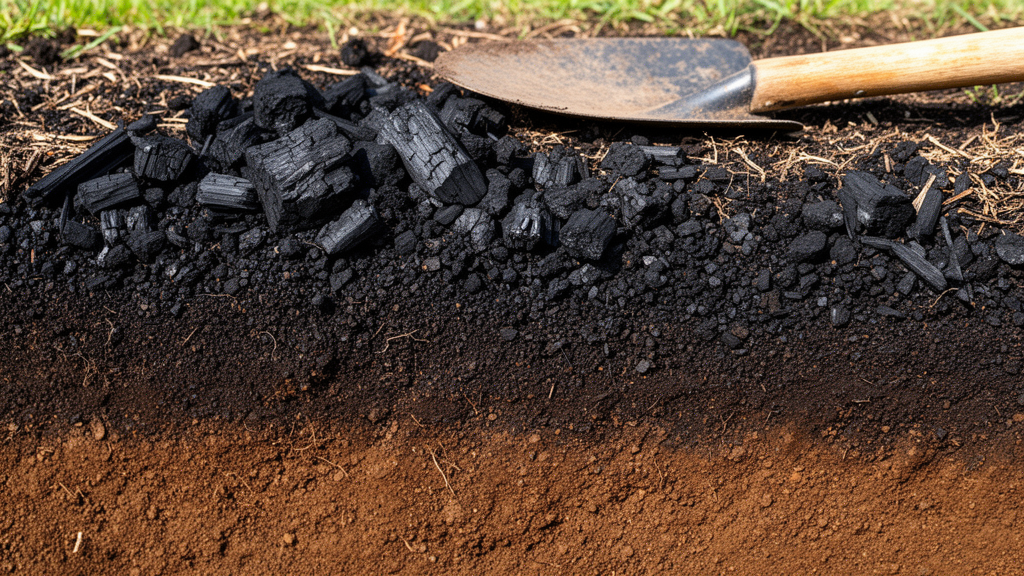
An eight-year field study conducted in Guizhou Province, China, has demonstrated that the agronomic benefits of biochar application to agricultural soils are temporary rather than permanent. The research, published in the journal Biochar, tracked soil nutrient dynamics across two contrasting soil types under continuous tobacco cultivation from 2018 to 2025. The findings challenge the widespread assumption that biochar acts as a permanent soil conditioner, revealing instead that its effects on nutrient availability diminish significantly after three to five years, leading to a complete convergence of treatment effects by the end of the study period.
The study was designed to address the limited understanding of long-term biochar effectiveness under intensive cultivation conditions. While biochar is frequently promoted as a soil amendment for enhancing nutrient availability and carbon sequestration, previous research has largely relied on short-term experiments or single-soil studies. This field trial evaluated five different application rates of biochar, ranging from 0 to 40 tonnes per hectare, in two distinct soil types: a sandy loam Dystrudept and a clay loam Hapludult. The experiment utilized a randomized complete block design with three replicates for each treatment, resulting in 15 plots per site. Flue-cured tobacco served as the test crop throughout the eight-year period, with standard agronomic practices and fertilization programs maintained consistently across all treatments.
Immediately following application in March 2018, biochar produced strong initial responses in soil chemistry. In the Hapludult soil, soil organic carbon increased dramatically from 14.38 g kg⁻¹ in the control plots to 83.59 g kg⁻¹ at the highest application rate of 40 t ha⁻¹. Similarly, soil pH rose sharply, reaching 7.65 in the Hapludult at the 40 t ha⁻¹ rate. These initial changes reflected the alkaline nature of the biochar, which was produced from tobacco stems via pyrolysis at 380–400 °C. The immediate input of nutrients and the liming effect created a pronounced differentiation between the treated plots and the controls during the first growing season.
However, these initial gains were not sustained over time. Soil organic carbon declined sharply during the first year after application, with the 40 t ha⁻¹ treatment in the Hapludult dropping to 23.96 g kg⁻¹ by June 2019. Although values stabilized after this initial drop, the differences among application rates gradually diminished. By the final sampling in October 2025, soil organic carbon levels had converged statistically across all treatments in both soils. This rapid decline suggests that a portion of the biochar-derived carbon was relatively labile under field conditions, consistent with previous studies indicating shorter carbon residence times under intensive agricultural management.
The persistence of biochar effects varied significantly between the two soil types, contradicting conventional predictions based on cation exchange capacity. The sandy loam Dystrudept exhibited a 40% longer persistence of significant treatment effects compared to the clay loam Hapludult. In the Dystrudept, the highest application rate maintained significantly higher soil pH than the control until July 2021, whereas in the Hapludult, treatment differences in pH became statistically indistinguishable by September 2021. This differential sensitivity is attributed to the lower buffering capacity of the sandy soil, which allowed for a stronger initial response to the alkaline biochar. However, under continuous cropping, crop uptake and leaching processes appeared to override the texture-based retention advantages typically associated with clay-rich soils.
Nutrient availability followed similar temporal patterns, with strong initial increases that progressively faded. Available potassium showed one of the strongest responses, rising from 192.34 mg kg⁻¹ in the control to 621.32 mg kg⁻¹ at the 40 t ha⁻¹ rate in the Hapludult in 2018. Despite these high initial concentrations, available potassium levels converged across treatments by 2024–2025. Olsen phosphorus and water-soluble chloride also exhibited strong but transient responses, with chloride levels peaking at 825.20 mg kg⁻¹ in the Dystrudept in September 2018 before declining rapidly. The convergence of these nutrient pools indicates that the initial biochar-derived inputs were gradually leached or removed from the soil system through plant uptake and hydrological transport.
Structural equation modeling was employed to elucidate the mechanistic pathways linking biochar application to nutrient availability. The analysis identified soil pH as the central mediator driving base cation availability, with strong positive pathways from pH to exchangeable calcium and magnesium. In the Hapludult, soil organic carbon emerged as the key regulator of nutrient dynamics, strongly increasing available potassium, which in turn stimulated labile carbon. In contrast, the Dystrudept exhibited stronger direct biochar effects and pH-mediated regulation of phosphorus availability. The models also revealed consistent negative temporal effects, with sampling date significantly reducing soil organic carbon, labile carbon, and pH over time, confirming that temporal processes erode nutrient pools regardless of the initial application rate.
The study identified 20 t ha⁻¹ as the optimal application rate, balancing effectiveness with persistence. While higher rates of 40 t ha⁻¹ generated the most pronounced initial effects, they also experienced the steepest temporal declines and did not extend the duration of benefits. Rates above 40 t ha⁻¹ were noted to potentially accelerate nutrient depletion without providing additional long-term advantages. This threshold effect suggests that maximizing short-term gains through high-rate applications is not a sustainable strategy for long-term soil health. Instead, the findings support the notion that biochar functions primarily as a medium-term amendment, with observable benefits lasting only three to five years before converging toward baseline conditions.
The implications of these findings are significant for agricultural management practices. The study suggests that single high-rate applications of biochar may be insufficient for maintaining agronomic benefits in intensive cropping systems. To sustain soil fertility, farmers may need to adopt soil-specific optimization strategies and consider periodic reapplication. For sandy soils, higher rates of 30–40 t ha⁻¹ may be required to achieve sustained effects, albeit with a greater risk of leaching, while moderate rates of 20–30 t ha⁻¹ may suffice for clay loams. Additionally, nitrogen management may need adjustment during the early years of application to offset potential immobilization effects, as the study observed variable nitrogen dynamics with no consistent long-term enhancement.
Limitations of the study include the use of a single type of biochar produced from tobacco stems, which may not represent the behavior of biochars derived from different feedstocks or pyrolysis conditions. The experiment was also conducted under a continuous tobacco cropping system, and the persistence of biochar effects may differ under other crop rotations or management practices. Furthermore, the study focused on soil chemical dynamics and did not directly measure processes such as nutrient leaching, greenhouse gas emissions, or microbial activity. Future research integrating these processes would provide a more comprehensive understanding of the mechanisms governing the long-term impacts of biochar in agricultural soils.
This research provides critical insights into the temporal dynamics of biochar effects, highlighting the importance of soil type and application rate in determining the longevity of soil amendments. The convergence of treatment effects by year six to eight fundamentally challenges claims of long-term carbon sequestration and sustained fertility improvements from single biochar applications. By identifying the medium-term nature of biochar benefits, the study offers a more realistic framework for managing soil health in intensive agricultural systems, emphasizing the need for adaptive strategies that account for the transient nature of biochar-induced changes.
Subject of Research: Biochar application rates regulate soil nutrient availability: evidence from an 8-year field study across two soils
Article Title: Biochar application rates regulate soil nutrient availability: evidence from an 8-year field study across two soils
Article References: Zhang, J., Li, C., Xu, M., Dong, J., Wang, S., Li, P., & Cai, H. (2026). Biochar application rates regulate soil nutrient availability: evidence from an 8-year field study across two soils. Biochar, 8(1), Article 115. https://doi.org/10.1007/s42773-026-00623-x
Image Credits: AI Generated
DOI: 10.1007/s42773-026-00623-x
Keywords: Biochar, application, rates, regulate, soil, nutrient, availability, evidence, year, field, across, soils
News Source: Alan Morgan. (November 8, 2026). Biochar soil benefits fade within five years. Scienmag.