A comprehensive review of 92 published articles, encompassing 85 pot experiments and 11 field applications, indicates that biochar-immobilized microbes (BIMs) represent a transformative approach to enhancing soil health and crop productivity. Published in the journal Biochar in June 2026, the study synthesizes data from 2018 to 2025 to evaluate the synergistic integration of biochar’s physicochemical advantages with microbial metabolic functions. The research aims to bridge the gap between laboratory-scale innovations and practical farmland applications, addressing the critical threat of soil degradation and contamination to global agricultural sustainability.
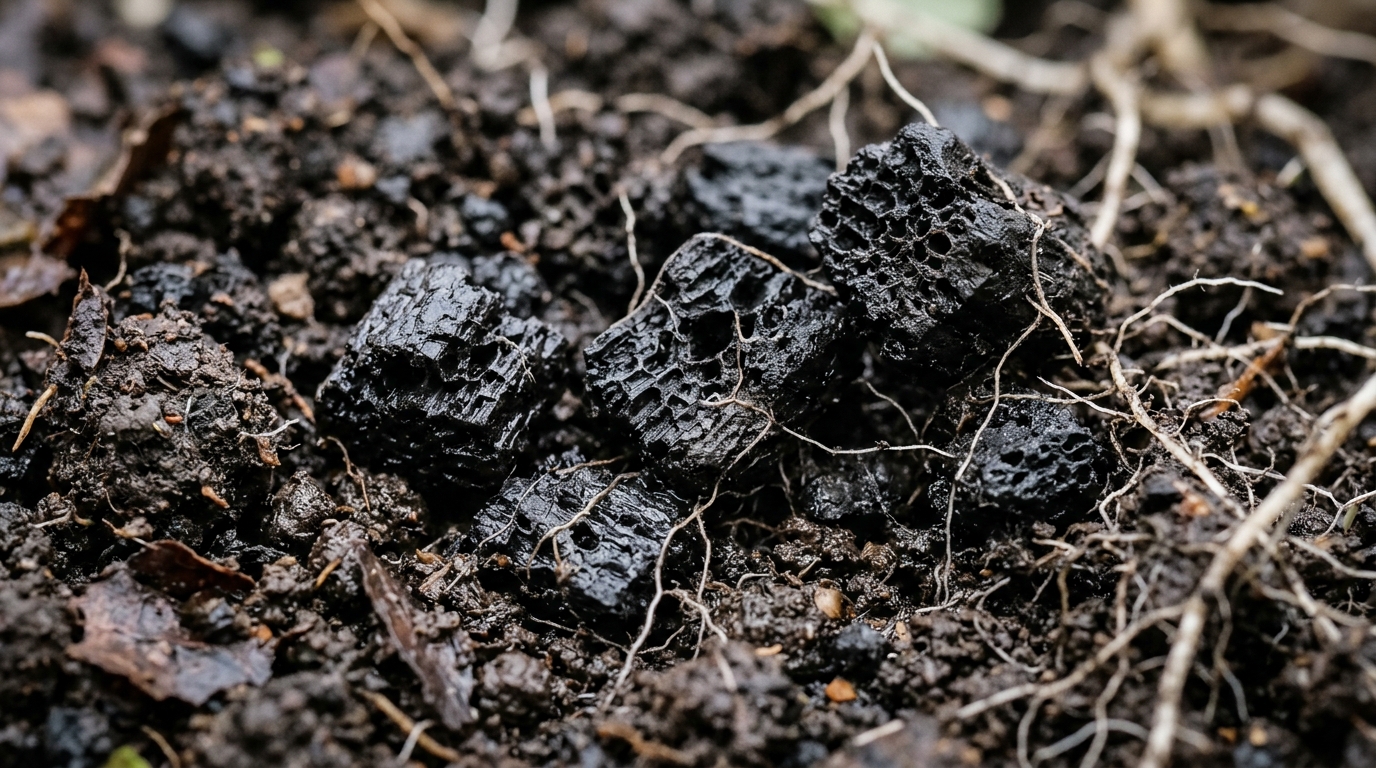
Biochar, a carbon-rich material produced through the pyrolysis of biomass, serves as a stable microbial habitat that enhances colonization through adsorption, entrapment, covalent bonding, and crosslinking. The review highlights that the porous structure of biochar improves soil aeration, water retention, and drainage, while its high surface area provides a thriving environment for beneficial microorganisms. By trapping essential nutrients such as nitrogen, phosphorus, and potassium, biochar stabilizes their bioavailable forms for plants. Furthermore, its alkaline nature neutralizes acidic soils, creating a balanced pH environment that supports diverse plant species and reduces the toxicity of heavy metals.
The immobilization of functional microbes onto biochar is categorized into four primary mechanisms: adsorption, entrapment, covalent bonding, and crosslinking. Adsorption, which relies on physical attractive forces such as van der Waals forces and hydrogen bonds, was the predominant method in the reviewed studies, appearing in 54 of the 92 cases. This technique is characterized by its simplicity, high microbe loading, and cost-effectiveness, though it may result in microbial leakage. Entrapment, often using sodium alginate, physically encloses microbial cells within the biochar matrix to prevent loss into the surrounding environment. Covalent bonding and crosslinking involve chemical reactions that form strong bonds between microbial cells and biochar functional groups, offering superior stability but at higher costs and complexity.
The review quantifies the effects of BIMs on soil properties, noting significant enhancements in physicochemical and biological parameters. In the cases reviewed, soil pH increased by 0.5 to 1.5 units, while cation exchange capacity rose by 12.25% to 39.05%. These improvements contribute to effective remediation of contaminated soils, with reported efficiencies reaching up to 95% for heavy metals and 90% for organic pollutants. The data indicate that BIMs elevate soil enzyme activities, including urease and dehydrogenase, and improve aeration and water retention capacity. The combination of biochar and microbes markedly increased alpha diversity indices in soil microbial communities, with the Shannon index rising by an average of 30.85% in pot experiments.
Comparative analyses across treatment groups consistently demonstrated that BIMs outperform standalone biochar or microbial treatments. For inorganic pollutants, the control group exhibited a natural immobilization efficiency of 14.3%, while biochar alone and microbes alone increased removal to 26.2% and 42.4%, respectively. The BIM group further increased the removal rate to 94.7%, with the highest reported rate of 95% achieved using a complex of Bacillus XZM immobilized on rice husk biochar. Similarly, for organic pollutants, BIMs achieved up to 97.64% degradation. This superior performance suggests that biochar not only serves as an effective sorbent but also enhances microbial survival, establishing synergistic mechanisms for sustainable pollutant removal.
Field applications demonstrate that BIMs can enhance crop yields by up to 45%, primarily through improved nutrient availability and stress resilience. In pot experiments, BIMs increased root length by 32.10% and root dry weight by 40.05% compared to controls. Specific studies reported even higher gains; for instance, soil amendment with BIMs significantly enhanced chili pepper yield by 66.86% compared to the control group. The review notes that early plant growth critically determines crop yield, and BIMs mitigate stressors during this phase by improving root health and nutrient acquisition. The combined treatment of plant growth-promoting rhizobacteria and biochar revealed a significant synergistic effect, enhancing root length and shoot length by 70% and 82%, respectively, compared to drought-stressed controls.
Despite the promising results from controlled environments, the transition from laboratory-scale research to field validation presents significant challenges. Field trials show variable microbial survival under climatic stresses, with the efficiency of field BIMs for inorganic contaminants at 70.2% and for organic contaminants at 80.1%, moderately lower than pot trial results. This discrepancy is likely attributed to climatic variability and competition from indigenous microorganisms. The scarcity of field studies, with only 11 out of 92 reviewed articles involving field tests, highlights the need for more long-term, on-farm studies to elucidate the impacts of BIMs on soil microbial diversity and crop productivity in real-world agricultural scenarios.
The review emphasizes the importance of dose optimization, noting that the global median market price for biochar ranges from 1 to 2710 USD per ton. For the remediation of moderately to heavily contaminated soils, a relatively high application dose of 2–5% w/w is typically required to provide sufficient adsorption sites and support for functional microorganisms. In contrast, for supplementary applications to improve soil fertility, a lower rate of 1–3% w/w is often adequate. The lack of field-based dose-effect data often leads to inefficient and high-dose applications, underscoring the need for integrated models that align economic viability with desired remediation outcomes.
Future research must prioritize long-term field validations, lifecycle assessments, and farmer-centric optimization to unlock the full potential of BIMs. The review suggests that advanced delivery technologies, such as microencapsulation and sodium alginate embedding, should be developed to enhance microbial resistance to stressors like drought and UV radiation. Additionally, the integration of synthetic biology, including CRISPR-engineered microbial strains, could lead to advanced remediation systems with enhanced functionality. A proactive risk-assessment protocol is essential to address potential ecological concerns, such as microbial dispersal and horizontal gene transfer, ensuring the sustainable implementation of BIM technology.
By systematically bridging lab innovations to farmland practicality, BIMs align with the UN Sustainable Development Goals, offering a promising pathway for soil restoration and sustainable agriculture. The review establishes a data-intensive paradigm, moving beyond narrative synthesis to deliver a quantitative knowledge landscape of the field. As soil degradation and contamination continue to pose critical threats, the synergistic efficacy of biochar-immobilized microbes provides a scalable solution for food security and environmental protection, provided that rigorous field studies and standardized operational protocols are established.
Beyond broad categorization, the reviewed literature details specific technical parameters governing biochar preparation and bacterial loading. Across the surveyed studies, crop residues served as the predominant feedstocks, with straw utilized in 52 of the 92 cases alongside materials such as rice husk and corn straw. Biomass was typically dried at 80 degrees Celsius, ground to fine powders, and pyrolyzed between 400 and 700 degrees Celsius under nitrogen flow. Researchers standardized preparation protocols by selecting biochar particle sizes between 0.15 and 2 millimeters, while isolating resilient strains, primarily from the genera Bacillus and Pseudomonas, through sequential transfers in enrichment media containing target contaminants as exclusive carbon or nitrogen sources. Microbial inoculation was commonly conducted at a carrier-to-suspension ratio of 1:10 to 1:20 weight by volume, utilizing cell suspensions normalized to an optical density of approximately 1.0 or viable counts near 100 million colony-forming units per milliliter over a 24-hour incubation period.
At the micro-interface, microbial colonization relies on cellular surface properties and structural characteristics of the carrier. Bacterial surface hydrophobicity governs initial physical adhesion to the hydrophobic carbon matrix, while electrostatic interactions between charged microbial walls and oxygen-containing functional groups, such as carboxyl and phenolic hydroxyl groups, regulate attachment. Furthermore, bacterial secretion of extracellular polymeric substances acts as a biological adhesive that neutralizes cell charges, diminishes electrostatic repulsion, and secures colonies within biochar pores. To verify successful immobilization, researchers employ three primary quantification methods: tracking supernatant optical density differentials before and after carrier exposure, plate colony counting to determine viable biomass in colony-forming units per gram of carrier, and real-time quantitative polymerase chain reaction to measure target gene copy numbers across matrix samples.
In agricultural soils, these complexes actively reshape biochemical pathways and disease dynamics. Individual studies compiled in the review demonstrate tangible chemical shifts, such as an increase in soil cation exchange capacity from 8.77 to 24.42 centimoles per kilogram following inoculation with Bacillus aryabhattai, and a 37.7 percent rise in the soil carbon pool management index driven by soluble organic carbon released during straw biochar decomposition. Concurrently, beneficial inoculants suppress crop pathogens and synthesize plant growth-promoting regulators. Strains such as Arthrobacter creatinolyticus secrete up to 68.9 milligrams per milliliter of indole-3-acetic acid to stimulate root hair density and lateral branching. When deployed against plant diseases, composites loaded with Bacillus subtilis SL-44 decreased the incidence of radish fusarium wilt by 59.88 percent, while strain Tbp55 achieved 79.60 percent biocontrol efficacy against tobacco disease, demonstrating pathogen inhibition through environmental buffering and antimicrobial secretion.
Plant physiological performance also responds directly to these amendments through accelerated development and enhanced photosynthetic activity. In phosphorus-deficient soils, thirty days of treatment with cotton straw biochar carrying phosphorus-solubilizing bacteria expanded tomato root length by 375 percent, raised dry root weight by 80 percent, and elevated total chlorophyll content by 63 percent while modulating photosystem II energy dissipation. However, addressing the long-term persistence and safety of applied strains remains essential. The authors recommend establishing an integrated monitoring framework that dynamically tracks functional microbial genes, including the nitrogen-fixing gene nifH and the denitrification gene nosZ, alongside soil chemical parameters. Coupling targeted genetic monitoring with porous carrier design and structured ecological risk assessment provides a systematic safeguard to prevent nutrient imbalances, limit off-target microbial dissemination, and verify functional longevity under real-world agricultural conditions.
Subject of Research: Efficacy of biochar-immobilized microbes in soil remediation and agricultural enhancement
Article Title: Biochar immobilized microbes for sustainable soil remediation and agriculture enhancement: from lab to farmland
Article References: Li, X., Lyu, Q., Han, C., Duan, N., Liu, Z., Gao, M., & Zhao, X. (2026). Biochar immobilized microbes for sustainable soil remediation and agriculture enhancement: from lab to farmland. Biochar, 8(1), Article 107. https://doi.org/10.1007/s42773-026-00613-z
Image Credits: AI Generated
DOI: 10.1007/s42773-026-00613-z
Keywords: biochar, soil remediation, microbial immobilization, sustainable agriculture, crop yield, heavy metals, organic pollutants, field trials, soil health, pyrolysis, immobilized, microbes
News Source: Alan Morgan. (November 9, 2026). Biochar-Microbe Composites Show Promise for Soil Cleanup. Scienmag.