Agricultural soils are rarely exposed to just one stressor at a time, yet most risk assessments still evaluate pollutants in isolation. A new experimental study finds that earthworms experience far greater behavioral stress when copper and a commercial glyphosate formulation are present together than when either chemical is applied alone. The results suggest that mixture effects in real fields may be underestimated.
Researchers focused on copper, commonly used in fungicides and vineyards, and glyphosate, a widely deployed herbicide. Copper can accumulate in soil to harmful levels over repeated applications, while glyphosate can persist long enough to interact with other contaminants. Because farmers may apply both products during overlapping periods, simultaneous exposure is a realistic scenario for soil organisms.
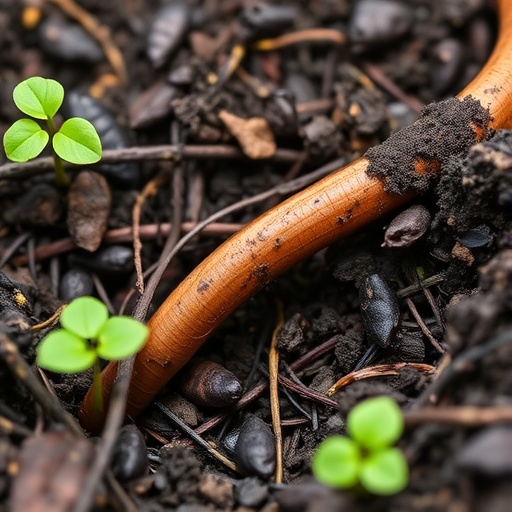
To probe ecological risk, the team used the earthworm Eisenia fetida, a standard bioindicator for soil quality. Earthworms were tested in a 48-hour avoidance assay, where individuals could move between uncontaminated soil and soils containing copper, glyphosate formulation, or both at varying concentrations. Avoidance is an early-warning behavioral endpoint that can precede mortality or reproductive damage.
When tested separately, both contaminants triggered concentration-dependent avoidance. Glyphosate led to avoidance rates of roughly 40–60%, while copper produced avoidance spanning about 40–87%. However, combining the chemicals intensified the response across the concentration range.
In mixture treatments, avoidance rose from 60% at the lowest combined dose to 100% at the highest dose. Importantly, even moderate co-exposure produced stronger avoidance than the corresponding single-contaminant conditions, indicating a synergistic or otherwise enhanced interaction.
The authors propose mechanisms that may explain the heightened stress: glyphosate can bind metal ions such as copper, while elevated copper may suppress microorganisms responsible for glyphosate degradation. In addition, commercial formulation additives could increase toxicity. Together, these factors may raise the bioavailable fraction of harmful compounds.
To test mitigation, the researchers amended soils with 1% biochar (about 20 metric tons per hectare). Biochar did not fully remove the effects, but it significantly reduced avoidance by 29% in one mixed condition and by 27% in the most contaminated treatment. Its porous structure and reactive surface chemistry likely help immobilize copper and glyphosate.
The study used standardized artificial soil to ensure control and reproducibility, but the authors note that natural soils are more complex and could modify contaminant behavior. Longer exposure windows and additional endpoints beyond behavior may be needed before translating results to the field.
Still, the findings highlight two practical messages for environmental risk management: mixture-aware bioassays like earthworm avoidance tests can rapidly detect combined threats, and biochar may improve the biological habitability of polluted agricultural soils.
===
Subject of Research: Mixed exposure of copper and commercial glyphosate formulation; mitigation with biochar in Eisenia fetida avoidance assays
Article Title: Mitigating the effects of copper and commercial glyphosate formulations with biochar: insights from Eisenia fetida avoidance assays
News Publication Date: 13-May-2026
Web References: https://doi.org/10.48130/bchax-0026-0013
References: Sousa JR, Matos C, Azevedo T, Gonçalves EN, Rajput VD, et al. 2026. Biochar X 2: e015. doi:10.48130/bchax-0026-0013
Image Credits: João Ricardo Sousa, Carolina Matos, Tiago Azevedo, Elisabete Nascimento Gonçalves, Vishnu D. Rajput, Abhishek Singh, Karen Ghazaryan, Francisco Saraiva, Tao Zhang & Rupesh Kumar Singh
Keywords
Biochar, copper, glyphosate, mixture toxicity, earthworm avoidance, Eisenia fetida, ecotoxicology, soil habitability, bioavailability, mitigation
Tags: bioindicators of soil healthcombined chemical stressors in agriculturecopper and glyphosate mixture effectsearthworm avoidance assayearthworm behavioral stressecological risk assessmentenvironmental impact of herbicide and fungicide interactionsimpact of pesticides and fungicides on soil organismssoil contamination by copper and glyphosatesoil organism toxicity testingsoil pollutionsustainable farming and soil conservation