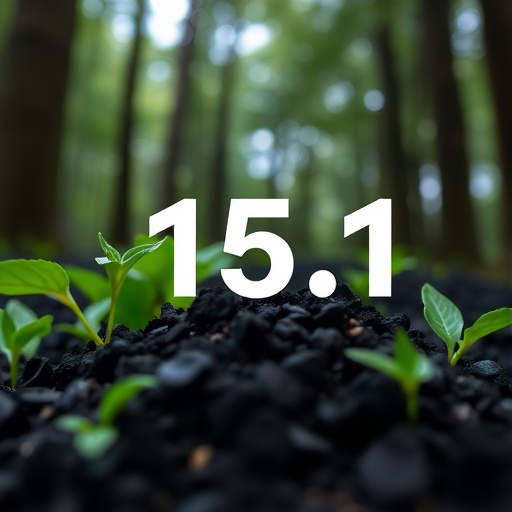
In a remarkable achievement for the scientific community focused on biochar and its multifaceted applications, the international academic journal BIOCHAR has ascended to unprecedented heights with the announcement of its 2025 Impact Factor reaching an impressive 15.1. This latest metric, revealed by the 2026 Journal Citation Reports published by Clarivate, underscores the journal’s influential role at the nexus of soil science, environmental sustainability, and carbon management. Over the past five years, BIOCHAR has maintained its supremacy as the leading publication worldwide within soil science, a position indicative of the vital contributions it makes to understanding and advancing soil health, sustainable agricultural practices, and ecological preservation.
The significance of this milestone extends beyond mere ranking. BIOCHAR’s prominence in the scientific landscape reflects the expanding scope and interdisciplinary nature of biochar research, emphasizing the journal’s capacity to integrate diverse strands of inquiry in agronomy, environmental science, and green technology. Sitting at number one for soil science journals over a half-decade demonstrates the journal’s unwavering commitment to quality and its pivotal role in shaping research agendas that address global challenges such as climate change, soil degradation, and carbon emissions.
Moreover, BIOCHAR’s impact resonates strongly within environmental sciences as a whole, where it secures an outstanding position as the 11th most cited journal out of 395 ranked. This places it firmly in the first quartile (Q1), a testament to the journal’s broad interdisciplinary relevance and influence. Its articles attract citations across multiple fields, including environmental remediation, carbon sequestration techniques, and sustainable material science, illustrating the journal’s role as a hub for innovative research that bridges traditional disciplinary boundaries and drives policy and technological solutions.
The journey of BIOCHAR began with a focused mission: to catalyze advancements in biochar and related carbon materials, informing and inspiring a global network of researchers committed to addressing carbon cycle dynamics, pollution control, and soil improvement methodologies. The diverse range of topics published—inclusive of biomass conversion processes, enhanced soil amendment techniques, pollutant absorption, and climate mitigation strategies—shed light on the complex interactions between biochar applications and environmental outcomes. These contributions are critical for developing sustainable practices that can be scaled to meet pressing environmental demands.
This influential publication platform is distinguished by its rigor and academic depth, providing a venue for original research, comprehensive reviews, and insightful commentary that collectively push the boundaries of knowledge on biochar science. Through advancing our understanding of biochar’s physicochemical properties and its role in carbon sequestration, it paves the way for breakthroughs in renewable energy, reduction of greenhouse gases, and enhancement of ecosystem services. Each volume reflects the latest innovations and experimental results, providing stakeholders—from soil scientists and environmental engineers to policymakers—with evidence-based insights needed for formulating impactful solutions.
The journal’s editorial vision emphasizes the integration of multidisciplinary perspectives, fostering collaboration among experts in chemistry, environmental engineering, agronomy, and material sciences. By emphasizing studies that elucidate mechanisms of biochar production, characterization, and application across varying environmental contexts, BIOCHAR furnishes a robust framework for evaluating the efficacy and environmental footprint of biochar technologies. This blend of fundamental science with applied research is essential for translating laboratory findings to real-world environmental management and climate resilience initiatives.
In light of the journal’s ranking accomplishments, the scientific community is afforded a sharper lens through which to interpret research trends and emerging priorities. The sustained leading position signals a growing recognition of biochar not only as a soil amendment but also as a potent tool for addressing carbon management challenges. It highlights the escalating demand for innovative carbon-negative technologies in the global effort to curb climate change. By facilitating knowledge dissemination, BIOCHAR accelerates the development of sustainable technologies that harness the carbon-rich potential of biochar to enhance agricultural productivity whilst mitigating environmental impacts.
Furthermore, the impact factor milestone emphasizes the importance of open knowledge exchange within the complex realms of environmental science and Earth systems. As global environmental crises intensify, journals like BIOCHAR are vital in convening a scholarly conversation that is both cutting-edge and practically oriented, enabling researchers worldwide to align scientific discovery with implementation strategies. The reach and reputational strength of BIOCHAR amplify the scientific dialogue surrounding biochar’s role in soil remediation, pollutant adsorption, and water quality enhancement, thereby influencing future policy frameworks and environmental stewardship practices.
The journal’s contribution also extends to enhancing climate-focused agendas, as biochar research directly interfaces with the United Nations Sustainable Development Goals, especially those related to climate action, life on land, and clean water. Through publishing pivotal studies on carbon sequestration efficacy and biochar’s multifunctional applications, BIOCHAR shapes the scientific foundation necessary for advancing climate mitigation technologies and promoting resilient ecosystems. Its interdisciplinary impact supports integrated approaches that recognize the complexity of Earth systems and the necessity for harmonized environmental solutions.
BIOCHAR unequivocally stands as an essential resource for researchers devoted to advancing knowledge about biochar’s multifarious roles—from its impacts at the molecular and soil microbiome levels to system-wide environmental benefits. The journal’s continued excellence and rising influence invigorate global efforts to valorize biochar as a sustainable technology core to mitigating anthropogenic environmental pressures. As the demand grows for innovations in green technology and environmental sustainability, BIOCHAR’s position at the forefront of this field is both timely and indispensable.
The 2025 Impact Factor achievement not only celebrates past accomplishments but also heralds a prospective future where BIOCHAR facilitates transformative research contributions. Its leadership role will continue to inspire innovative research pathways and foster collaborative networks, pushing biochar science beyond conventional boundaries and unlocking new potential for global environmental solutions. With its extensive interdisciplinary reach, the journal epitomizes academic excellence and practical relevance, serving as a beacon for scientists, engineers, and policymakers worldwide.
Ultimately, BIOCHAR’s ascent underlines the vital importance of dedicated scientific platforms that pursue specialized yet integrative research domains. This milestone invites researchers and practitioners alike to engage deeply with biochar technologies, fostering advancements that are critical to sustainable agriculture, environmental remediation, and carbon cycle management. As a nexus of interdisciplinary knowledge, BIOCHAR empowers the global scientific community to meet ecological challenges head-on, driving innovation that promotes a healthier planet.
Subject of Research: Biochar science and technology, including biochar production, carbon sequestration, soil improvement, pollutant remediation, and climate mitigation.
Article Title: BIOCHAR Achieves Unprecedented 15.1 Impact Factor, Reinforcing Global Leadership in Soil and Environmental Sciences
News Publication Date: June 17, 2026
Web References:
Biochar Journal on Springer
BIOCHAR Facebook
BIOCHAR Twitter (X)
BIOCHAR Bluesky
Image Credits: Biochar Editorial Office, Shenyang Agricultural University
Keywords
Biochar, Soil Science, Environmental Sciences, Carbon Sequestration, Carbon Capture, Environmental Remediation, Environmental Management, Sustainable Agriculture, Climate Mitigation, Biomass Conversion, Pollutant Remediation, Green Technology
Tags: biochar research impact factor 2025carbon management innovationsclimate change mitigation strategiesecological preservation scienceenvironmental sustainability studiesglobal soil degradation solutionsgreen technology in agricultureinterdisciplinary biochar applicationsleading environmental science publicationssoil health advancement researchsoil science journal rankingsustainable agricultural practices research