• HOME
  • NEWS
  • EXPLORE
    • CAREER
      • Companies
      • Jobs
    • EVENTS
    • iGEM
      • News
      • Team
    • PHOTOS
    • VIDEO
    • WIKI
  • BLOG
  • COMMUNITY
    • FACEBOOK
    • INSTAGRAM
    • TWITTER
Tuesday, May 19, 2026
BIOENGINEER.ORG
No Result
View All Result
  • Login
  • HOME
  • NEWS
  • EXPLORE
    • CAREER
      • Companies
      • Jobs
        • Lecturer
        • PhD Studentship
        • Postdoc
        • Research Assistant
    • EVENTS
    • iGEM
      • News
      • Team
    • PHOTOS
    • VIDEO
    • WIKI
  • BLOG
  • COMMUNITY
    • FACEBOOK
    • INSTAGRAM
    • TWITTER
  • HOME
  • NEWS
  • EXPLORE
    • CAREER
      • Companies
      • Jobs
        • Lecturer
        • PhD Studentship
        • Postdoc
        • Research Assistant
    • EVENTS
    • iGEM
      • News
      • Team
    • PHOTOS
    • VIDEO
    • WIKI
  • BLOG
  • COMMUNITY
    • FACEBOOK
    • INSTAGRAM
    • TWITTER
No Result
View All Result
Bioengineer.org
No Result
View All Result
Home NEWS Science News Biology

Binding with consequences

Bioengineer by Bioengineer
March 6, 2019
in Biology
Reading Time: 3 mins read
0
IMAGE
Share on FacebookShare on TwitterShare on LinkedinShare on RedditShare on Telegram

IMAGE

Credit: Source: Ella Levit-Zerdoun

A research team led by Prof. Dr. Winfried Römer and Dr. Elias Hobeika from the University of Freiburg and the University Medical Center in Ulm has discovered a mechanism with which bacteria activate white blood cells and attack an organism’s immune system. The scientists recently published the results in the journal Science Signaling.

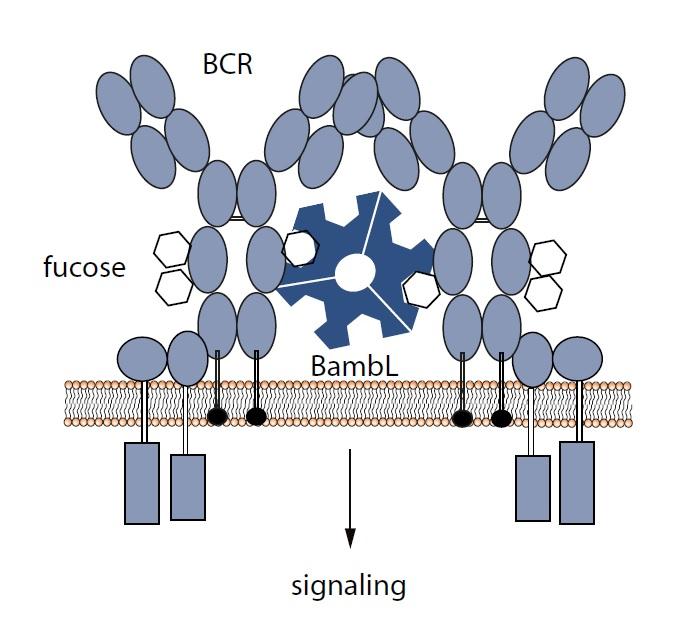
The bacterial species Burkholderia ambifaria belongs to a group of bacterial strains that can cause infections in immunocompromised hosts. These bacteria produce so-called lectins, proteins that bind to carbohydrates. Among other things, lectin BambL is able to bind to the B-cell antigen receptor (BCR). This protein is located on the surface of B cells, which belong to the white blood cells. The antigen receptor consists of a variable and a constant region that also carries several carbohydrate residues. With its variable region, it specifically binds antigens, which also include pathogens. Inside the cell, it serves as a docking site for further molecules that trigger signaling processes in the immune cell. B cells are activated and mature into effector cells, the so-called plasma cells, which produce large amounts of antibodies against pathogens.

The researchers found out that lectin BambL binds to the carbohydrate residues of the antigen receptor in a controlled and artificial environment and thus activates the B cells: “We were surprised that a bacterial lectin initiates the strictly regulated antigen receptor signaling pathway,” says Dr. Isabel Wilhelm, a first author of the study. Prolonged stimulation with BambL led to the rapid death of the white blood cells. The process was only possible in cells with an intact antigen receptor.

The lectin injection into mice led to an immune response within three days, which showed increased amounts of B-cells in the spleen and their decrease in the bone marrow. Symptoms decreased in animals with fully functional immune systems within seven days. “However, there may be a risk for immunocompromised patients if they are unable to build up an effective response to pathogens,” says Dr. Ella Levit-Zerdoun, another lead author of the study.

Researchers from the BIOSS and CIBSS clusters of excellence in biological signaling research, the Spemann Graduate School of Biology and Medicine at the University of Freiburg, the Max Planck Institute of Immunobiology and Epigenetics and the University Medical Center in Ulm were involved in the work. The discovery of the mechanism provides the team with the opportunity for further investigations. The focus will be on the effects of the Burkholderia ambifaria pathogen on humans, possible preventive measures and treatment methods.

###

Original publication:
Wilhelm, I., Levit-Zerdoun, E., Jakob, J., Villringer, S., Frensch, M., Übelhart, R., Landi, A., Müller, P., Imberty, A., Thuenauer, R., Claudinon, J., Jumaa, H., Reth, M., Eibel, H., Hobeika, E. & Römer, W. (2019): Carbohydrate-dependent B cell activation by fucose-binding bacterial lectins. In: Science Signaling. DOI: 10.1126/scisignal.aao7194

Contact:

Faculty of Biology, BIOSS and CIBSS

University of Freiburg

[email protected]

Dr. Elias Hobeika

Institute of Immunology

Ulm University Medical Center

Tel.: 0731/500-65215

[email protected]

Media Contact
Dr. Winfried Römer

49-761-203-67500

Original Source

https://www.pr.uni-freiburg.de/pm-en/press-releases-2018/binding-with-consequences

Related Journal Article

http://dx.doi.org/10.1126/scisignal.aao7194

Tags: BiologyCell BiologyMicrobiology
Share13Tweet8Share2ShareShareShare2

Related Posts

New Insights into How Smoking Causes Lung Stiffness — Biology

New Insights into How Smoking Causes Lung Stiffness

May 19, 2026
Breakthrough Cancer Treatment Effective Across All Organ Types — Biology

Breakthrough Cancer Treatment Effective Across All Organ Types

May 18, 2026

Butyrate Alleviates Temporomandibular Joint Pain via Epigenetic Mechanisms

May 18, 2026

How Hibernation Impacts Visual Processing in Squirrels’ Brains

May 18, 2026
Please login to join discussion

POPULAR NEWS

  • Research Indicates Potential Connection Between Prenatal Medication Exposure and Elevated Autism Risk

    845 shares
    Share 338 Tweet 211
  • New Study Reveals Plants Can Detect the Sound of Rain

    731 shares
    Share 292 Tweet 182
  • Salmonella Haem Blocks Macrophages, Boosts Infection

    62 shares
    Share 25 Tweet 16
  • Breastmilk Balances E. coli and Beneficial Bacteria in Infant Gut Microbiomes

    58 shares
    Share 23 Tweet 15

About

We bring you the latest biotechnology news from best research centers and universities around the world. Check our website.

Follow us

Recent News

AI Revolutionizes Mental Health Care: New Reichman University Study Led by Prof. Anat Shoshani Unveils Therapy at Your Fingertips

Persistent Inequities Continue to Impact Cardiovascular Disease Burden and Care

New Insights into How Smoking Causes Lung Stiffness

Subscribe to Blog via Email

Enter your email address to subscribe to this blog and receive notifications of new posts by email.

Join 82 other subscribers
  • Contact Us

Bioengineer.org © Copyright 2023 All Rights Reserved.

Welcome Back!

Login to your account below

Forgotten Password?

Retrieve your password

Please enter your username or email address to reset your password.

Log In
No Result
View All Result
  • Homepages
    • Home Page 1
    • Home Page 2
  • News
  • National
  • Business
  • Health
  • Lifestyle
  • Science

Bioengineer.org © Copyright 2023 All Rights Reserved.