

• HOME
  • NEWS
  • EXPLORE
    • CAREER
      • Companies
      • Jobs
    • EVENTS
    • iGEM
      • News
      • Team
    • PHOTOS
    • VIDEO
    • WIKI
  • BLOG
  • COMMUNITY
    • FACEBOOK
    • INSTAGRAM
    • TWITTER
Tuesday, September 15, 2026
BIOENGINEER.ORG
No Result
View All Result
  • Login
  • HOME
  • NEWS
  • EXPLORE
    • CAREER
      • Companies
      • Jobs
        • Lecturer
        • PhD Studentship
        • Postdoc
        • Research Assistant
    • EVENTS
    • iGEM
      • News
      • Team
    • PHOTOS
    • VIDEO
    • WIKI
  • BLOG
  • COMMUNITY
    • FACEBOOK
    • INSTAGRAM
    • TWITTER
  • HOME
  • NEWS
  • EXPLORE
    • CAREER
      • Companies
      • Jobs
        • Lecturer
        • PhD Studentship
        • Postdoc
        • Research Assistant
    • EVENTS
    • iGEM
      • News
      • Team
    • PHOTOS
    • VIDEO
    • WIKI
  • BLOG
  • COMMUNITY
    • FACEBOOK
    • INSTAGRAM
    • TWITTER
No Result
View All Result
Bioengineer.org
No Result
View All Result
Home NEWS Science News Health

Biguanide derivative 4C boosts talazoparib by triggering ferroptosis in bladder cancer

Bioengineer by Bioengineer
July 28, 2026
in Health
Reading Time: 2 mins read
0
Share on FacebookShare on TwitterShare on LinkedinShare on RedditShare on Telegram

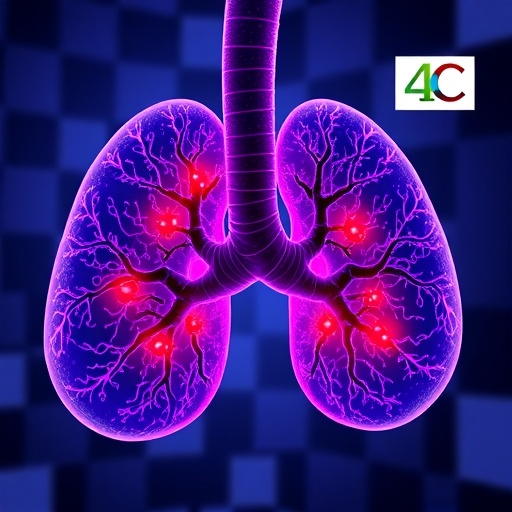
A new preclinical study reports that a previously underexplored biguanide-based compound, 4C, can dramatically enhance the anticancer effects of talazoparib in bladder cancer models. Published in Cell Death Discovery, the work frames the synergy in terms of ferroptosis—an iron-dependent, lipid peroxidation–driven form of cell death distinct from classical apoptosis.

Researchers focus on the molecular circuitry connecting lipid metabolism to ferroptotic vulnerability. They show that treatment with 4C primes tumor cells by reshaping metabolic signaling, while talazoparib—known for its DNA damage–amplifying activity through PARP inhibition—adds a stress context that ferroptosis can exploit.

Central to the mechanism is the SREBP1/FASN/ SLC7A11/GPX4 axis, a pathway that coordinates fatty acid synthesis, antioxidant capacity, and membrane lipid protection. According to the authors, 4C suppresses SREBP1-driven lipogenic output through FASN, leading to altered lipid composition and greater susceptibility to peroxidation.

At the same time, the study links this metabolic shift to downstream impairment of SLC7A11, a key cystine transporter that supports glutathione production. With glutathione supply disrupted, GPX4—an enzyme that uses glutathione to neutralize lipid radicals—loses functional protection.

The combined outcome is an accumulation of lethal lipid oxidative damage, culminating in ferroptotic cell death. Importantly, the synergy is not described as a generic additive effect; the experiments are interpreted as evidence that 4C actively reprograms ferroptosis readiness, making talazoparib-treated cancer cells fail to mount an effective lipid-defense response.

These findings also carry a translational implication: therapies that combine DNA repair stress with ferroptosis induction may overcome resistance mechanisms that limit PARP inhibitors. If the signaling axis holds in broader contexts, monitoring components such as SLC7A11 and GPX4 could help identify tumors most likely to benefit.

While the report is currently positioned in preclinical territory, its viral-science framing is clear: a metabolic “switch” delivered by a biguanide derivative could convert talazoparib exposure into a ferroptosis-triggering regime in bladder cancer.

DOI: https://doi.org/10.1038/s41420-026-03270-0

Tags: biguanide derivatives in cancer treatmentbladder cancer therapycombination therapy for cancerferroptosis induction in cancer cellsiron-dependent cell death mechanismslipid metabolism in ferroptosislipid peroxidation-driven cell deathmetabolic reprogramming in cancer therapyovercoming drug resistance in bladder cancerpreclinical cancer researchSREBP1/FASN/SLC7A11/GPX4 pathwaytalazoparib and PARP inhibition


Share12Tweet7Share2ShareShareShare1

Related Posts

Ancient Chinese Herbal Formula Decoded: How Danggui Buxue Decoction Fights Chronic Kidney Disease

September 14, 2026

Falls Are Rising Sharply Among Older Adults in Ireland, Landmark 15-Year Study Finds

September 14, 2026

Nurses’ Disaster Readiness Hinges on Both Hospital Resources and Psychological Strength, Study Finds

September 14, 2026

Therapeutic Family Camps Bring Healing and Hope to Aboriginal Children in Remote Australia

September 13, 2026

POPULAR NEWS

  • Ancient Chinese Herbal Formula Decoded: How Danggui Buxue Decoction Fights Chronic Kidney Disease

    29 shares
    Share 12 Tweet 7
  • Polariton OLEDs Combine Narrowband Color, Angle Stability and High Efficiency Through TADF

    29 shares
    Share 12 Tweet 7
  • Falls Are Rising Sharply Among Older Adults in Ireland, Landmark 15-Year Study Finds

    29 shares
    Share 12 Tweet 7
  • Sintering Rewritten: New Review Maps How Aluminum Powders Shed Their Oxide Skin and Gain Strength

    29 shares
    Share 12 Tweet 7

About

We bring you the latest biotechnology news from best research centers and universities around the world. Check our website.

Follow us

Recent News

Ancient Chinese Herbal Formula Decoded: How Danggui Buxue Decoction Fights Chronic Kidney Disease

Polariton OLEDs Combine Narrowband Color, Angle Stability and High Efficiency Through TADF

Falls Are Rising Sharply Among Older Adults in Ireland, Landmark 15-Year Study Finds

Subscribe to Blog via Email

Enter your email address to subscribe to this blog and receive notifications of new posts by email.

Join 85 other subscribers
  • Contact Us

Bioengineer.org © Copyright 2023 All Rights Reserved.

Welcome Back!

Login to your account below

Forgotten Password?

Retrieve your password

Please enter your username or email address to reset your password.

Log In
No Result
View All Result
  • Homepages
    • Home Page 1
    • Home Page 2
  • News
  • National
  • Business
  • Health
  • Lifestyle
  • Science

Bioengineer.org © Copyright 2023 All Rights Reserved.