• HOME
  • NEWS
  • EXPLORE
    • CAREER
      • Companies
      • Jobs
    • EVENTS
    • iGEM
      • News
      • Team
    • PHOTOS
    • VIDEO
    • WIKI
  • BLOG
  • COMMUNITY
    • FACEBOOK
    • INSTAGRAM
    • TWITTER
Monday, May 25, 2026
BIOENGINEER.ORG
No Result
View All Result
  • Login
  • HOME
  • NEWS
  • EXPLORE
    • CAREER
      • Companies
      • Jobs
        • Lecturer
        • PhD Studentship
        • Postdoc
        • Research Assistant
    • EVENTS
    • iGEM
      • News
      • Team
    • PHOTOS
    • VIDEO
    • WIKI
  • BLOG
  • COMMUNITY
    • FACEBOOK
    • INSTAGRAM
    • TWITTER
  • HOME
  • NEWS
  • EXPLORE
    • CAREER
      • Companies
      • Jobs
        • Lecturer
        • PhD Studentship
        • Postdoc
        • Research Assistant
    • EVENTS
    • iGEM
      • News
      • Team
    • PHOTOS
    • VIDEO
    • WIKI
  • BLOG
  • COMMUNITY
    • FACEBOOK
    • INSTAGRAM
    • TWITTER
No Result
View All Result
Bioengineer.org
No Result
View All Result
Home NEWS Science News Biology

Big and strong may not last as long, according to UBC prof

Bioengineer by Bioengineer
August 23, 2017
in Biology
Reading Time: 2 mins read
0
Share on FacebookShare on TwitterShare on LinkedinShare on RedditShare on Telegram
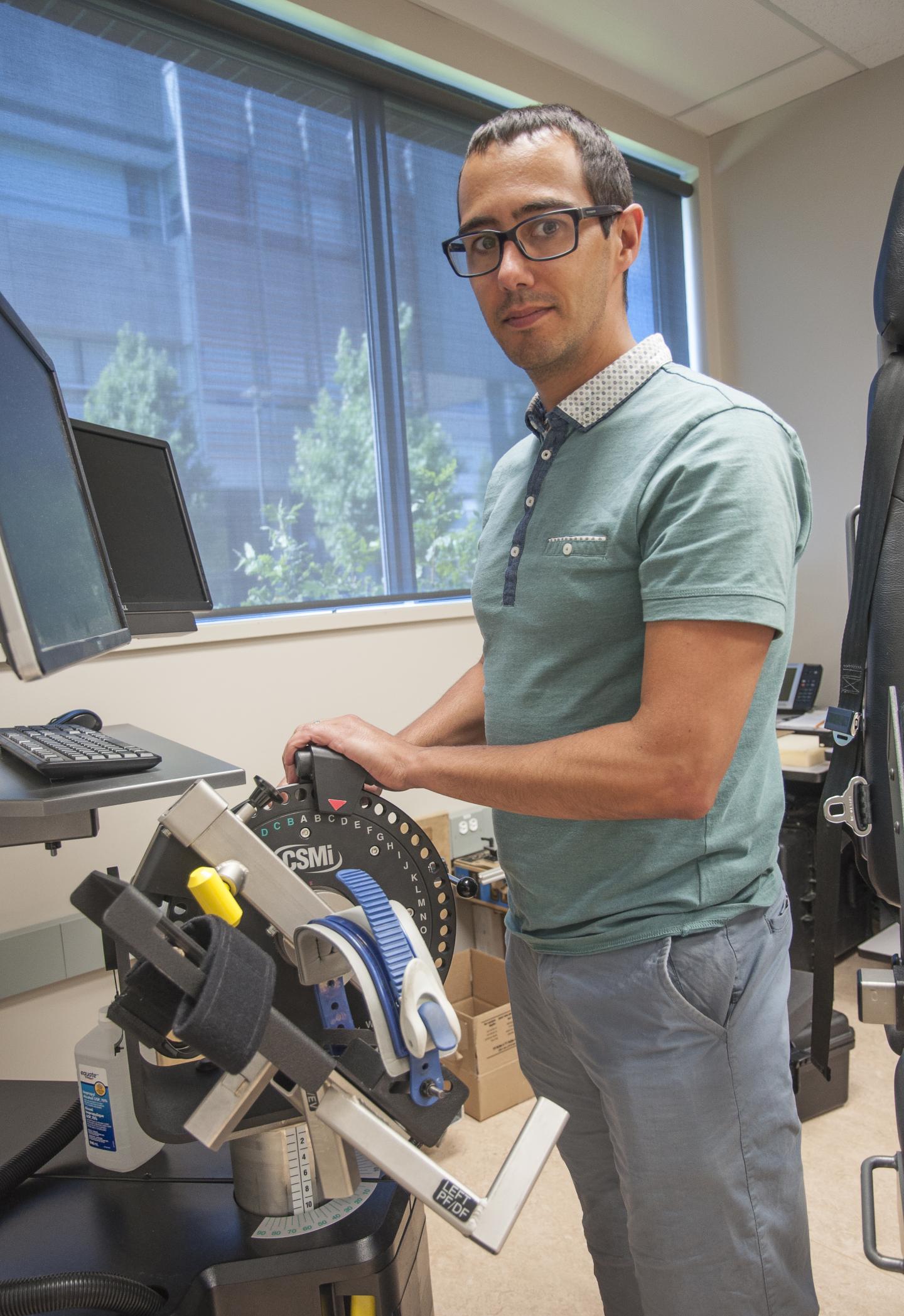
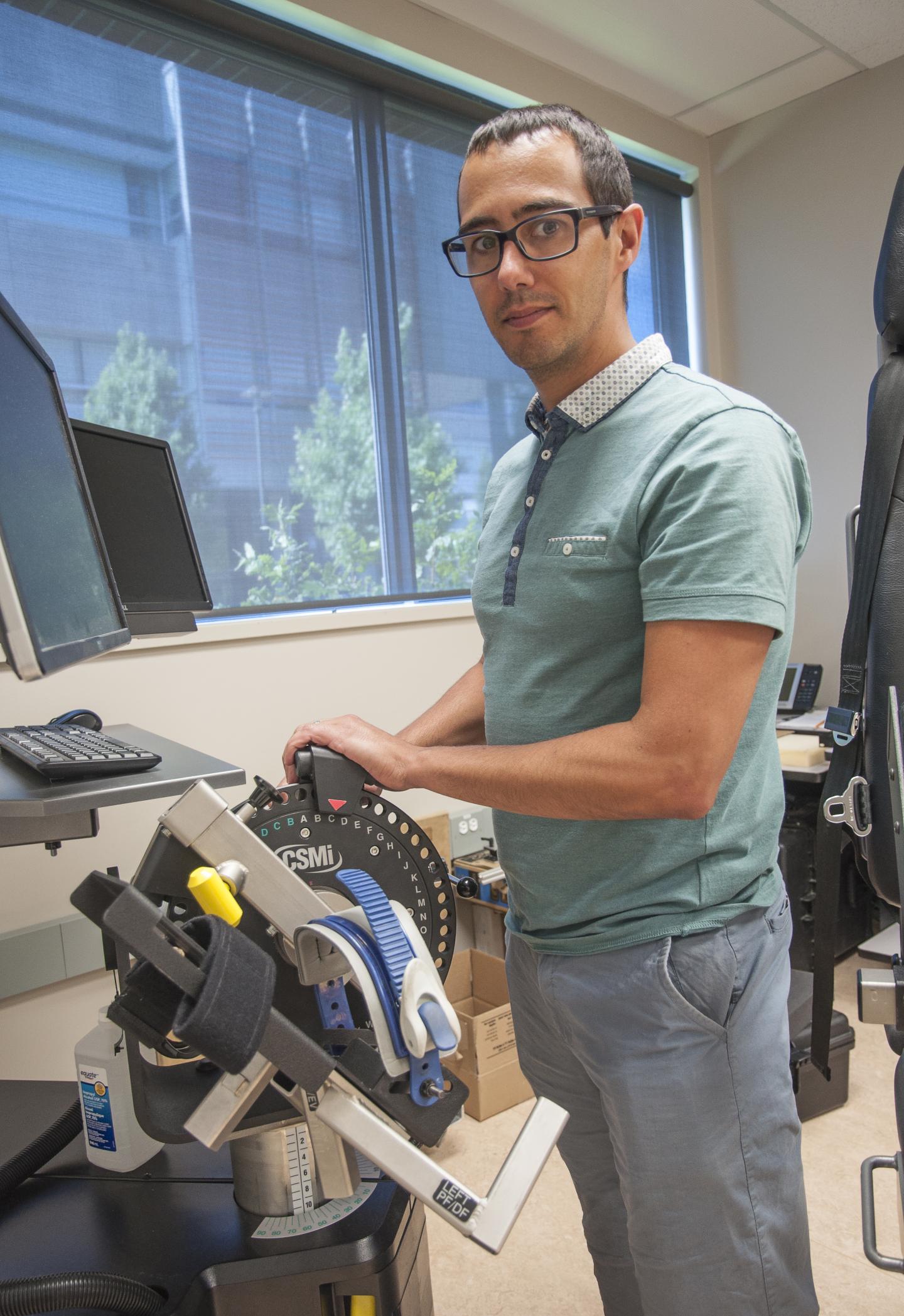
IMAGE

Credit: UBC Okanagan

In the battle of the sexes, new UBC research suggests that men may be stronger physically but women have much greater muscle endurance than their male counterparts.

In a new study from UBC's Okanagan campus, researchers in the School of Health and Exercise Sciences have found that women are considerably less exhausted after natural, dynamic muscle exercises than men of similar age and athletic ability.

"We've known for some time that women are less fatigable than men during isometric muscle tests — static exercises where joints don't move, such as holding a weight — but we wanted to find out if that's true during more dynamic and practical everyday movements," says Assistant Professor Brian Dalton. "And the answer is pretty definitive: women can outlast men by a wide margin."

In his study, done in collaboration with the University of Guelph and University of Oregon, Dalton recruited eight men and nine women that were at a similar level of physical fitness. Participants were asked to flex their foot against a suite of sensors as quickly as they could 200 times. The speed, power and torque of their movements and electrical activity of their muscles was then captured and recorded over time.

"We chose to measure foot movements because it makes use of calf muscles on the back of the leg, which are essential for practical, everyday tasks like standing and walking," says Dalton. "What we found is that males were faster and more powerful at first but became more fatigued much faster than females."

While only one isolated muscle group was studied, Dalton says he would expect similar results for other muscles groups and his results are consistent with what has been observed elsewhere.

"We know from previous research that for events like ultra-trail running, males may complete them faster but females are considerably less tired by the end," he adds. "If ever an ultra-ultra-marathon is developed, women may well dominate in that arena."

But it's not all about competition. Dalton says his results can also inform more practical applications, such as designing exercise programs or even adapting work environments to minimize work-related fatigue and improve overall productivity.

"We may, for example, want to lower the load for males, even though they may be stronger at the outset, to more closely match the endurance observed in females," he says. "Both sexes have valuable physical abilities and it only makes sense that we study and develop the tools to afford them the best advantage."

"There's no battle at all," he jokes. "Maybe more of a balance of the sexes."

###

The study appears in the June 2017 issue of Applied Physiology, Nutrition, and Metabolism and was conducted with financial support from Natural Sciences and Engineering Research Council of Canada.

Media Contact:

Nathan Skolski
Associate Director, Public Affairs | University Relations
The University of British Columbia | Okanagan campus
Phone: 250-807-9926 | Cell: 778-628-3093
Email: [email protected]

Media Contact

Nathan Skolski
[email protected]
250-807-9926

http://ok.ubc.ca/welcome.html

Share13Tweet8Share2ShareShareShare2

Related Posts

Rising Sightings of Blue and Fin Whales in the South East Atlantic — Biology

Rising Sightings of Blue and Fin Whales in the South East Atlantic

May 23, 2026
New Maps Reveal How European Landscapes Can Simultaneously Promote Climate Action and Biodiversity Conservation — Biology

New Maps Reveal How European Landscapes Can Simultaneously Promote Climate Action and Biodiversity Conservation

May 22, 2026

University of Cincinnati Structural Biologists Achieve World First in Visualizing Crucial Cell Protein

May 22, 2026

Reducing Fertilizer Use Through Strategic Scientific Partnerships

May 22, 2026
Please login to join discussion

POPULAR NEWS

  • ESMO 2025: mRNA COVID Vaccines Enhance Efficacy of Cancer Immunotherapy

    314 shares
    Share 126 Tweet 79
  • New Study Reveals Plants Can Detect the Sound of Rain

    734 shares
    Share 293 Tweet 183
  • Research Indicates Potential Connection Between Prenatal Medication Exposure and Elevated Autism Risk

    847 shares
    Share 339 Tweet 212
  • Common Food Preservatives Associated with Elevated Blood Pressure and Increased Heart Disease Risk

    56 shares
    Share 22 Tweet 14

About

We bring you the latest biotechnology news from best research centers and universities around the world. Check our website.

Follow us

Recent News

AI Insights Uncover Causes of Injury Deaths

Comparing Robust Intelligent Controls for 3-DOF Robots

Predicting Flashover on Polluted Insulators with CNN-LSTM

Subscribe to Blog via Email

Enter your email address to subscribe to this blog and receive notifications of new posts by email.

Join 83 other subscribers
  • Contact Us

Bioengineer.org © Copyright 2023 All Rights Reserved.

Welcome Back!

Login to your account below

Forgotten Password?

Retrieve your password

Please enter your username or email address to reset your password.

Log In
No Result
View All Result
  • Homepages
    • Home Page 1
    • Home Page 2
  • News
  • National
  • Business
  • Health
  • Lifestyle
  • Science

Bioengineer.org © Copyright 2023 All Rights Reserved.