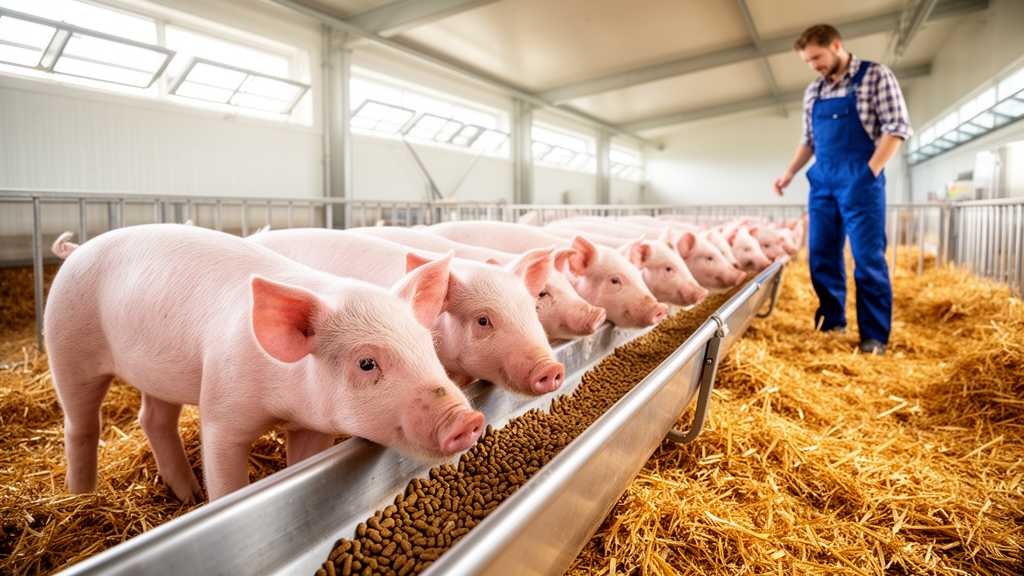
Dietary betaine supplementation improved growth performance and reduced diarrhea in newly weaned piglets, according to a study published in Frontiers in Veterinary Science. The research, conducted by a team from Hebei University of Engineering and Foshan University, also found that the supplement was accompanied by measurable shifts in the composition of bacteria living in the animals’ colons, although the authors emphasize that these microbial findings are associative and require further validation.
The animals were randomly assigned to one of three dietary treatments: a control diet with no betaine, or diets supplemented with either 1,250 or 2,500 mg/kg of betaine.
Over the course of the trial, the researchers evaluated growth performance and diarrhea incidence, then analyzed the colonic microbiota using 16S rRNA gene sequencing. To explore the functional potential of the microbiota, the team used two computational tools, PICRUSt2 and Tax4Fun2.
The phenotypic results were consistent across both betaine doses. Compared with the control group, piglets receiving either 1,250 or 2,500 mg/kg of betaine showed significantly higher average daily gain, a significantly lower feed conversion ratio, and a significantly reduced incidence of diarrhea, with all differences reported at a statistical threshold of p < 0.05. In practical terms, the supplemented animals grew faster, converted feed into body mass more efficiently, and suffered less digestive upset during the post-weaning period.
The microbiota analysis revealed that betaine supplementation was accompanied by changes in the relative abundances of several bacterial genera in the colon. An exploratory random forest analysis identified several candidate genera contributing to group discrimination, including Prevotellaceae_NK3B31_group, Oscillibacter, Oscillospira, and Ruminococcus_torques_group. These genera were also among those whose relative abundances differed in the low-dose betaine group compared with controls.
Functional prediction added another layer to the picture. The analysis suggested that low-dose betaine was associated with enrichment of predicted KEGG pathways related to energy metabolism, including the citrate cycle, also known as the TCA cycle, as well as butanoate metabolism and folate biosynthesis.
That caveat is central to how the authors frame their conclusions. Because microbial metabolites, short-chain fatty acids, intestinal barrier function, and immune indicators were not directly measured, the microbiota-related findings should be interpreted as associative rather than causal, the study states. The predicted pathway enrichments come from computational inference based on taxonomic data, not from direct biochemical measurements, and the authors call for further validation of these microbial observations.
The phenotypic findings, by contrast, rest on direct measurements of growth and diarrhea in the trial animals. The authors conclude that dietary betaine supplementation improved growth performance and reduced diarrhea incidence in weaned piglets, and that these improvements were accompanied by changes in selected colonic bacterial taxa and predicted microbial functions.
The study was received on 14 July 2026 and accepted on 22 September 2026, and it appears in the Animal Nutrition and Metabolism section of the journal.
Subject of Research: The effects of dietary betaine supplementation on growth performance, diarrhea incidence, and colonic microbiota in weaned piglets.
Article Title: Effects of betaine on growth performance and colonic microbiota in weaned piglets
Article References: Wang, H., Zhao, Z., Pang, T., Lin, D., & Chai, J. (2026). Effects of betaine on growth performance and colonic microbiota in weaned piglets. Frontiers in Veterinary Science, 13, Article 1937273. https://doi.org/10.3389/fvets.2026.1937273
Image Credits: AI Generated
DOI: 10.3389/fvets.2026.1937273
Keywords: betaine, weaned piglets, growth performance, diarrhea, colonic microbiota, 16S rRNA sequencing, feed conversion ratio, animal nutrition, swine, PICRUSt2, gut bacteria, feed additive
News Source: Morgan Morrow. (October 28, 2026). Betaine Feed Supplement Boosts Growth and Cuts Diarrhea in Weaned Piglets. Scienmag.