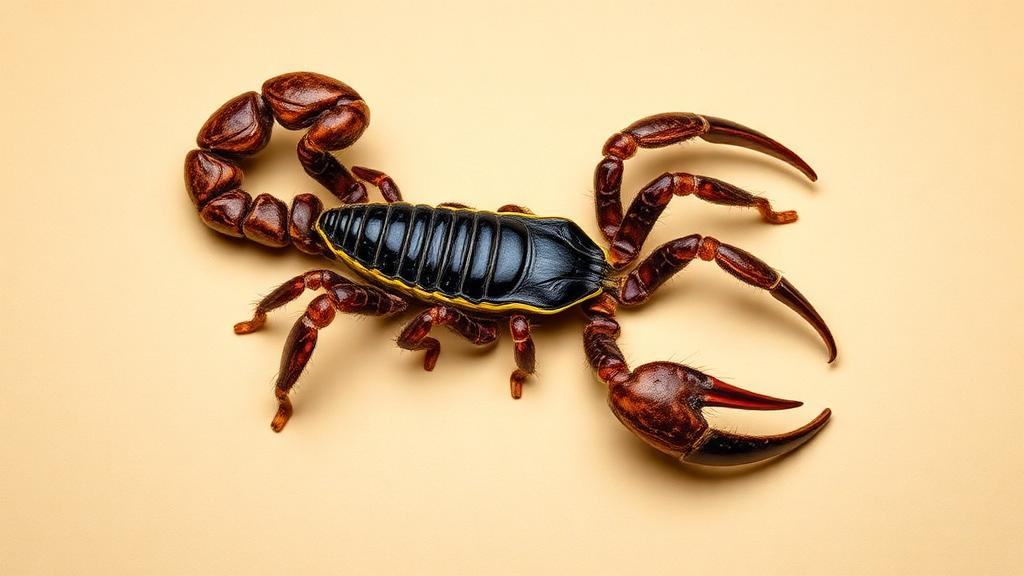
Deep inside the archives of the Royal Belgian Institute of Natural Sciences in Brussels, thousands of scorpions have been waiting in glass jars for more than a century. Now, for the first time, the entire collection has been catalogued, revised and released to the world as open data. A newly published dataset documents all 3,652 scorpion specimens preserved at RBINS, spanning 151 years of collecting from 1872 to 2023 and covering 59 countries. The release transforms one of Europe’s most historically significant arachnid holdings into a digital resource that any researcher, anywhere, can query in seconds.
The collection itself is a product of Belgium’s scientific history. RBINS traces its roots to 1846, shortly after Belgium gained independence in 1830, when it was established as a natural history museum in Brussels with an initial focus on geology, palaeontology and zoology. Today the Institute manages the third-largest natural science collection in Europe, encompassing approximately 37 million specimens, and holds the European label of major research infrastructure. Its scorpion holdings, though a small fraction of that total, represent a remarkable cross-section of global arachnid diversity, and their detailed determination was carried out in two main phases: a small portion was first examined in 2010 by L. Baert, before the collection was thoroughly re-examined in 2023 and 2025 by Lorenzo Prendini, who made new identifications and revised previous ones.
The published dataset comprises eleven families, 56 genera and 117 species of scorpions, with most specimens identified to genus or species level during the recent re-evaluation. The largest number of individuals, 1,657, belong to the family Buthidae, followed by Scorpionidae with 823 and Caraboctonidae with 727. At the genus level, Hadruroides leads with 720 individuals, followed by Hottentotta with 641, Pandipalpus with 496, Lychas with 289, Isometrus with 145, Scorpio with 127 and Babycurus with 124. Geographically, the specimens originate from a wide range of locations in 59 countries, with the Democratic Republic of the Congo contributing the largest number of individuals at 1,364, followed by Ecuador’s Galápagos Islands with 729.
The chronological span of the collection is equally striking. The oldest specimen was collected in Rio de Janeiro, Brazil, in 1872, while the most recent acquisition came from Bruges, Belgium, in 2023. The most frequent years fall between 1940 and 1950, which largely reflects sampling in the Upemba National Park by Gaston François de Witte, the Belgian naturalist and collector whose expeditions in the former Belgian Congo greatly expanded the zoological collections of Belgian institutions. De Witte, who became curator at the Royal Museum of Natural History in Brussels in 1937, is the most represented collector in the dataset, and most of the specimens were collected during expeditions led by researchers of RBINS.
What makes this release technically significant is not just the scale but the standardisation. The entire dataset was fully converted to the Darwin Core biodiversity data standard, the widely adopted format that allows occurrence records from diverse sources to be seamlessly combined, compared and reused by different systems globally. Standardisation adheres to the FAIR principles, ensuring that data are Findable, Accessible, Interoperable and Reusable, while open access fosters transparency and reproducibility, enabling the scientific community to validate findings and build efficiently upon prior work. The dataset consists of 1,470 rows and 51 columns, with each record carrying detailed information on taxonomy, geography, collection date, collector, identifier and preservation, all published under a CC BY-NC 4.0 licence.
The taxonomy was primarily standardised using the classification system provided by the Global Biodiversity Information Facility, with recent nomenclatural changes cross-referenced against Checklist Bank. This matters because scorpion phylogeny has been notoriously unstable in recent years, with classification systems rapidly becoming outdated. By anchoring the records to a standardised format, the underlying occurrence data remains permanently accessible and comparable with other collections globally, regardless of future taxonomic changes. The physical collection was reorganised accordingly, with identified specimens subdivided alphabetically from family down to genus level, a pragmatic curatorial choice that prioritises long-term physical stability over transient systematic accuracy.
That alphabetical archiving strategy carries real technical weight. In fluid collections, larger storage jars often act as secondary containers holding numerous smaller vials with individual specimens, mostly preserved in 70% ethanol. Under a strictly phylogenetic system, a major taxonomic revision such as a family split or a genus transfer would force the curator to physically re-label and relocate these heavy, fragile parent jars, risking damage and consuming significant time. By contrast, sorting alphabetically ensures that a jar’s location remains fixed as long as the family or genus name starts with the same letter, so only the smaller internal vials need re-labelling, reducing the risk and workload associated with reorganising the entire collection space. Notably, a select portion of the collection, particularly recently acquired material and specimens from the Galápagos Islands, is stored in 97% ethanol to ensure optimal DNA preservation for future molecular analyses.
The scientific value of mobilising this heritage extends into unexpected domains, including public health. Clinical reports underscore the prevalence of scorpion envenomation in the Democratic Republic of the Congo, yet the lack of precise taxonomic identification remains a significant barrier to effective public health strategies. By providing a robust historical and taxonomic framework for medically significant genera like Hottentotta and Lychas, the dataset helps bridge this gap, offering a reliable reference for future epidemiological research and the documentation of harmful species distribution. The same records support crucial research in taxonomy, ecology and biogeography of the order Scorpiones, providing the critical historical evidence needed to analyse human impacts and track the effects of climate change.
The dataset also offers a comprehensive and up-to-date overview of the entire RBINS scorpion collection, including, for the first time, a list of specimens for which taxonomic determination remains incomplete, such as those identified only to family or genus level. This transparency establishes a clear roadmap for the curatorial and taxonomic tasks that lie ahead. Future work should focus on georeferencing the 73 records without location information and the six generic localities, such as the Pyrenees and the Sahara, a spatial enrichment that is vital for enabling accurate ecological niche modelling, conservation assessments and biogeographical studies.
In an era when natural history collections worldwide are racing to digitise their holdings, the RBINS scorpion dataset stands as a testament to the enduring value of museum specimens. It not only solidifies the systematic knowledge of the identified collection but serves as a call to action for the specialised research community, demonstrating how disparate physical labels and institutional records can be transformed into a FAIR digital dataset that maximises the scientific return on curatorial investment and actively supports global efforts in biodiversity informatics. For 3,652 scorpions that spent up to 151 years in the dark, the lights have finally come on.
Subject of Research: A Darwin Core dataset of scorpions (Arachnida, Scorpiones) from the Royal Belgian Institute of Natural Sciences (RBINS) Collections
Article Title: A Darwin Core dataset of scorpions ( Arachnida , Scorpiones ) from the Royal Belgian Institute of Natural Sciences (RBINS) Collections
Article References: Durante, F., Prendini, L., Pizzolotto, R., Wérenne, G., Baert, L., Musschoot, T., & Dekoninck, W. (2026). A Darwin Core dataset of scorpions (Arachnida, Scorpiones) from the Royal Belgian Institute of Natural Sciences (RBINS) Collections. Biodiversity Data Journal, 14, Article e188187. https://doi.org/10.3897/bdj.14.e188187
Image Credits: AI Generated
Keywords: Darwin, Core, dataset, scorpions, Arachnida, Scorpiones, Royal, Belgian, Institute, Natural, Sciences, RBINS
News Source: Drew Townsend. (October 17, 2026). Belgian museum opens 3,652 scorpion records spanning 150 years. Scienmag.