• HOME
  • NEWS
  • EXPLORE
    • CAREER
      • Companies
      • Jobs
    • EVENTS
    • iGEM
      • News
      • Team
    • PHOTOS
    • VIDEO
    • WIKI
  • BLOG
  • COMMUNITY
    • FACEBOOK
    • INSTAGRAM
    • TWITTER
Tuesday, May 19, 2026
BIOENGINEER.ORG
No Result
View All Result
  • Login
  • HOME
  • NEWS
  • EXPLORE
    • CAREER
      • Companies
      • Jobs
        • Lecturer
        • PhD Studentship
        • Postdoc
        • Research Assistant
    • EVENTS
    • iGEM
      • News
      • Team
    • PHOTOS
    • VIDEO
    • WIKI
  • BLOG
  • COMMUNITY
    • FACEBOOK
    • INSTAGRAM
    • TWITTER
  • HOME
  • NEWS
  • EXPLORE
    • CAREER
      • Companies
      • Jobs
        • Lecturer
        • PhD Studentship
        • Postdoc
        • Research Assistant
    • EVENTS
    • iGEM
      • News
      • Team
    • PHOTOS
    • VIDEO
    • WIKI
  • BLOG
  • COMMUNITY
    • FACEBOOK
    • INSTAGRAM
    • TWITTER
No Result
View All Result
Bioengineer.org
No Result
View All Result
Home NEWS Science News Biology

Beetles spark development of color-changing nanoparticles for commercial use

Bioengineer by Bioengineer
June 14, 2017
in Biology
Reading Time: 2 mins read
0
Share on FacebookShare on TwitterShare on LinkedinShare on RedditShare on Telegram
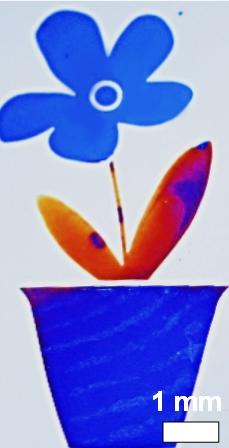
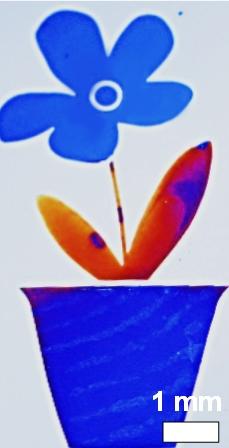
IMAGE

Credit: Credit: American Chemical Society Click here to download the image.

Inspired by the varying colors that gleam off of beetle shells, scientists have developed color-shifting nanoparticles that can change hue even after being embedded into a material. A report on the new, inexpensive technique, which could lead to the production of easier-to-read sensors and anti-tampering tags, appears in ACS Applied Materials & Interfaces.

The shells, or exoskeletons, of beetles are covered with stacks of crystalline-like shapes that scatter light and produce dazzling colors. In some cases, these colors can change with just a slight shift of the viewing angle. Known as structural colors, scientists have long been interested in replicating them for use in paints, dyes, cosmetics and other products. But unlike many pigments, structural colors are eco-friendly and resist fading. Current techniques used to integrate structural colors into materials are time-consuming and costly, however. And once they are attached to a surface, it is hard to modify them. Geon Hwee Kim, Taechang An and Geunbae Lim sought to overcome these challenges.

The researchers used a process called hydrothermal growth to synthesize zinc oxide nanostructures in 40 to 80 degree Celsius water. This technique produced the tiny particles quickly and easily. The method also allowed them to better control the size and spacing of the nanostructures, a key step toward being able to adjust colors as needed within a material or fabric. The researchers conclude that this new technique could have broad applications including the fabrication of microelectrodes for use in sensors.

###

The authors acknowledge funding from the National Research Foundation of Korea.

The abstract that accompanies this study is available here.

The American Chemical Society, the world's largest scientific society, is a not-for-profit organization chartered by the U.S. Congress. ACS is a global leader in providing access to chemistry-related information and research through its multiple databases, peer-reviewed journals and scientific conferences. ACS does not conduct research, but publishes and publicizes peer-reviewed scientific studies. Its main offices are in Washington, D.C., and Columbus, Ohio.

To automatically receive news releases from the American Chemical Society, contact [email protected].

Follow us on Twitter | Facebook

Media Contact

Katie Cottingham
[email protected]
301-775-8455
@ACSpressroom

http://www.acs.org

############

Story Source: Materials provided by Scienmag

Share12Tweet8Share2ShareShareShare2

Related Posts

Breakthrough Cancer Treatment Effective Across All Organ Types — Biology

Breakthrough Cancer Treatment Effective Across All Organ Types

May 18, 2026
Butyrate Alleviates Temporomandibular Joint Pain via Epigenetic Mechanisms — Biology

Butyrate Alleviates Temporomandibular Joint Pain via Epigenetic Mechanisms

May 18, 2026

How Hibernation Impacts Visual Processing in Squirrels’ Brains

May 18, 2026

PKU Researchers Pioneer First-in-Class Drug Candidate Targeting Cholestatic Itch

May 18, 2026
Please login to join discussion

POPULAR NEWS

  • Research Indicates Potential Connection Between Prenatal Medication Exposure and Elevated Autism Risk

    845 shares
    Share 338 Tweet 211
  • New Study Reveals Plants Can Detect the Sound of Rain

    731 shares
    Share 292 Tweet 182
  • Salmonella Haem Blocks Macrophages, Boosts Infection

    62 shares
    Share 25 Tweet 16
  • Breastmilk Balances E. coli and Beneficial Bacteria in Infant Gut Microbiomes

    58 shares
    Share 23 Tweet 15

About

We bring you the latest biotechnology news from best research centers and universities around the world. Check our website.

Follow us

Recent News

Leveraging Technology to Enhance Emergency Response for Cardiac and Stroke Cases

Protein Engineering and Testing Condensed into One Day

Machine Learning Pinpoints Immunotherapy Targets, Validated by Tumor Explants

Subscribe to Blog via Email

Enter your email address to subscribe to this blog and receive notifications of new posts by email.

Join 82 other subscribers
  • Contact Us

Bioengineer.org © Copyright 2023 All Rights Reserved.

Welcome Back!

Login to your account below

Forgotten Password?

Retrieve your password

Please enter your username or email address to reset your password.

Log In
No Result
View All Result
  • Homepages
    • Home Page 1
    • Home Page 2
  • News
  • National
  • Business
  • Health
  • Lifestyle
  • Science

Bioengineer.org © Copyright 2023 All Rights Reserved.