• HOME
  • NEWS
  • EXPLORE
    • CAREER
      • Companies
      • Jobs
    • EVENTS
    • iGEM
      • News
      • Team
    • PHOTOS
    • VIDEO
    • WIKI
  • BLOG
  • COMMUNITY
    • FACEBOOK
    • INSTAGRAM
    • TWITTER
Saturday, April 18, 2026
BIOENGINEER.ORG
No Result
View All Result
  • Login
  • HOME
  • NEWS
  • EXPLORE
    • CAREER
      • Companies
      • Jobs
        • Lecturer
        • PhD Studentship
        • Postdoc
        • Research Assistant
    • EVENTS
    • iGEM
      • News
      • Team
    • PHOTOS
    • VIDEO
    • WIKI
  • BLOG
  • COMMUNITY
    • FACEBOOK
    • INSTAGRAM
    • TWITTER
  • HOME
  • NEWS
  • EXPLORE
    • CAREER
      • Companies
      • Jobs
        • Lecturer
        • PhD Studentship
        • Postdoc
        • Research Assistant
    • EVENTS
    • iGEM
      • News
      • Team
    • PHOTOS
    • VIDEO
    • WIKI
  • BLOG
  • COMMUNITY
    • FACEBOOK
    • INSTAGRAM
    • TWITTER
No Result
View All Result
Bioengineer.org
No Result
View All Result
Home NEWS Science News Biology

Bees and the thought of naught

Bioengineer by Bioengineer
June 8, 2018
in Biology
Reading Time: 2 mins read
0
Share on FacebookShare on TwitterShare on LinkedinShare on RedditShare on Telegram
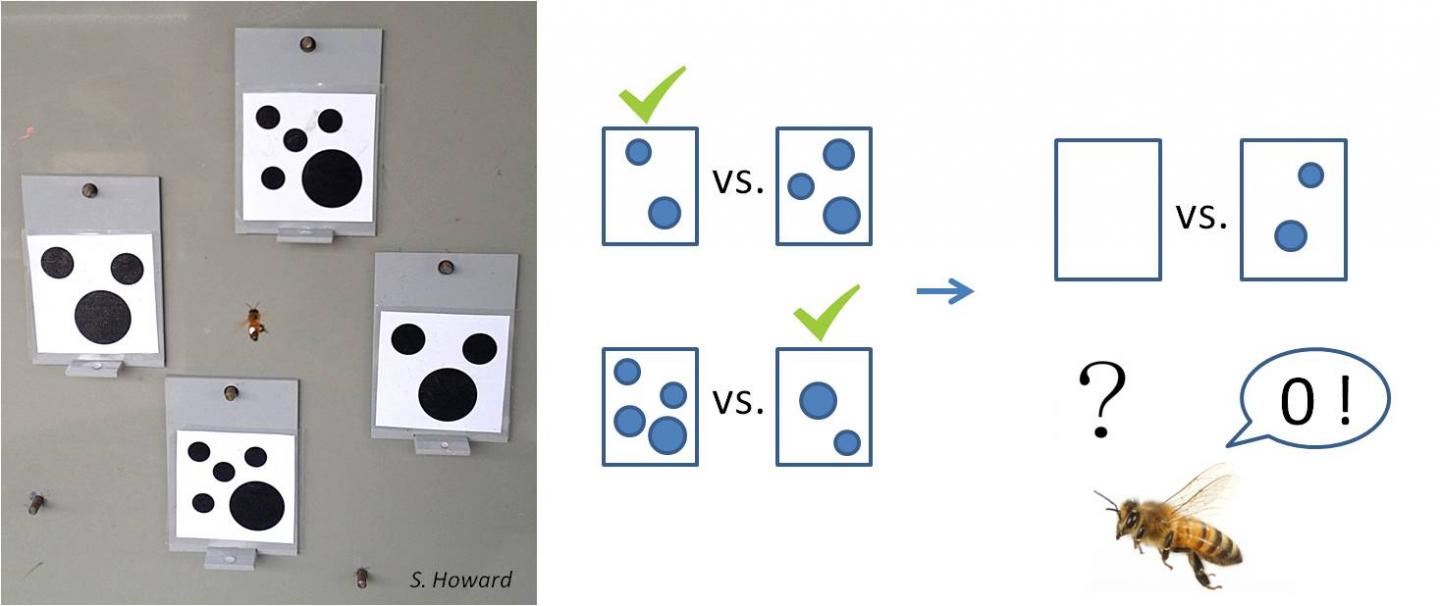
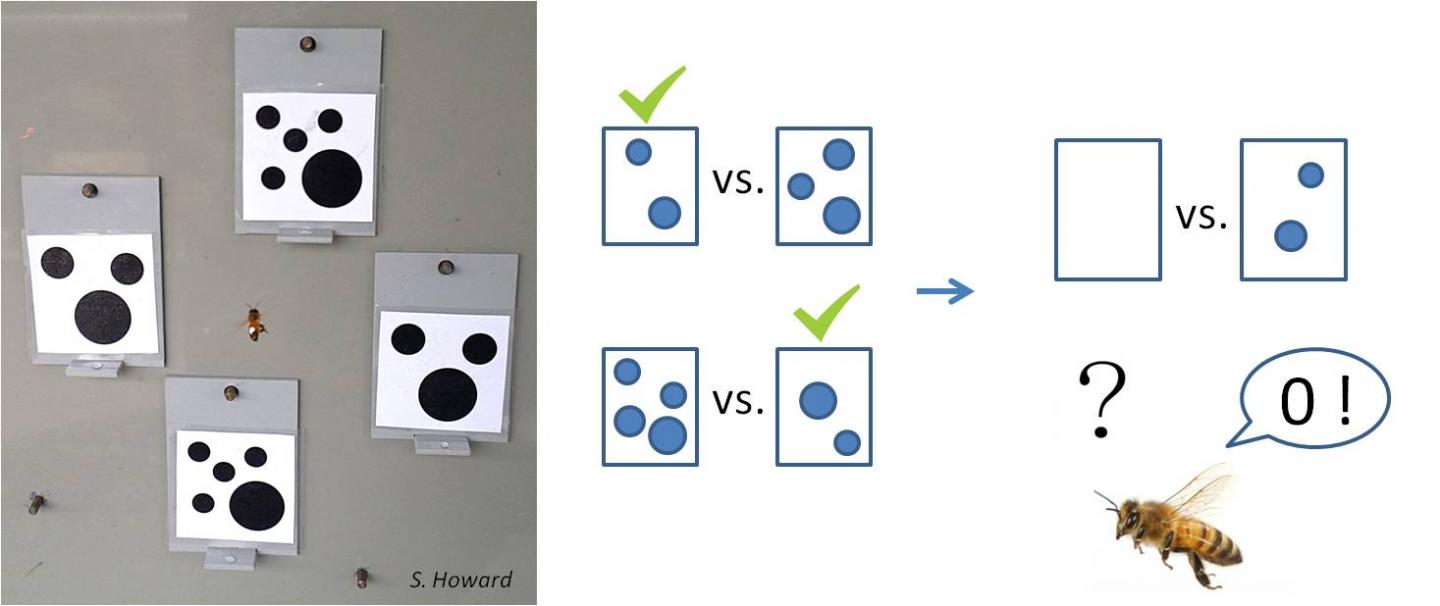
IMAGE

Credit: © Scarlett Howard & Aurore Avarguès-Weber

Though some vertebrates had already been shown to master complex numerical concepts like addition and zero, no evidence of this existed for insects. Since bees can count to five at least, the researchers taught them the inequality relations "greater than" and "less than."

First they trained them to drink sweetened water from an experimental setup where platforms were paired with images. Their task was simply to choose the image depicting the smallest number of elements. If they selected the correct one, they were rewarded with sweetened water. Otherwise, they got bitter quinine solution. Once the bees grasped the exercise, the researchers showed them two images at a time: one was blank (representing zero) and another had one or more dots (representing a whole number). The insects selected the blank image as representing the least number of elements. This shows they had extrapolated their understanding of "less than"–as applied to whole numbers (1, 2, 3, 4, or 5)–to zero, which they assigned the lowest rank of all.

Bees have only a million neurons (100,000 times fewer than humans), yet both species can grasp zero. Zero was a major mathematical breakthrough for humans and is a particularly abstract concept. We can use this symbol of "nothing" to designate the absence of objects, while manipulating it as if it represented a quantity. The brain, which evolved to process sensory stimuli, can also perceive the absence of stimuli as a construct itself. By suggesting that the concept of zero is useful even to pollinating insects, the scientists' discovery invites inquiry into its symbolic importance more generally.

###

Media Contact

Juliette Dunglas
[email protected]
01-449-64634

http://www.cnrs.fr

Original Source

http://www2.cnrs.fr/en/3127.htm http://dx.doi.org/10.1126/science.aar4975

Share14Tweet8Share2ShareShareShare2

Related Posts

On-Demand Growth of Liver Tissue Directly Within the Body

On-Demand Growth of Liver Tissue Directly Within the Body

April 17, 2026
Conserved DNA Architect Links Chloroplasts to Cell Cycle

Conserved DNA Architect Links Chloroplasts to Cell Cycle

April 17, 2026

UTS Study Reveals Toxic Metal Exposure from E-Cigarette Devices

April 17, 2026

Can Exercise Help You Beat Stress Hormones? New Insights from a Clinical Trial

April 17, 2026
Please login to join discussion

POPULAR NEWS

  • Scientists Investigate Possible Connection Between COVID-19 and Increased Lung Cancer Risk

    62 shares
    Share 25 Tweet 16
  • NSF funds machine-learning research at UNO and UNL to study energy requirements of walking in older adults

    100 shares
    Share 40 Tweet 25
  • Boosting Breast Cancer Risk Prediction with Genetics

    47 shares
    Share 19 Tweet 12
  • Popular Anti-Aging Compound Linked to Damage in Corpus Callosum, Study Finds

    46 shares
    Share 18 Tweet 12

About

We bring you the latest biotechnology news from best research centers and universities around the world. Check our website.

Follow us

Recent News

Blocking RIPK1/RIPK3-MLKL Reduces Preterm Birth

PD-L1 CPS in Gastroesophageal Cancer: Care vs. Trials

Barriers to Immunity Research in Elder Care Populations

Subscribe to Blog via Email

Enter your email address to subscribe to this blog and receive notifications of new posts by email.

Join 79 other subscribers
  • Contact Us

Bioengineer.org © Copyright 2023 All Rights Reserved.

Welcome Back!

Login to your account below

Forgotten Password?

Retrieve your password

Please enter your username or email address to reset your password.

Log In
No Result
View All Result
  • Homepages
    • Home Page 1
    • Home Page 2
  • News
  • National
  • Business
  • Health
  • Lifestyle
  • Science

Bioengineer.org © Copyright 2023 All Rights Reserved.