• HOME
  • NEWS
  • EXPLORE
    • CAREER
      • Companies
      • Jobs
    • EVENTS
    • iGEM
      • News
      • Team
    • PHOTOS
    • VIDEO
    • WIKI
  • BLOG
  • COMMUNITY
    • FACEBOOK
    • INSTAGRAM
    • TWITTER
Monday, May 25, 2026
BIOENGINEER.ORG
No Result
View All Result
  • Login
  • HOME
  • NEWS
  • EXPLORE
    • CAREER
      • Companies
      • Jobs
        • Lecturer
        • PhD Studentship
        • Postdoc
        • Research Assistant
    • EVENTS
    • iGEM
      • News
      • Team
    • PHOTOS
    • VIDEO
    • WIKI
  • BLOG
  • COMMUNITY
    • FACEBOOK
    • INSTAGRAM
    • TWITTER
  • HOME
  • NEWS
  • EXPLORE
    • CAREER
      • Companies
      • Jobs
        • Lecturer
        • PhD Studentship
        • Postdoc
        • Research Assistant
    • EVENTS
    • iGEM
      • News
      • Team
    • PHOTOS
    • VIDEO
    • WIKI
  • BLOG
  • COMMUNITY
    • FACEBOOK
    • INSTAGRAM
    • TWITTER
No Result
View All Result
Bioengineer.org
No Result
View All Result
Home NEWS Science News Biology

‘Bee’ informed: Public interest exceeds understanding in bee conservation

Bioengineer by Bioengineer
September 5, 2017
in Biology
Reading Time: 2 mins read
0
Share on FacebookShare on TwitterShare on LinkedinShare on RedditShare on Telegram
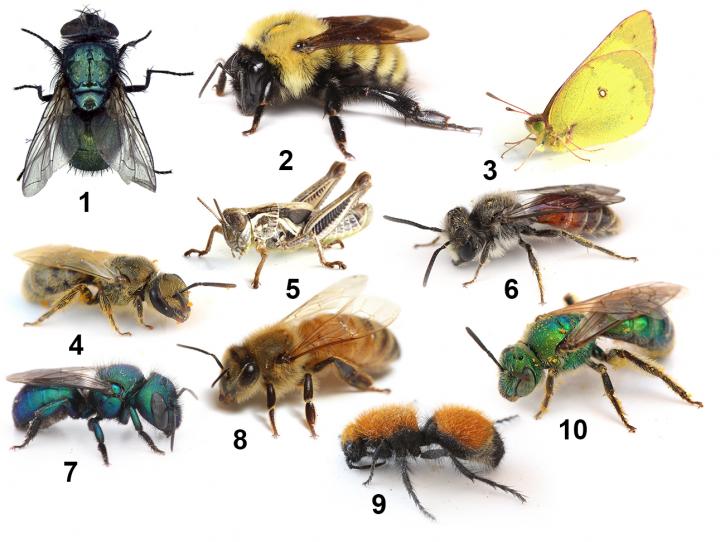
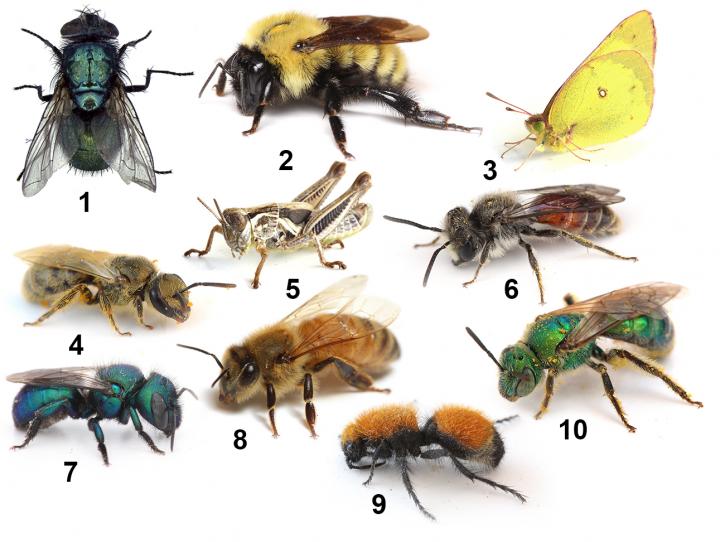
IMAGE

Credit: Joseph Wilson, Utah State University

Many people have heard bee populations are declining due to such threats as colony collapse disorder, pesticides and habitat loss. And many understand bees are critical to plant pollination. Yet, according to a study led by Utah State University ecologist Joseph Wilson, few are aware of the wide diversity of bees and other pollinators beyond such species as honeybees.

"The U.S. Postal Service recently released its 'Protect Pollinator' series, which features only the European honeybee and the monarch butterfly," says Wilson, assistant professor of biology at USU's Tooele campus. "A social media commenter observed that using these two species on a campaign to protect pollinators is akin to focusing on chickens to save birds. It's a pretty good comparison, actually."

Wilson, with colleagues Matthew Forister of the University of Nevada-Reno and USU alum Olivia Messinger Carril '00 MS'06, published findings in the Sept. 5, 2017, online edition of Frontiers in Ecology and the Environment.

"In our recent survey, 99 percent of our respondents said bees are critical or important, yet only 14 percent were able to guess within 1,000, the actual number of bee species in the United States," he says. "Most people estimated around 50 species of bees, while the correct number is about 4,000 known species."

Further, when shown images of varied insects, many respondents were unable to discern bees from non-bees.

"A challenge with lack of knowledge about bees is you can't protect what you're now aware of," Wilson says. "We could be losing species or causing decline and not even know it."

Public education is key to bolstering conservation efforts, he says.

"Because conservation efforts require substantial public support, it's important that the public understand bees and what needs to be done to protect these species," Wilson says. "Education and outreach are key to understanding bee declines and protecting our pollinators."

###

Media Contact

Joseph Wilson
[email protected]
435-632-9791

http://www.usu.edu

Related Journal Article

http://dx.doi.org/10.1002/fee.1531

Share12Tweet8Share2ShareShareShare2

Related Posts

Tracing 700 Million Years of Blood Cell Evolution — Biology

Tracing 700 Million Years of Blood Cell Evolution

May 25, 2026
How Wasp Societies Conquer Intense Leadership Conflicts — Biology

How Wasp Societies Conquer Intense Leadership Conflicts

May 25, 2026

Tiny Blue Octopus from the Galápagos Islands: Small Enough to Fit in the Palm of Your Hand

May 25, 2026

Rising Sightings of Blue and Fin Whales in the South East Atlantic

May 23, 2026
Please login to join discussion

POPULAR NEWS

  • ESMO 2025: mRNA COVID Vaccines Enhance Efficacy of Cancer Immunotherapy

    315 shares
    Share 126 Tweet 79
  • New Study Reveals Plants Can Detect the Sound of Rain

    734 shares
    Share 293 Tweet 183
  • Research Indicates Potential Connection Between Prenatal Medication Exposure and Elevated Autism Risk

    847 shares
    Share 339 Tweet 212
  • Common Food Preservatives Associated with Elevated Blood Pressure and Increased Heart Disease Risk

    56 shares
    Share 22 Tweet 14

About

We bring you the latest biotechnology news from best research centers and universities around the world. Check our website.

Follow us

Recent News

Phenome-wide Study Links Second-Line Diabetes Drugs to Health Outcomes

Schizophrenia RNA Alters Mouse Brain and Behavior

Tracing 700 Million Years of Blood Cell Evolution

Subscribe to Blog via Email

Enter your email address to subscribe to this blog and receive notifications of new posts by email.

Join 82 other subscribers
  • Contact Us

Bioengineer.org © Copyright 2023 All Rights Reserved.

Welcome Back!

Login to your account below

Forgotten Password?

Retrieve your password

Please enter your username or email address to reset your password.

Log In
No Result
View All Result
  • Homepages
    • Home Page 1
    • Home Page 2
  • News
  • National
  • Business
  • Health
  • Lifestyle
  • Science

Bioengineer.org © Copyright 2023 All Rights Reserved.