• HOME
  • NEWS
  • EXPLORE
    • CAREER
      • Companies
      • Jobs
    • EVENTS
    • iGEM
      • News
      • Team
    • PHOTOS
    • VIDEO
    • WIKI
  • BLOG
  • COMMUNITY
    • FACEBOOK
    • INSTAGRAM
    • TWITTER
Monday, January 19, 2026
BIOENGINEER.ORG
No Result
View All Result
  • Login
  • HOME
  • NEWS
  • EXPLORE
    • CAREER
      • Companies
      • Jobs
        • Lecturer
        • PhD Studentship
        • Postdoc
        • Research Assistant
    • EVENTS
    • iGEM
      • News
      • Team
    • PHOTOS
    • VIDEO
    • WIKI
  • BLOG
  • COMMUNITY
    • FACEBOOK
    • INSTAGRAM
    • TWITTER
  • HOME
  • NEWS
  • EXPLORE
    • CAREER
      • Companies
      • Jobs
        • Lecturer
        • PhD Studentship
        • Postdoc
        • Research Assistant
    • EVENTS
    • iGEM
      • News
      • Team
    • PHOTOS
    • VIDEO
    • WIKI
  • BLOG
  • COMMUNITY
    • FACEBOOK
    • INSTAGRAM
    • TWITTER
No Result
View All Result
Bioengineer.org
No Result
View All Result
Home NEWS Science News Biology

Beavers are diverse forest landscapers

Bioengineer by Bioengineer
June 10, 2020
in Biology
Reading Time: 2 mins read
0
IMAGE
Share on FacebookShare on TwitterShare on LinkedinShare on RedditShare on Telegram

IMAGE

Credit: Sonja Kivinen

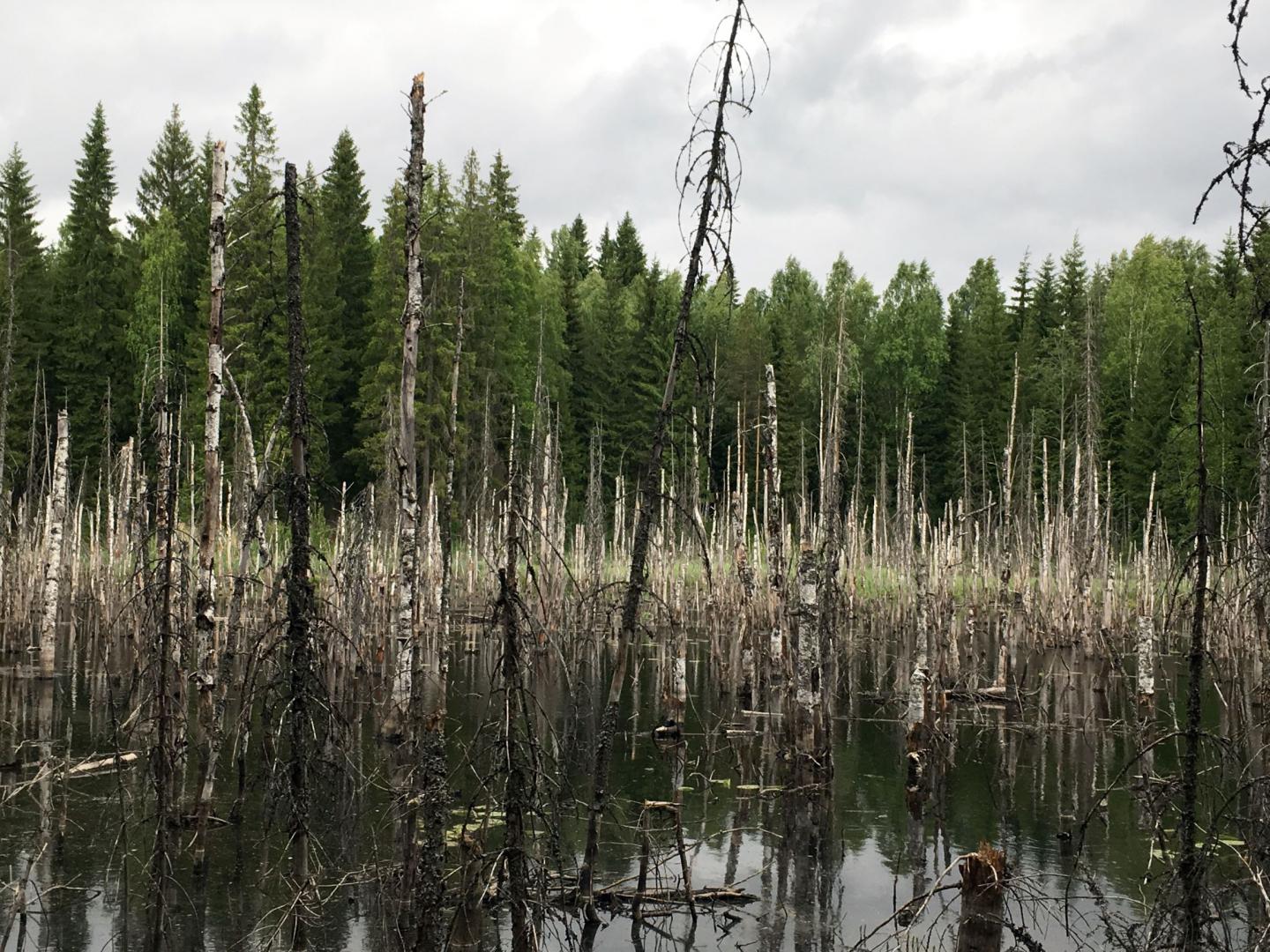
Beavers are ecosystem engineers that cut down trees to build dams, eventually causing floods. Beaver-induced floods make forest landscapes and habitats increasingly diverse, but very little is known about the long-term effects of beavers on European landscapes. Researchers at the University of Eastern Finland and the University of Helsinki examined the history and occurrence of beaver-induced floods and patch dynamics in southern Finland. They used a unique dataset of field observations from 1970 to 2018.

Floods caused by beavers over the course of history form a network of different habitats that remain interconnected even for long periods of time.

“Beavers can help to restore wetland ecosystems and entire boreal forests, and they also help in conserving the biodiversity of these environments,” Researcher Sonja Kivinen from the University of Eastern Finland says.

The European beaver was hunted to extinction in the 19th century Finland. Nowadays, the study area is home to the American beaver, which was introduced there in the 1950s. The American beaver builds similar dams as the European one.

“The spread of the beaver in our study area has created a diverse and constantly changing mosaic of beaver ponds and beaver meadows of different ages,” Kivinen says.

In 49 years, number of beaver-induced flood sites grew 11-fold

The researchers observed that the number of beaver-induced flood sites grew by more than 11-fold over the study period. In addition to creating new flood sites, beavers also often use old sites to cause new floods. The duration of an individual flood and the frequency of floods can vary greatly between different flood sites, resulting in an abundance of habitat patches with different environmental conditions.

“Thanks to beaver activity, there is a unique richness of wetlands in the forest landscape: flowages dominated by bushes, beaver meadows, and deadwood that can be used by various other species,” University Lecturer Petri Nummi from the University of Helsinki says.

Indeed, beaver-induced disturbances are more predictable in diversifying the forest landscape than for example forest fires or storms.

###

The study was carried out within the IBC-Carbon project funded by the Strategic Research Council at the Academy of Finland.

Research article:

Kivinen, S., Nummi, P. & Kumpula, T. Beaver-induced spatiotemporal patch dynamics affect landscape-level environmental heterogeneity. Environmental Research Letters, in press. Available online: https://doi.org/10.1088/1748-9326/ab9924

For further information, please contact:

Sonja Kivinen, Department of Geographical and Historical Studies, University of Eastern Finland,

tel. +358405884185, sonja.kivinen(at)uef.fi

Petri Nummi, Department of Forest Sciences, University of Helsinki, tel. +358504486160

Timo Kumpula, Department of Geographical and Historical Studies, University of Eastern Finland, tel. +358503728566

Media Contact
Sonja Kivinen
[email protected]

Related Journal Article

http://dx.doi.org/10.1088/1748-9326/ab9924

Tags: BiodiversityBiologyZoology/Veterinary Science
Share12Tweet8Share2ShareShareShare2

Related Posts

blank

Calcium Channel Modulation: Matricaria Chamomilla’s Cardiovascular Impact

January 19, 2026
blank

Exploring XTH Gene Family’s Role in Cowpea Salt Stress

January 19, 2026

Detecting Aflatoxins and Ochratoxin A in Feed

January 19, 2026

Exploring Bumblebee Relationships and Spatial Complexity

January 19, 2026
Please login to join discussion

POPULAR NEWS

  • Enhancing Spiritual Care Education in Nursing Programs

    155 shares
    Share 62 Tweet 39
  • PTSD, Depression, Anxiety in Childhood Cancer Survivors, Parents

    148 shares
    Share 59 Tweet 37
  • Robotic Ureteral Reconstruction: A Novel Approach

    78 shares
    Share 31 Tweet 20
  • Study Reveals Lipid Accumulation in ME/CFS Cells

    54 shares
    Share 22 Tweet 14

About

We bring you the latest biotechnology news from best research centers and universities around the world. Check our website.

Follow us

Recent News

Neuro Gene Signatures Forecast DLBCL Prognosis and Regulation

Sleep Quality Changes Forecast Depression in Older Chinese Adults

Advantage of PET/MRI Over PET/CT in Ovarian Cancer

Subscribe to Blog via Email

Enter your email address to subscribe to this blog and receive notifications of new posts by email.

Join 71 other subscribers
  • Contact Us

Bioengineer.org © Copyright 2023 All Rights Reserved.

Welcome Back!

Login to your account below

Forgotten Password?

Retrieve your password

Please enter your username or email address to reset your password.

Log In
No Result
View All Result
  • Homepages
    • Home Page 1
    • Home Page 2
  • News
  • National
  • Business
  • Health
  • Lifestyle
  • Science

Bioengineer.org © Copyright 2023 All Rights Reserved.