• HOME
  • NEWS
  • EXPLORE
    • CAREER
      • Companies
      • Jobs
    • EVENTS
    • iGEM
      • News
      • Team
    • PHOTOS
    • VIDEO
    • WIKI
  • BLOG
  • COMMUNITY
    • FACEBOOK
    • INSTAGRAM
    • TWITTER
Monday, July 13, 2026
BIOENGINEER.ORG
No Result
View All Result
  • Login
  • HOME
  • NEWS
  • EXPLORE
    • CAREER
      • Companies
      • Jobs
        • Lecturer
        • PhD Studentship
        • Postdoc
        • Research Assistant
    • EVENTS
    • iGEM
      • News
      • Team
    • PHOTOS
    • VIDEO
    • WIKI
  • BLOG
  • COMMUNITY
    • FACEBOOK
    • INSTAGRAM
    • TWITTER
  • HOME
  • NEWS
  • EXPLORE
    • CAREER
      • Companies
      • Jobs
        • Lecturer
        • PhD Studentship
        • Postdoc
        • Research Assistant
    • EVENTS
    • iGEM
      • News
      • Team
    • PHOTOS
    • VIDEO
    • WIKI
  • BLOG
  • COMMUNITY
    • FACEBOOK
    • INSTAGRAM
    • TWITTER
No Result
View All Result
Bioengineer.org
No Result
View All Result
Home NEWS Science News Biology

Beatboxing orangutans and the evolution of speech

Bioengineer by Bioengineer
June 27, 2023
in Biology
Reading Time: 2 mins read
0
Orangutang beatboxing
Share on FacebookShare on TwitterShare on LinkedinShare on RedditShare on Telegram

Orangutans can make two separate sounds simultaneously, much like songbirds or human beatboxers, according to a study. Adriano Lameira and Madeleine Hardus observed vocalizing orangutans in the wild. Humans use the lips, tongue, and jaw to make the unvoiced sounds of consonants, while activating the vocal folds in the larynx with exhaled air to make the voiced, open sounds of vowels. Orangutans are capable of producing both types of sounds—and both at once. For example, large male orangutans in Borneo will produce noises known as “chomps” in combination with “grumbles” in combative situations. Females in Sumatra produce “kiss squeaks” atop “rolling calls” to alert others of a possible predator threat. Humans rarely produce voiced and voiceless noises simultaneously. The exception is beatboxing, a virtuosic vocal performance mimicking the complex beats of hip hop music. According to the authors, the vocal control and coordination abilities of wild great apes have been underestimated compared to the focus on the vocal abilities of birds. The finding has implications for the vocal capabilities of our shared ancestors and for the evolution of human speech—as well as human beatboxing.
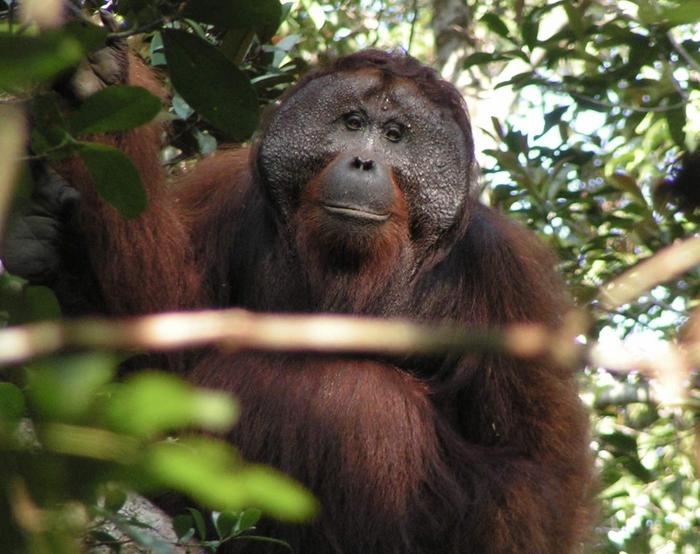
Orangutang beatboxing

Credit: Adriano Lameira and Madeleine Hardus

Orangutans can make two separate sounds simultaneously, much like songbirds or human beatboxers, according to a study. Adriano Lameira and Madeleine Hardus observed vocalizing orangutans in the wild. Humans use the lips, tongue, and jaw to make the unvoiced sounds of consonants, while activating the vocal folds in the larynx with exhaled air to make the voiced, open sounds of vowels. Orangutans are capable of producing both types of sounds—and both at once. For example, large male orangutans in Borneo will produce noises known as “chomps” in combination with “grumbles” in combative situations. Females in Sumatra produce “kiss squeaks” atop “rolling calls” to alert others of a possible predator threat. Humans rarely produce voiced and voiceless noises simultaneously. The exception is beatboxing, a virtuosic vocal performance mimicking the complex beats of hip hop music. According to the authors, the vocal control and coordination abilities of wild great apes have been underestimated compared to the focus on the vocal abilities of birds. The finding has implications for the vocal capabilities of our shared ancestors and for the evolution of human speech—as well as human beatboxing.


Journal

PNAS Nexus

DOI

10.1093/pnasnexus/pgad182

Article Title

Wild orangutans can simultaneously use two independent vocal sound sources similarly to songbirds and human beatboxers

Article Publication Date

27-Jun-2023
Share12Tweet8Share2ShareShareShare2

Related Posts

Han directs new $15M NIH center for organ-on-chip technology

Han directs new $15M NIH center for organ-on-chip technology

July 11, 2026
Bacteriophages Enable Next-Gen Smart Pathogen Detection Sensors

Bacteriophages Enable Next-Gen Smart Pathogen Detection Sensors

July 10, 2026

Temperature Fluctuations Have Greater Impact Than Previously Believed

July 10, 2026

New Study Uncovers Biology Behind Glioma Cancer Progression

July 10, 2026

POPULAR NEWS

  • Detection of EDCs in Breast Milk and Infant Urine Up to Six Months Highlights Early Exposure Risks

    77 shares
    Share 31 Tweet 19
  • New Drug Candidate Developed at McMaster Shows Potential for Treating Brain Cancer

    58 shares
    Share 23 Tweet 15
  • KTU Researchers Explore Ultrasound’s Role in Enhancing Blood Flow Beyond Diagnostics

    53 shares
    Share 21 Tweet 13
  • Experimental Therapy Simultaneously Destroys Prostate Tumor Cells and Reactivates Antitumor Immunity

    46 shares
    Share 18 Tweet 12

About

BIOENGINEER.ORG

We bring you the latest biotechnology news from best research centers and universities around the world. Check our website.

Follow us

Recent News

Top Companies Pledge Nature Goals but Fail to Ensure Accountability

Global Initiative Unveils AI Tools to Boost Alzheimer’s Research and Therapies

Esophagectomy shows feasible short-term outcomes in octogenarian esophageal cancer patients

Subscribe to Blog via Email

Success! An email was just sent to confirm your subscription. Please find the email now and click 'Confirm' to start subscribing.

Join 85 other subscribers
  • Contact Us

Bioengineer.org © Copyright 2023 All Rights Reserved.

Welcome Back!

Login to your account below

Forgotten Password?

Retrieve your password

Please enter your username or email address to reset your password.

Log In
No Result
View All Result
  • Homepages
    • Home Page 1
    • Home Page 2
  • News
  • National
  • Business
  • Health
  • Lifestyle
  • Science

Bioengineer.org © Copyright 2023 All Rights Reserved.