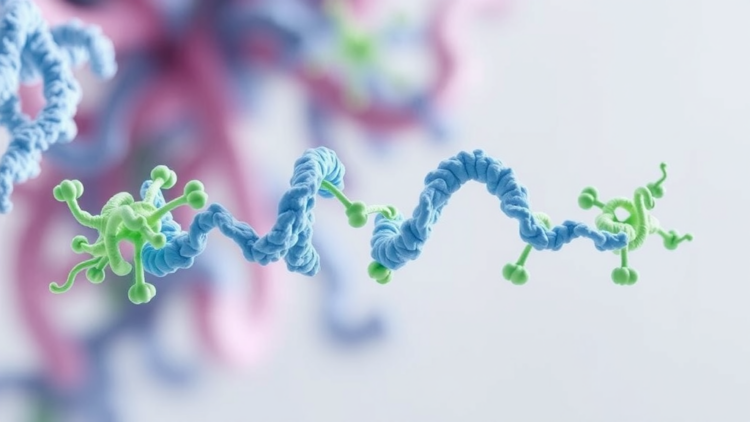
A protein whose failure lies at the heart of a devastating childhood neurodegenerative disorder has turned out to be a long-sought enzyme in one of the cell’s most obscure lipid-making pathways. In two studies published in Nature Cell Biology, researchers report that CLN8, the protein mutated in a form of Batten disease, catalyzes a key step in the production of bis(monoacylglycero)phosphate, an unusual phospholipid that accumulates almost exclusively in late endosomes and lysosomes. The findings give the protein a clear biochemical identity and provide a fresh framework for understanding why its absence causes catastrophic neurological decline.
Batten disease, the most common form of neuronal ceroid lipofuscinosis, is a group of inherited lysosomal storage disorders in which waste materials build up inside cells, particularly the neurons of the brain and retina. Children affected by CLN8 mutations can experience seizures, progressive vision loss, motor deterioration and cognitive decline, and most forms of the disease remain fatal. Roughly a dozen genes have been linked to the various forms of Batten disease, and while many of the implicated proteins have been localized to lysosomes or the endoplasmic reticulum, the precise biochemical functions of several of them have remained stubbornly elusive. CLN8, a small transmembrane protein resident in the endoplasmic reticulum, has been one of the most enigmatic.
The new work began with a deceptively simple question: how do cells manufacture bis(monoacylglycero)phosphate, a lipid so distinctive that some researchers have described it as the fingerprint of the late endosome? Unlike the canonical phospholipids that form bilayer membranes throughout the cell, BMP has an unusual stereochemical configuration and a peculiar sn-1, sn-1′ glycerophosphate backbone. It is found almost nowhere else in the cell except the internal vesicles of late endosomes and lysosomes, where it plays a central role in lipid sorting and degradation. Despite its importance, the enzymatic machinery responsible for synthesizing BMP had never been definitively identified, leaving a conspicuous gap in cell biology.
Textbook descriptions of phospholipid synthesis rely on a well-characterized set of enzymes in the endoplasmic reticulum that build phosphatidic acid and its derivatives using glycerol-3-phosphate as a scaffold. That canonical pathway, however, does not explain how BMP is made. Previous biochemical studies had suggested the existence of an alternative, non-canonical route that starts from glycerophosphoglycerol rather than glycerol-3-phosphate, but the enzyme that would initiate this pathway by converting glycerophosphoglycerol into lysophosphatidylglycerol had remained unidentified. The two studies now converge on the answer: CLN8 itself performs this acyltransferase reaction, using acyl-CoA molecules as fatty acid donors to acylate glycerophosphoglycerol.
In technical terms, the researchers showed that CLN8 catalyzes the acyl-CoA-dependent acylation of glycerophosphoglycerol, producing lysophosphatidylglycerol. This lysophospholipid is then converted, by subsequent enzymatic steps, into bis(monoacylglycero)phosphate. The discovery assigns a genuine enzymatic function to a protein that had previously been suspected of acting as a transporter or chaperone, and it places CLN8 at the very entry point of a biosynthetic route that supplies the late endocytic pathway with one of its signature lipids. The reactions were traced to the endoplasmic reticulum, consistent with CLN8’s known subcellular localization, implying that BMP precursors must be trafficked from their site of synthesis to the acidic compartments where the mature lipid accumulates.
The significance of this pathway assignment extends well beyond the technical satisfaction of filling in a missing enzymatic step. Bis(monoacylglycero)phosphate is indispensable for the normal functioning of lysosomes. It serves as a platform for the binding and activation of acid sphingomyelinase and other lipid-degrading enzymes, participates in the sorting of cholesterol and other lipids within the endolysosomal system, and is required for the proper vesicular trafficking that allows lysosomes to digest cellular debris. When BMP levels fall, these processes falter, and the consequences in neurons, which are extraordinarily dependent on continuous membrane turnover, can be severe. A failure to produce this lipid could therefore plausibly explain much of the cellular pathology observed in CLN8 Batten disease.
That connection is precisely what makes the new findings so consequential for the Batten disease field. Mutations in the CLN8 gene, which range from missense changes that impair protein function to larger deletions, give rise to two overlapping clinical presentations: a progressive epilepsy-ataxia syndrome and a more generalized classic Batten phenotype. By establishing that CLN8 is the acyltransferase that initiates BMP synthesis, the studies transform CLN8 from a protein of unknown function into an enzyme whose substrate, cofactor and product are now defined. This opens the door to measuring BMP and related lipids as biomarkers in patients, and to screening for small molecules that might restore pathway flux in cells carrying CLN8 mutations.
The identification of a non-canonical phospholipid pathway also resonates with a broader trend in cell biology. Over the past decade, researchers have come to appreciate that the canonical Kennedy pathway and its relatives do not account for every lipid a cell needs, and that alternative routes operate in specific organelles and under specific physiological conditions. Lysophosphatidylglycerol, the product of the CLN8-catalyzed reaction, has previously been detected in cells but its biosynthetic origin was unclear. Assigning its production to CLN8 resolves that ambiguity and suggests that related acyltransferase activities may await discovery in other corners of the endomembrane system. It also raises the possibility that other unsolved lysosomal storage disorders may stem from defects in equally obscure lipid biochemistry.
For the immediate future, the studies are expected to redirect experimental attention toward the steps downstream of CLN8. If lysophosphatidylglycerol is the direct precursor of BMP, then the enzymes that convert the former into the latter, and the transport mechanisms that move these lipids between the endoplasmic reticulum and the late endosome, become obvious targets for investigation. Understanding how the pathway is regulated, how it responds to cellular stress, and how mutations that partially impair CLN8 function translate into reduced BMP production will all be critical next steps. The fact that two independent studies arrived at the same conclusion through different approaches lends particular confidence to the central claim and suggests the finding will withstand the scrutiny that follows any major discovery.
Batten disease remains without a cure, and therapies developed to date, including enzyme replacement and gene therapy approaches for other subtypes, have delivered only partial benefits. Discoveries like this one, which replace biochemical mystery with molecular mechanism, are the raw material from which such therapies are ultimately built. By revealing that the ER-associated protein CLN8 enables a non-canonical phospholipid synthesis pathway, the researchers have not only solved a long-standing puzzle in lipid biochemistry but have also handed clinicians and drug developers a concrete, measurable process that can now be interrogated in patients and models alike. For families affected by CLN8 disease, the work represents a meaningful step from description toward explanation, and from explanation, eventually, toward intervention.
Subject of Research: The enzymatic role of the Batten disease protein CLN8 in a non-canonical phospholipid synthesis pathway
Article Title: Batten disease protein CLN8 enables a non-canonical phospholipid synthesis pathway
Article References: Breithofer, J., Fawzy, N., Zitta, C., Tischitz, M., Bulfon, D., Hofmann, C., Hartig, L., Wagner, C., Grabner, G. F., Pirchheim, A., Lass, A., Taschler, U., Turner, K., Petkevicius, K., Stelzl, U., Kratky, D., Breinbauer, R., & Zimmermann, R. (2026). Batten disease protein CLN8 enables a non-canonical phospholipid synthesis pathway. Nature Cell Biology. https://doi.org/10.1038/s41556-026-02059-8
Image Credits: AI Generated
DOI: 10.1038/s41556-026-02059-8
Keywords: Batten disease, CLN8, phospholipid synthesis, lysophosphatidylglycerol, bis(monoacylglycero)phosphate, lysosome, endoplasmic reticulum, lipid biochemistry, neuronal ceroid lipofuscinosis, neurodegeneration, acyltransferase, endolysosomal pathway
Cite Scienmag News
APA MLA Chicago
Diana Fleming. (September 20, 2026). Batten Disease Protein CLN8 Reveals a Hidden Route for Making Key Lipids. Scienmag. https://scienmag.com/batten-disease-protein-cln8-reveals-a-hidden-route-for-making-key-lipids/
Diana Fleming. “Batten Disease Protein CLN8 Reveals a Hidden Route for Making Key Lipids.” Scienmag, 20 September 2026, https://scienmag.com/batten-disease-protein-cln8-reveals-a-hidden-route-for-making-key-lipids/. Accessed 20 September 2026.
Diana Fleming. “Batten Disease Protein CLN8 Reveals a Hidden Route for Making Key Lipids.” Scienmag. September 20, 2026. https://scienmag.com/batten-disease-protein-cln8-reveals-a-hidden-route-for-making-key-lipids/
Copy citation Download RIS
Tags: acyltransferaseBatten diseasebis(monoacylglycero)phosphatebis(monoacylglycero)phosphate productionCLN8CLN8 protein functionendolysosomal pathwayendoplasmic reticulumendosomal and lysosomal lipid metabolismgenetic mutations in Batten diseaseintracellular lipid traffickinglipid biochemistrylipid biosynthesis pathwayslysophosphatidylglycerollysosomal enzyme identificationlysosomal storage disorderslysosomeneurobiology of childhood neurodegenerationneurodegenerationneurodegenerative disease mechanismsNeuronal Ceroid Lipofuscinosisphospholipid synthesis