• HOME
  • NEWS
  • EXPLORE
    • CAREER
      • Companies
      • Jobs
    • EVENTS
    • iGEM
      • News
      • Team
    • PHOTOS
    • VIDEO
    • WIKI
  • BLOG
  • COMMUNITY
    • FACEBOOK
    • INSTAGRAM
    • TWITTER
Monday, August 31, 2026
BIOENGINEER.ORG
No Result
View All Result
  • Login
  • HOME
  • NEWS
  • EXPLORE
    • CAREER
      • Companies
      • Jobs
        • Lecturer
        • PhD Studentship
        • Postdoc
        • Research Assistant
    • EVENTS
    • iGEM
      • News
      • Team
    • PHOTOS
    • VIDEO
    • WIKI
  • BLOG
  • COMMUNITY
    • FACEBOOK
    • INSTAGRAM
    • TWITTER
  • HOME
  • NEWS
  • EXPLORE
    • CAREER
      • Companies
      • Jobs
        • Lecturer
        • PhD Studentship
        • Postdoc
        • Research Assistant
    • EVENTS
    • iGEM
      • News
      • Team
    • PHOTOS
    • VIDEO
    • WIKI
  • BLOG
  • COMMUNITY
    • FACEBOOK
    • INSTAGRAM
    • TWITTER
No Result
View All Result
Bioengineer.org
No Result
View All Result
Home NEWS Science News Biology

Bat Poop: A Reliable Source of Climate Change

Bioengineer by Bioengineer
October 26, 2017
in Biology
Reading Time: 2 mins read
0
Share on FacebookShare on TwitterShare on LinkedinShare on RedditShare on Telegram
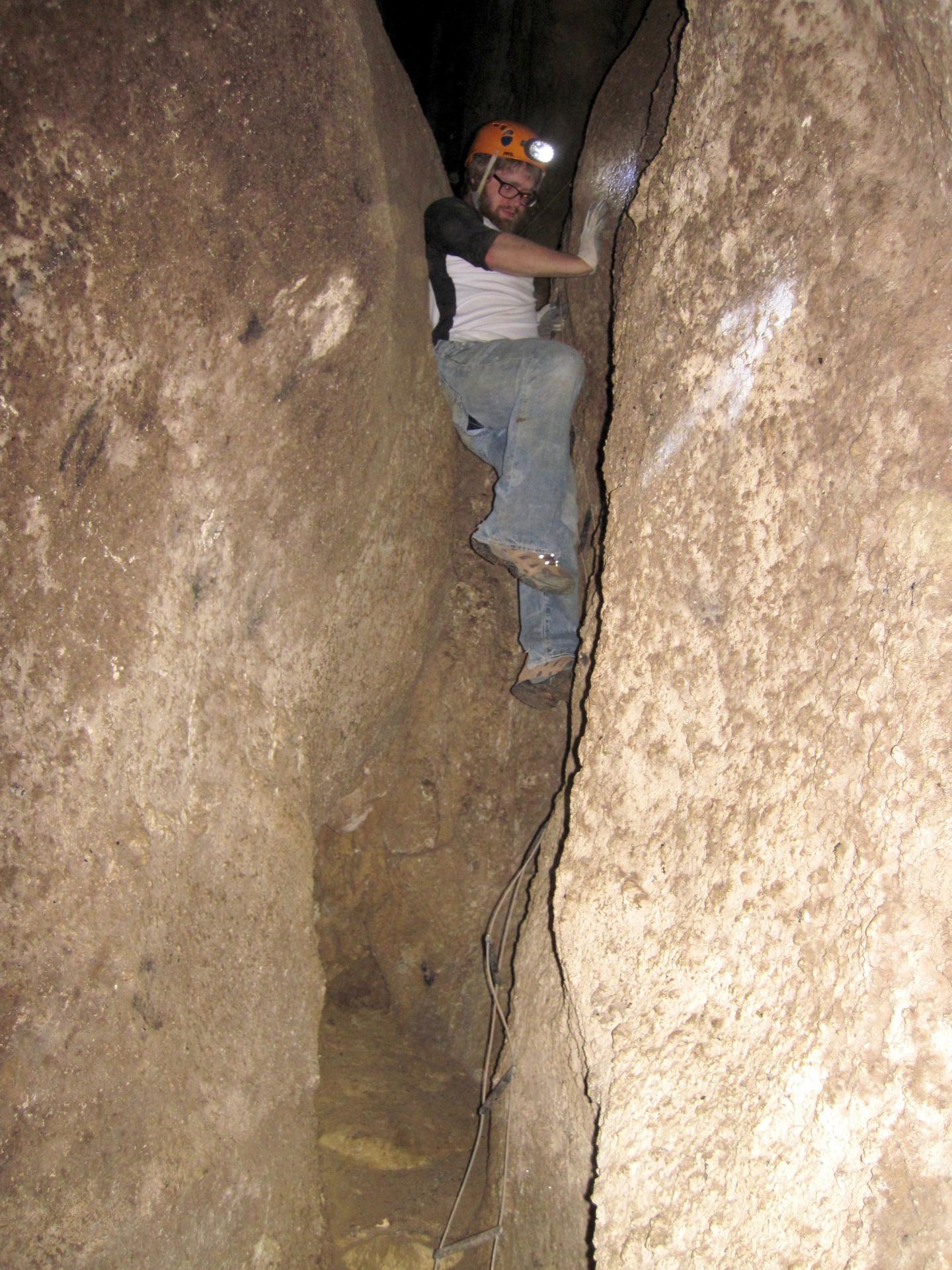
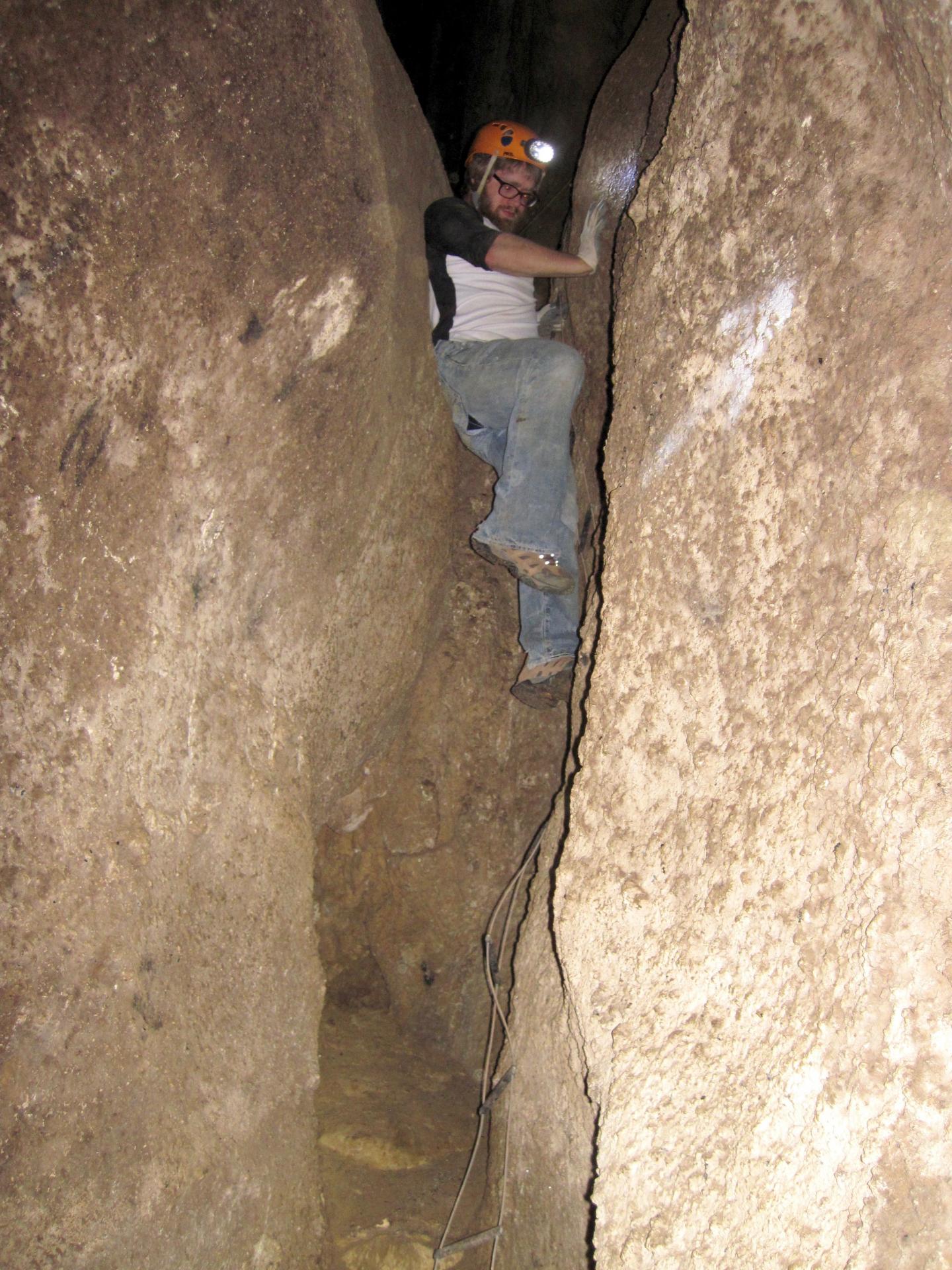
IMAGE

Credit: Dr. Bogdan Onac, University of South Florida

People have long known that bat guano – the polite term for what the flying mammals leave on the floors of caves where they live worldwide – is a valuable source of fuel and fertilizer, but now newly published research from University of South Florida geoscientists show that the refuse is also a reliable record of climate change.

In a new paper published this week in the research journal Scientific Reports, USF geochemistry Professor Bogdan Onac and PhD student Daniel Cleary report that isotopes found in bat guano over the last 1,200 years can provide scientists with information on how the climate was and is changing.

The scientists examined bat guano from a cave in northwestern Romania to produce new insight into how the climate in east-central Europe has changed since the Medieval Warm Period, about 850 AD.

Nitrogen cycling within temperate forests is very sensitive to changes in the amount of winter precipitation received each year. When nitrogen isotopes change in response to variation in winter precipitation over the past 2,000 years, this signature is transferred from the soil to plant leaves to insect to bat and ultimately guano.

"Luckily for scientists, the statement 'you are what you eat' also applies to bats," Onac said.

Scientists frequently examine chemical records in natural substances to document how the climate has changed in the past, and to lend insight into how rapidly it is changing now. Scientists drill mud cores into the sediments under the oceans, ice cores in the Arctic and Antarctica, examine tree rings, or use the chemistry found in caves (stalagmites) as climatic proxies.

Bat guano is rich with nitrogen, and scientists know that nitrogen moves through the food change and through animals, where it is returned to the environment. When bats return to the same location within a cave, guano piles beneath their roost can reach sizable dimensions. The researchers found in M?gurici Cave in Romania is a large three-meter pile of bat guano that has been accumulating for more than a thousand years.

Isotopic analysis of the guano pile in the M?gurici Cave resulted in a near annual record of winter precipitation for the region. The location of this cave in the foreland of the East Carpathian Mountains means winter precipitation is modulated by the North Atlantic Oscillation (NAO), with wetter conditions influencing the availability of nitrogen within the surrounding forest system. Using historical records of precipitation, a relationship between winter precipitation and NAO phases was established. Through this work, past phases of the NAO could then be reconstructed back to 1600 AD, Cleary said.

The work represents the first study to provide a paleo-record of this large scale atmospheric circulation pattern for East-Central Europe using cave bat guano. The USF researchers collaborated with Babes-Bolyai University in Cluj, Romania, and the University of Bremen in Germany.

###

The study was funded with a seed grant from USF that led to a five-year grant from the Romanian Science Foundation, which supported the analytical work of D. Cleary.

Media Contact

Tina Meketa
[email protected]
813-955-2593

http://www.hsc.usf.edu

Share13Tweet8Share2ShareShareShare2

Related Posts

Methylation puts parasites in motion

Methylation puts parasites in motion

August 31, 2026
Desiccation promotes DNA damage and rifampin resistance in Mycobacterium tuberculosis

Desiccation promotes DNA damage and rifampin resistance in Mycobacterium tuberculosis

August 31, 2026

Gastrointestinal Parasitism in Cattle and Water Buffaloes in Pakistan: Prevalence and Associated Risk Factors

August 31, 2026

Development of HPLC–PDA method for steviol glycosides analysis in food matrices

August 31, 2026
Please login to join discussion

POPULAR NEWS

  • β-Sitosterol from Ipomoea carnea Jacq. As a promising anti-inflammatory agent: Evidence from in silico modeling and in vitro validation

    29 shares
    Share 12 Tweet 7
  • Design, fabrication and characterization of a wearable Fiber Bragg grating sensor for cardiorespiratory monitoring using finger plethysmography

    29 shares
    Share 12 Tweet 7
  • KAIST opens the era of industrial-scale microbial foods, proposing growth strategies for the next-generation protein market

    29 shares
    Share 12 Tweet 7
  • Virologist awarded $2 million NIH grant to investigate how virus-infected cells live and die

    29 shares
    Share 12 Tweet 7

About

We bring you the latest biotechnology news from best research centers and universities around the world. Check our website.

Follow us

Recent News

β-Sitosterol from Ipomoea carnea Jacq. As a promising anti-inflammatory agent: Evidence from in silico modeling and in vitro validation

Design, fabrication and characterization of a wearable Fiber Bragg grating sensor for cardiorespiratory monitoring using finger plethysmography

KAIST opens the era of industrial-scale microbial foods, proposing growth strategies for the next-generation protein market

Subscribe to Blog via Email

Enter your email address to subscribe to this blog and receive notifications of new posts by email.

Join 85 other subscribers
  • Contact Us

Bioengineer.org © Copyright 2023 All Rights Reserved.

Welcome Back!

Login to your account below

Forgotten Password?

Retrieve your password

Please enter your username or email address to reset your password.

Log In
No Result
View All Result
  • Homepages
    • Home Page 1
    • Home Page 2
  • News
  • National
  • Business
  • Health
  • Lifestyle
  • Science

Bioengineer.org © Copyright 2023 All Rights Reserved.