

• HOME
  • NEWS
  • EXPLORE
    • CAREER
      • Companies
      • Jobs
    • EVENTS
    • iGEM
      • News
      • Team
    • PHOTOS
    • VIDEO
    • WIKI
  • BLOG
  • COMMUNITY
    • FACEBOOK
    • INSTAGRAM
    • TWITTER
Thursday, January 1, 2026
BIOENGINEER.ORG
No Result
View All Result
  • Login
  • HOME
  • NEWS
  • EXPLORE
    • CAREER
      • Companies
      • Jobs
        • Lecturer
        • PhD Studentship
        • Postdoc
        • Research Assistant
    • EVENTS
    • iGEM
      • News
      • Team
    • PHOTOS
    • VIDEO
    • WIKI
  • BLOG
  • COMMUNITY
    • FACEBOOK
    • INSTAGRAM
    • TWITTER
  • HOME
  • NEWS
  • EXPLORE
    • CAREER
      • Companies
      • Jobs
        • Lecturer
        • PhD Studentship
        • Postdoc
        • Research Assistant
    • EVENTS
    • iGEM
      • News
      • Team
    • PHOTOS
    • VIDEO
    • WIKI
  • BLOG
  • COMMUNITY
    • FACEBOOK
    • INSTAGRAM
    • TWITTER
No Result
View All Result
Bioengineer.org
No Result
View All Result
Home NEWS Science News Health

Banned pesticides in Europe’s rivers

Bioengineer by Bioengineer
April 8, 2019
in Health
Reading Time: 2 mins read
0
IMAGE
Share on FacebookShare on TwitterShare on LinkedinShare on RedditShare on Telegram

IMAGE

Credit: Jonathan Panduro Findalen/Greenpeace

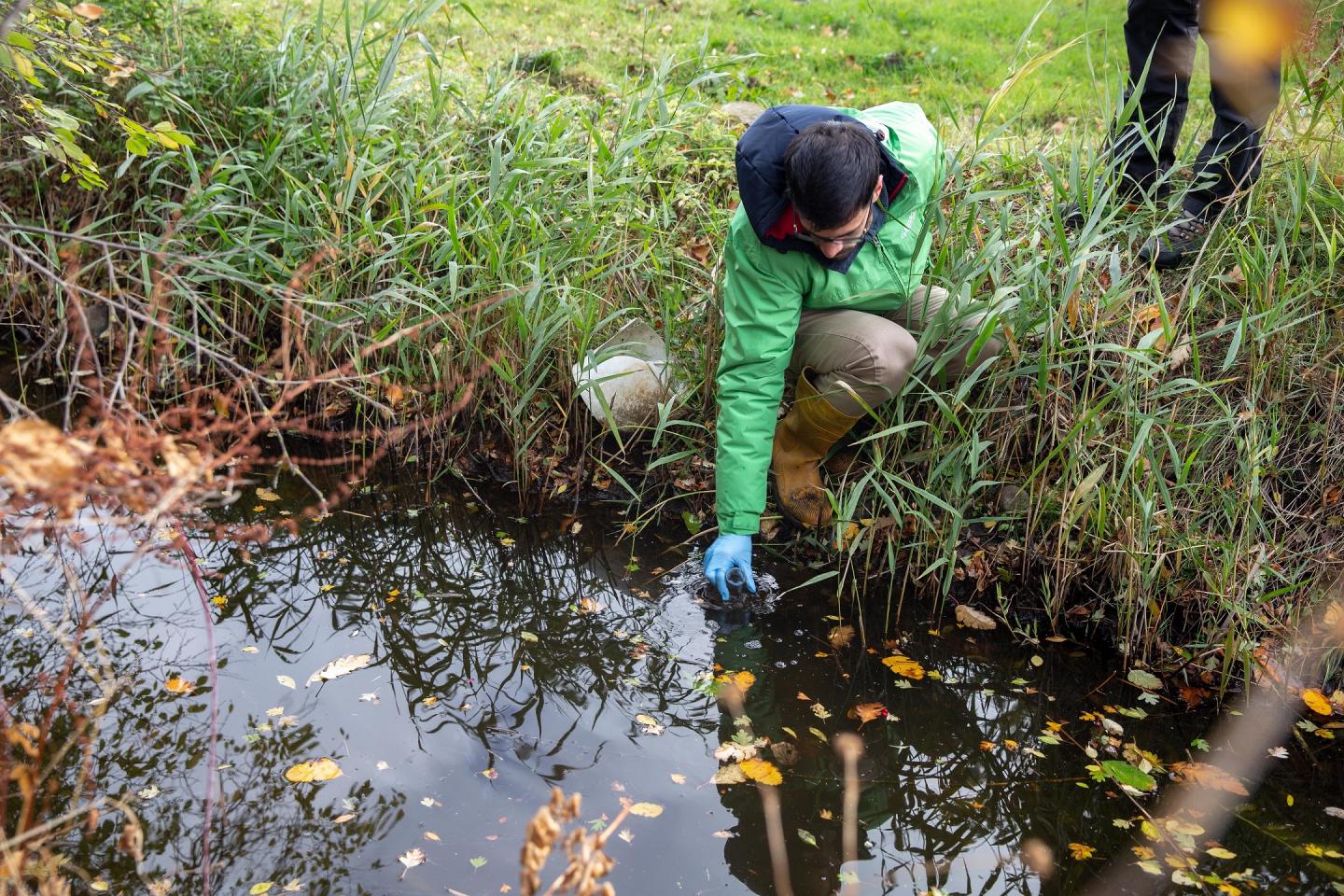
Tests of Europe’s rivers and canals have revealed more than 100 pesticides – including 24 that are not licensed for use in the EU.

The study, which tested samples from 29 waterways in 10 countries including the UK, also found 21 veterinary drugs.

Every river and canal screened in the study – from countries as far apart as Poland and Spain – contained multiple pesticides, and most contained veterinary drugs.

The scientists, from Greenpeace Research Laboratories at the University of Exeter, said the highest levels of contamination were found in a Belgian canal that contained 70 pesticides.

In 13 of the 29 waterways, concentrations of at least one pesticide exceeded European standards for acceptable levels.

“There is huge uncertainty about what effects these mixtures of chemicals could have on wildlife and human health,” said Dr Jorge Casado, who led the analytical work.

“We know many of these individual pesticides are a cause for concern.

“However, despite ongoing efforts by the European Food Safety Authority (EFSA) to establish methods for mixture assessment, as things stand we still don’t really know what it means for wildlife and human health when faced with such complex and variable exposures to harmful chemicals, even if some are at concentrations that might not individually trigger concern.”

The researchers said the presence of unlicensed pesticides did not necessarily mean they had been used illegally, as they could have been used for other permitted purposes or before bans came into force or licenses expired.

However, they noted that several pesticides were found in multiple rivers, and said the concentration and frequency of carbendazim (found in 93% of samples) was “remarkable”.

The majority of the veterinary drugs detected were antimicrobials, most being antibiotics.

The study is an example of the work that will be developed further at Exeter’s Global Systems Institute (GSI), which aims to bring together people and organisations from multiple fields to secure a “flourishing future for humanity”.

“This is not a case of us versus farmers or water companies,” said Dr Paul Johnston, who co-authored the paper.

“This is about using forensic scientific methods to investigate a problem that faces us all. We have to work together to find a holistic solution.

“Farmers don’t want to pollute rivers, and water companies don’t want to have to remove all that pollution again downstream, so we have to work to reduce reliance on pesticides and veterinary drugs through more sustainable agriculture.”

Of the 103 pesticides identified, almost half were herbicides and the rest were fungicides or insecticides.

###

The study took samples from waterways in Austria, Belgium, Germany, Denmark, France, Italy, the Netherlands, Poland, Spain and the UK.

The paper, published in the journal Science of the Total Environment, is entitled: “Screening of pesticides and veterinary drugs in small streams in the European Union by liquid chromatography high resolution mass spectrometry.”

Media Contact
Alex Morrison
[email protected]

Related Journal Article

http://dx.doi.org/10.1016/j.scitotenv.2019.03.207

Tags: Agricultural Production/EconomicsAgricultureBiodiversityBiologyEcology/EnvironmentFertilizers/Pest ManagementFisheries/AquacultureMarine/Freshwater BiologyToxicology
Share14Tweet8Share2ShareShareShare2

Related Posts

AI Classifies Tumor-Infiltrating Lymphocytes in Breast Cancer

January 1, 2026

Transforming Allied Health: Effective Co-Designed Placement Models

January 1, 2026

Enhanced Nerve Conduits Boost Sciatic Regeneration

January 1, 2026

Assessing HPV Self-Collection Readiness in Tamil Nadu

January 1, 2026
Please login to join discussion

POPULAR NEWS

  • blank

    PTSD, Depression, Anxiety in Childhood Cancer Survivors, Parents

    110 shares
    Share 44 Tweet 28
  • NSF funds machine-learning research at UNO and UNL to study energy requirements of walking in older adults

    71 shares
    Share 28 Tweet 18
  • Exploring Audiology Accessibility in Johannesburg, South Africa

    52 shares
    Share 21 Tweet 13
  • SARS-CoV-2 Subvariants Affect Outcomes in Elderly Hip Fractures

    44 shares
    Share 18 Tweet 11

About

We bring you the latest biotechnology news from best research centers and universities around the world. Check our website.

Follow us

Recent News

AI Classifies Tumor-Infiltrating Lymphocytes in Breast Cancer

Breakthroughs in 3D Photonic Waveguide Couplers

Transforming Allied Health: Effective Co-Designed Placement Models

Subscribe to Blog via Email

Enter your email address to subscribe to this blog and receive notifications of new posts by email.

Join 71 other subscribers
  • Contact Us

Bioengineer.org © Copyright 2023 All Rights Reserved.

Welcome Back!

Login to your account below

Forgotten Password?

Retrieve your password

Please enter your username or email address to reset your password.

Log In
No Result
View All Result
  • Homepages
    • Home Page 1
    • Home Page 2
  • News
  • National
  • Business
  • Health
  • Lifestyle
  • Science

Bioengineer.org © Copyright 2023 All Rights Reserved.


