


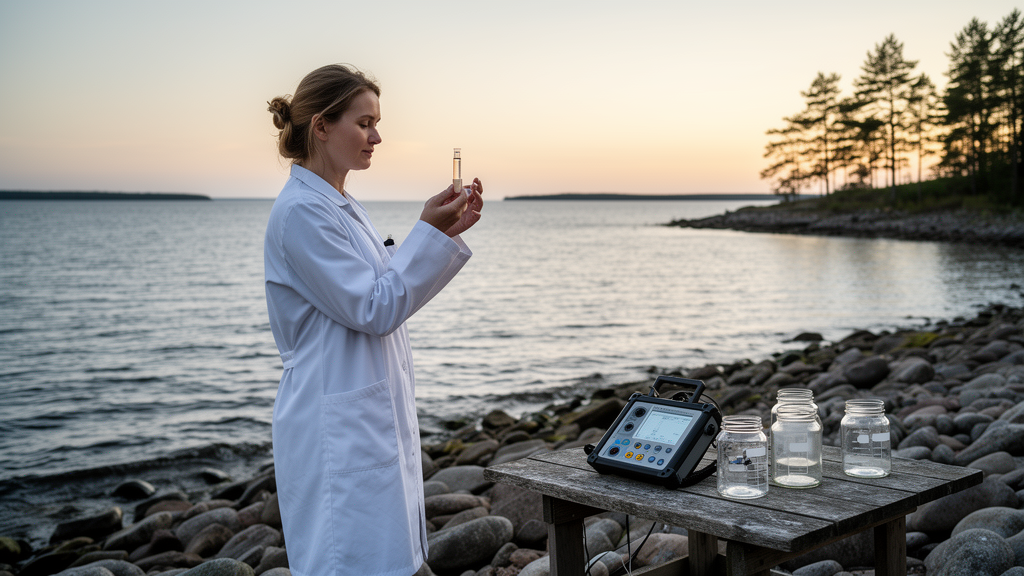
A comprehensive review of artificial radionuclides in the world’s seas and oceans finds that the Baltic Sea carries the highest levels of radioactive contamination among the marine environments examined, while estimated radiation doses from seafood consumption remain far below international safety thresholds. The study, published in Environmental Geochemistry and Health, analyzed research from 2005 to 2025 on three human-made isotopes: cesium-137, strontium-90, and plutonium-239.
The review identifies three main sources of these isotopes in aquatic systems: the release of radioactive effluents from nuclear power plants, atmospheric nuclear weapons testing, and major nuclear accidents such as Chernobyl and Fukushima. In the Baltic Sea, surface-water cesium-137 concentrations ranged from 12 to 51 becquerels per cubic meter, and sediment concentrations ranged from 1 to 400 becquerels per kilogram of dry weight. Both figures substantially exceed the global ocean average for surface water, which the review places at 0.5 to 2 becquerels per cubic meter.
The authors attribute the Baltic Sea’s elevated contamination primarily to its semi-enclosed morphology, restricted water exchange, and prolonged exposure to radioactive fallout from the 1986 Chernobyl accident. Approximately 5 petabecquerels of cesium-137 were deposited within the Baltic Sea catchment and subsequently delivered to the marine environment. For comparison, the Fukushima accident released an estimated 10 to 20 petabecquerels of cesium-137 directly to the ocean, yet the Baltic’s limited flushing means contamination persists at higher concentrations.
Among the artificial radionuclides analyzed, cesium-137 emerged as the dominant contributor to total artificial radioactivity in most studied marine environments. In the Baltic Sea specifically, it accounts for more than 80 to 90 percent of anthropogenic radioactivity. This dominance reflects both its abundance in fallout and its relatively consistent reporting across monitoring programs compared with strontium-90 and plutonium-239.
The quantitative risk assessment, based on cesium-137 as the most consistently reported anthropogenic radionuclide, showed that the annual effective dose from seafood consumption ranged from 1.2 to 12 microsieverts per year across different regions. The corresponding Excess Lifetime Carcinogenic Risk values were well below international thresholds, typically under 10 to the power of minus 5. These modeled estimates suggest that, despite measurable contamination in regional seas, the radiological risk to consumers of seafood from artificial isotopes is small.
The review adds an important caveat: these anthropogenic doses are negligible compared with those from naturally occurring radionuclides, particularly polonium-210, which account for more than 99 percent of the total seafood ingestion dose globally. The authors note that while their review deliberately focuses on artificial radionuclides to maintain focus and coherence, natural radionuclides are the dominant contributors to seafood ingestion dose in most marine environments.
Subject of Research: Radiological risks of anthropogenic radionuclides in the world's seas and oceans
Article Title: An assessment of radiological risks from anthropogenic radionuclides (137Cs, 90Sr, and 239Pu) in the world’s seas and oceans
Article References: Pourali, P., Ghayurdoost, F., Asgari Lajayer, B., & Mosaferi, M. (2026). An assessment of radiological risks from anthropogenic radionuclides (137Cs, 90Sr, and 239Pu) in the world’s seas and oceans. Environmental Geochemistry and Health, 48(17), Article 670. https://doi.org/10.1007/s10653-026-03567-0
Image Credits: AI Generated
DOI: 10.1007/s10653-026-03567-0
Keywords: Baltic Sea, cesium-137, strontium-90, plutonium-239, radioactive contamination, Chernobyl, Fukushima, seafood dose, radiological risk, marine environment, nuclear weapons testing, polonium-210
News Source: Violet Maxwell. (October 29, 2026). Baltic Sea Leads Global Ocean Radioactivity Review, But Seafood Doses Stay Low. Scienmag.



