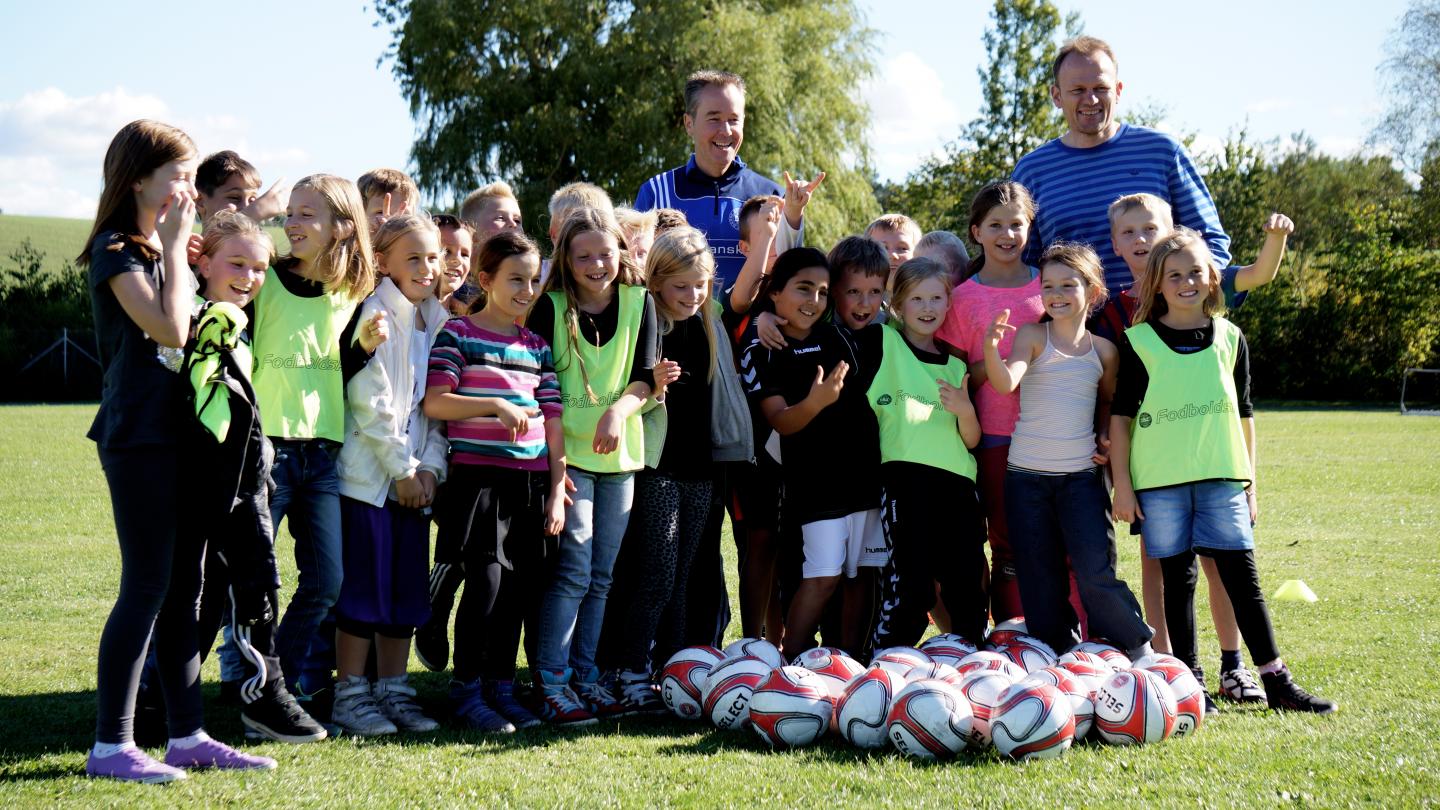
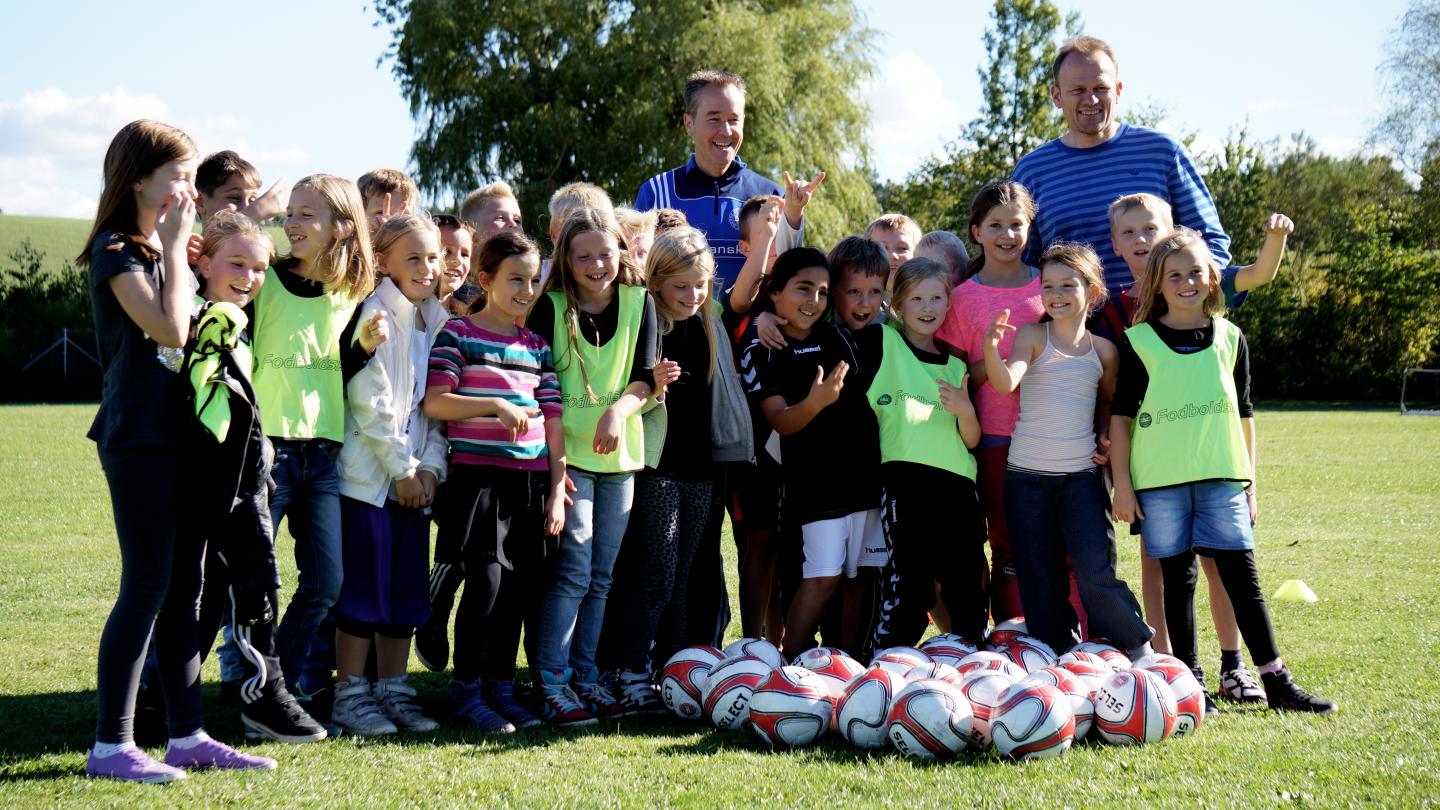
Credit: F-MARC
The study, which was published in the February 2018 issue of the recognised British Journal of Sports Medicine, examined bone and muscle health in 295 schoolchildren from Frederikssund and Copenhagen over a whole school year where the children participated in the 'FIT FIRST' training concept, looking into the effects of various types of intense interval training at school.
This programme was initiated at University of Copenhagen by researchers Professor Peter Krustrup and Assistant Professor Malte Nejst Larsen, now at the University of Southern Denmark, and run in collaboration between sports coaches and schoolteachers.
In the study, the researchers compared the effects on children who took the normal school PE classes with children who had intense exercise on the timetable for two hours a week in the form of ball games on small pitches or 'circuit training' consisting of gymnastic and strength exercises using their own body weight.
Strong bones in children prevent osteoporosis later in life
"Our research shows that intense exercise at school has clear positive effects on bone density, muscular strength and balance in 8-10-year-old children," says the project leader Peter Krustrup, Professor of Sport and Health Sciences at the University of Southern Denmark.
"In the children in third grade who played ball games three against three or participated in circuit training for 3 x 40 minutes a week, muscular strength increased by 10% and balance improved by 15%, while the children's bone density increased by a whole 45% compared to the control group. These types of sports are great ways for children to "put bone in the bank".
Malte Nejst Larsen, Assistant Professor at the University of Southern Denmark, adds: "The study shows that bone density in the ball-game group rose by 7% in the legs and by 3% in the body as a whole, giving a real boost to bone health. Exercise in school for children aged 8-10 which improves bone density, muscular strength and balance is the first big step towards preventing osteoporosis later in life," he says.
About the FIT FIRST concept
FIT FIRST stands for 'Frequent Intense Training – Football, Interval Running and Strength Training'.
The concept has been developed based on many years of Danish research into the importance of intensity for effects on cardiovascular and bone health, and the influence of the organisation of sports activities, such as the use of small-sided football, team handball, floorball and basketball on small pitches. Like the concept 'FIFA 11 for Health in Europe', the aim of FIT FIRST is to produce well-specified, evidence-based and implementable tools to boost fitness and health through exercise at school.
The project was run in a partnership between the Copenhagen Centre for Team Sport and Health at the University of Copenhagen, Gentofte Hospital and the municipality of Frederikssund, with financial support from the Nordea Foundation (Nordea-fonden), the Aase and Ejnar Danielsen Foundation, Augustinus Fonden, FIFA's research unit F-MARC, the Danish Football Association (DBU), Team Denmark, the Sports Confederation of Denmark (DIF) and the Danish Ministry of Culture.
###
Findings from the project
The study of the FIT FIRST concept showed that:
- Bone density in the legs and in the body as a whole rose by 44% and 46% more in the ball-game group than in the control group, while bone density in the circuit training group rose by 39% and 17% more than in the control group. The increase in bone density in the legs was significantly greater in the ball-game group than in the circuit training group.
- Bone density in the legs increased by 7.0% in the ball-game group, 5.6% in the circuit training group and 4.0% in the control group, while bone density in the whole body rose by 3.0%, 2.9% and 2.1% in the three groups.
- Muscular strength, measured by a standing long jump (squat jump), increased by 10% for both the ball-game and circuit training groups, while there was no change in the control group.
- Balance improved by 13% in the ball-game group and by 19% in the circuit training group, while there was no change in the control group.
Contact:
Peter Krustrup
Professor of Sport and Health Sciences,
Department of Sports Science and Clinical Biomechanics
University of Southern Denmark
Denmark
E-mail: [email protected]
Mobile: 45-2116-1530
Media Contact
[email protected]
[email protected]
0045-23-23-86-24
http://www.sdu.dk/en/Om_SDU/Fakulteterne/Sundhedsv
Related Journal Article
http://dx.doi.org/10.1136/bjsports-2016-096219