Credit: Kumar R, et al. (2017)
A subspecies of the bacterium Streptococcus gallolyticus appears to actively promote the development of colorectal cancer, according to new research published in PLOS Pathogens.
Scientists have known for some time that people infected with the S. gallolyticus subspecies gallolyticus (Sg) are more likely to have colorectal cancer (CRC), a leading cause of cancer death. However, it was unknown whether Sg actively promotes CRC or whether it simply grows comfortably in the environment provided by CRC tumor cells.
To investigate the precise role of Sg in CRC, Ritesh Kumar of Texas A&M Health Science Center and colleagues performed several experiments using cultured human colorectal cells, mice with CRC, and tissue from human tumors.
Experiments in which CRC cells and Sg were grown together showed that Sg promotes proliferation of CRC cells, and that this effect depends on what phase of growth the Sg bacteria are in. Sg¬-driven proliferation of CRC cells only occurred when the bacteria and CRC cells were in direct contact with each other; substances secreted by bacterial cells did not drive proliferation on their own.
The researchers also explored the effects of Sg on a human protein known as β-catenin, which plays a key role in the development of CRC. They found that Sg did not promote proliferation of CRC cells in which β-catenin production or activity were deliberately reduced, suggesting that Sg drives proliferation through the β-catenin cell signaling pathway.
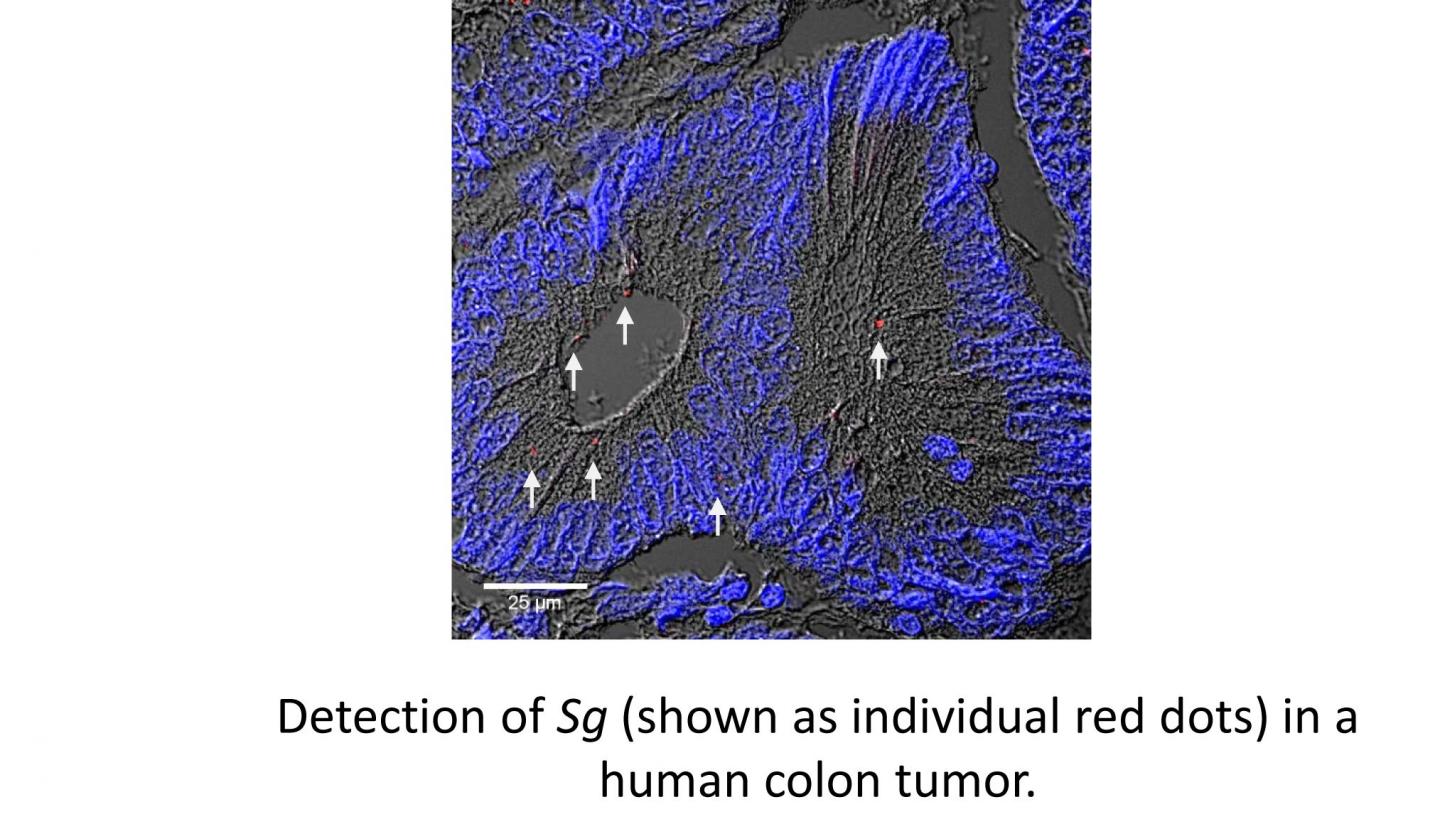
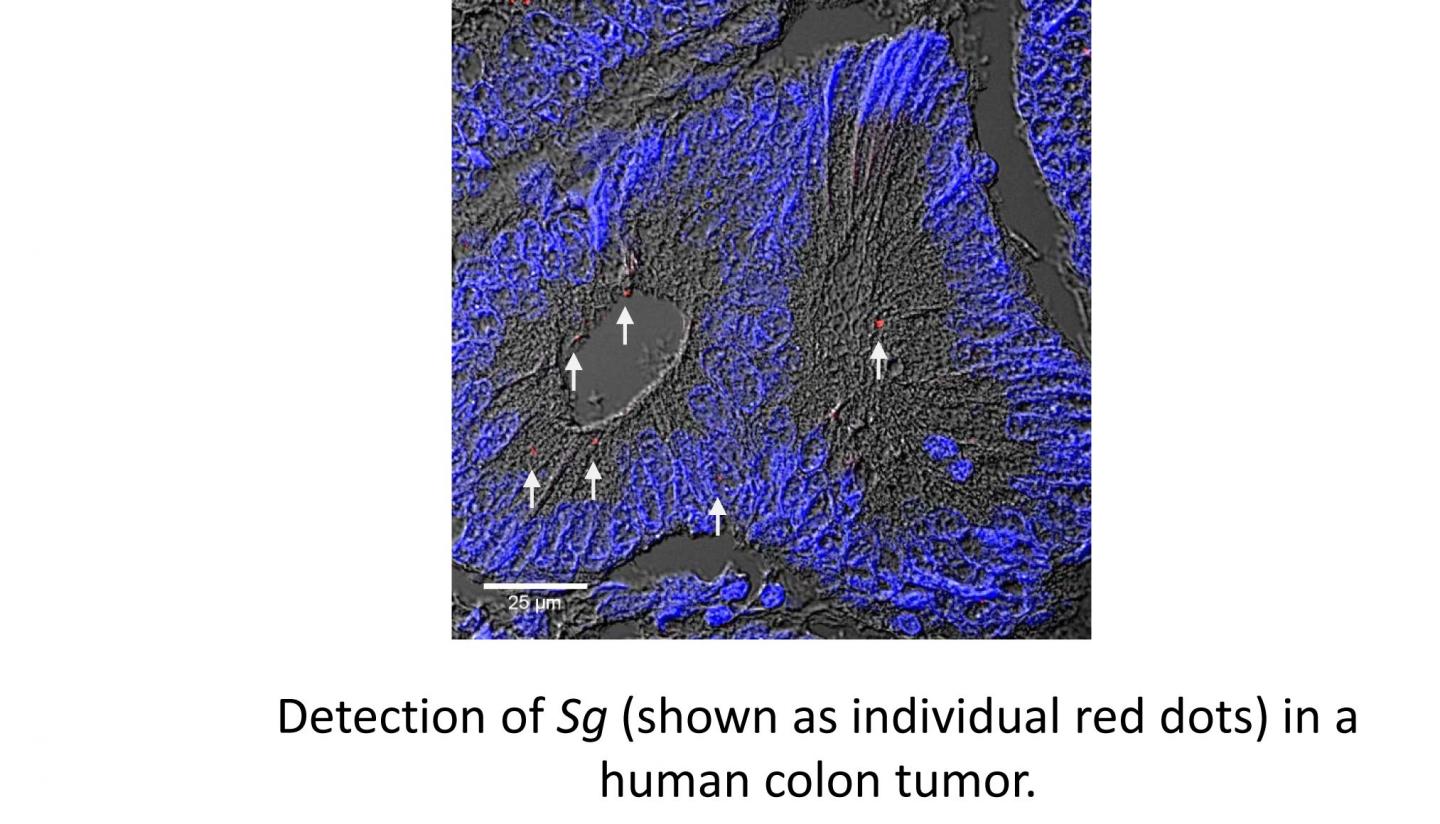
In mice with CRC, those injected with Sg developed more tumors and had greater β-catenin production (as well as other signs of cancer severity) than did mice injected with a different type of bacteria as a control. The researchers also analyzed normal and tumor tissue samples from more than 100 human CRC patients and found that most were infected with Sg, which was previously unknown.
Overall, these findings strongly suggest that Sg plays an active role in CRC development in humans. In the future, the precise mechanisms of its tumor-promoting activity could potentially be exploited to develop new strategies to diagnose, prevent, and treat CRC. "A bacterium that has been well documented to have a strong clinical association with CRC is now found to also functionally promote the development of CRC."
###
In your coverage please use this URL to provide access to the freely available article in PLOS Pathogens: http://journals.plos.org/plospathogens/article?id=10.1371/journal.ppat.1006440
Citation: Kumar R, Herold JL, Schady D, Davis J, Kopetz S, Martinez-Moczygemba M, et al. (2017) Streptococcus gallolyticus subsp. gallolyticus promotes colorectal tumor development. PLoS Pathog 13(7): e1006440. https://doi.org/10.1371/journal.ppat.1006440
Funding: The study was supported by funds from the Hamill Foundation and Texas A&M Health Science Center. JD is supported in part by a grant from The University of Texas MD Anderson Cancer Center Duncan Family Institute for Cancer Prevention and Risk Assessment.Characterized Cell Line Core Facility, University of Texas MD Anderson Cancer Center, Houston, TX is funded by NCI # CA016672. The funders had no role in study design, data collection and analysis, decision to publish, or preparation of the manuscript.
Competing Interests: The authors have declared that no competing interests exist.
Media Contact
PLOS Pathogens
[email protected]
Related Journal Article
http://dx.doi.org/10.1371/journal.ppat.1006440