• HOME
  • NEWS
  • EXPLORE
    • CAREER
      • Companies
      • Jobs
    • EVENTS
    • iGEM
      • News
      • Team
    • PHOTOS
    • VIDEO
    • WIKI
  • BLOG
  • COMMUNITY
    • FACEBOOK
    • INSTAGRAM
    • TWITTER
Saturday, June 13, 2026
BIOENGINEER.ORG
No Result
View All Result
  • Login
  • HOME
  • NEWS
  • EXPLORE
    • CAREER
      • Companies
      • Jobs
        • Lecturer
        • PhD Studentship
        • Postdoc
        • Research Assistant
    • EVENTS
    • iGEM
      • News
      • Team
    • PHOTOS
    • VIDEO
    • WIKI
  • BLOG
  • COMMUNITY
    • FACEBOOK
    • INSTAGRAM
    • TWITTER
  • HOME
  • NEWS
  • EXPLORE
    • CAREER
      • Companies
      • Jobs
        • Lecturer
        • PhD Studentship
        • Postdoc
        • Research Assistant
    • EVENTS
    • iGEM
      • News
      • Team
    • PHOTOS
    • VIDEO
    • WIKI
  • BLOG
  • COMMUNITY
    • FACEBOOK
    • INSTAGRAM
    • TWITTER
No Result
View All Result
Bioengineer.org
No Result
View All Result
Home NEWS Science News

Bacteria take a deadly risk to survive

Bioengineer by Bioengineer
May 2, 2017
in Science News
Reading Time: 2 mins read
0
Share on FacebookShare on TwitterShare on LinkedinShare on RedditShare on Telegram
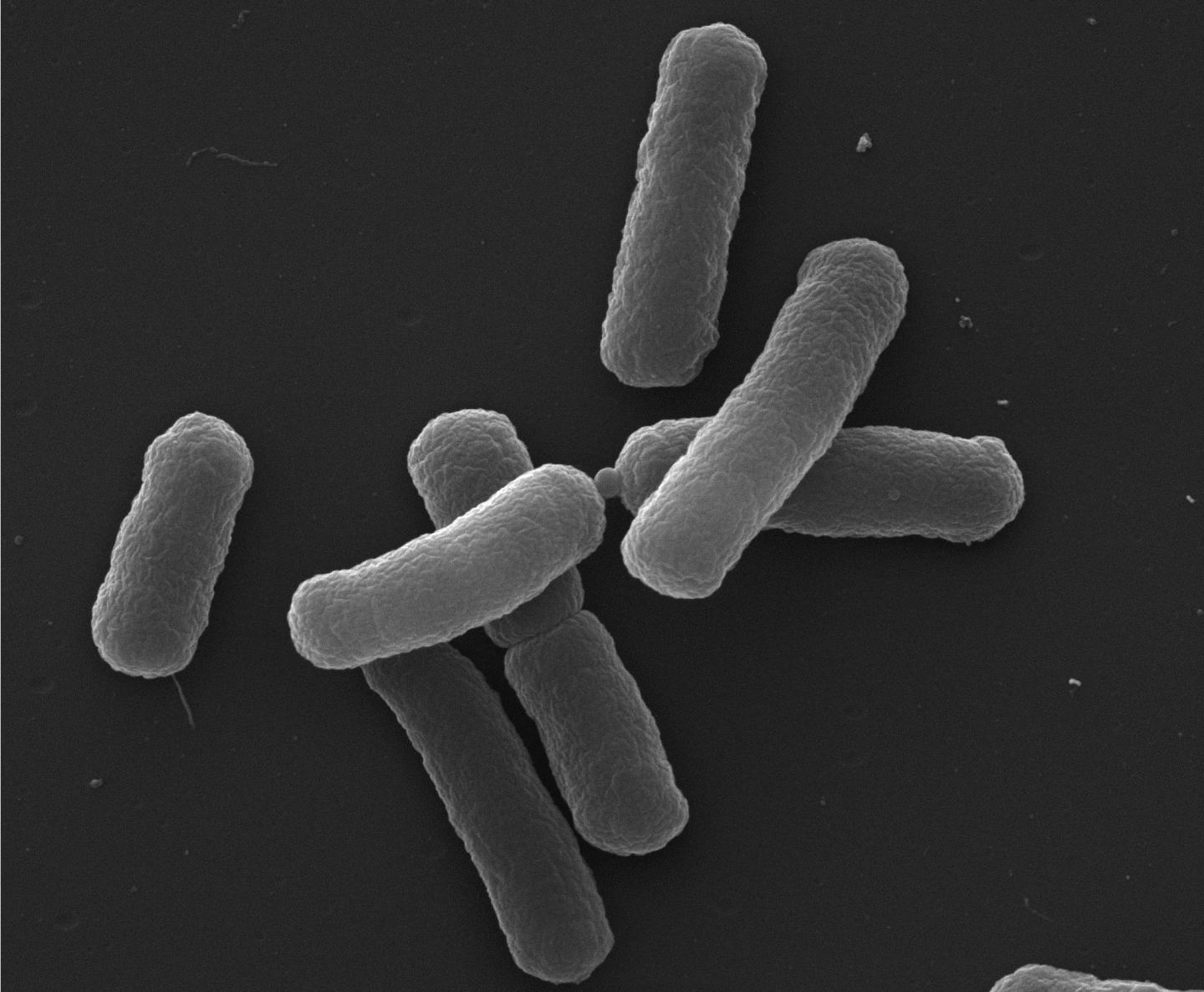
IMAGE

Credit: KU Leuven – Toon Swings

Bacteria need mutations — changes in their DNA code — to survive under difficult circumstances. When necessary, they can even mutate at different speeds. This is shown in a recent study by the Centre of Microbial and Plant Genetics at KU Leuven (University of Leuven), Belgium. The findings open up various new avenues for research, ranging from more efficient biofuel production methods to a better treatment for bacterial infections and cancer.

When they're under stress, bacteria start mutating to produce one or more DNA variants that make it possible for the bacteria to survive and reproduce. But mutating is dangerous under normal circumstances as it weakens the bacteria. The trick, therefore, is finding the balance between too many and too few mutations. Losing this balance means hypermutation: the cell mutates much more quickly than it normally does, eventually leading to death.

As scientific knowledge about the role of hypermutation is still limited, KU Leuven researchers examined its underlying mechanism in the gut bacteria Escherichia coli. "E.coli is a notorious cause of diarrhoea, but most E.coli strains are in fact harmless gut bacteria found in human beings and animals," says Professor Jan Michiels. "Exposure to high, near-lethal concentrations of ethanol triggers hypermutation in the E.coli. We were surprised to find that the speed of hypermutation in the bacteria can rapidly be changed: the bacteria mutate more quickly in higher concentrations of ethanol and more slowly when the ethanol stress is relieved. As soon as the danger is past, the bacteria step on the brake and try to revert to their normal state, without hypermutation."

Hypermutation allowed the bacteria to survive ethanol stress and enabled the researchers to select E. coli mutants that are very resistant to ethanol. This offers new perspectives for research on biofuel production. "In the biofuel production process sugar is derived from plant residues and similar waste products. This sugar, in turn, is converted into ethanol. E.coli bacteria can be used for this purpose: they can convert sugars into ethanol but are eventually killed by the ethanol they produce. The hypermutation enabled us to obtain variants that are less susceptible to ethanol and that grow quickly. This means that we might be able to use them for more efficient biofuel production."

"Another application is the fight against the antibiotic resistance of bacteria and the resistance of cancer cells to chemotherapy," doctoral student Toon Swings adds. "Antibiotics pose a deadly threat to bacteria. The bacteria protect themselves by mutating and, as a result, they develop antibiotic resistance. The same applies to cancer cells after a treatment. Therefore, blocking hypermutation could form a possible treatment or perhaps even a new co-therapy."

###

Media Contact

Jan Michiels
32-163-29684
[email protected]

Toon Swings
[email protected]
32-163-76672

############

Story Source: Materials provided by Scienmag
Share12Tweet8Share2ShareShareShare2

Related Posts

Researchers Target Entire Phishing Campaigns Instead of Isolated Malicious Links — Technology and Engineering

Researchers Target Entire Phishing Campaigns Instead of Isolated Malicious Links

June 13, 2026
How Environment Shapes Newborn Health Outcomes — Technology and Engineering

How Environment Shapes Newborn Health Outcomes

June 13, 2026

Unseen Vision Loss: Danish Seniors’ Hidden Struggles

June 13, 2026

Precision Ablation Targets Metastatic Cancer via Rewired Signaling

June 13, 2026
Please login to join discussion

POPULAR NEWS

  • ESMO 2025: mRNA COVID Vaccines Enhance Efficacy of Cancer Immunotherapy

    325 shares
    Share 130 Tweet 81
  • Saying Goodbye to PGY-6: Pediatric Fellowship Realities

    98 shares
    Share 39 Tweet 25
  • Multi-Hospital Study Reveals Long Covid Burden Is Twice as High as Current Estimates

    90 shares
    Share 36 Tweet 22
  • Common Food Preservatives Associated with Elevated Blood Pressure and Increased Heart Disease Risk

    58 shares
    Share 23 Tweet 15

About

We bring you the latest biotechnology news from best research centers and universities around the world. Check our website.

Follow us

Recent News

Researchers Target Entire Phishing Campaigns Instead of Isolated Malicious Links

How Environment Shapes Newborn Health Outcomes

Unseen Vision Loss: Danish Seniors’ Hidden Struggles

Subscribe to Blog via Email

Enter your email address to subscribe to this blog and receive notifications of new posts by email.

Join 82 other subscribers
  • Contact Us

Bioengineer.org © Copyright 2023 All Rights Reserved.

Welcome Back!

Login to your account below

Forgotten Password?

Retrieve your password

Please enter your username or email address to reset your password.

Log In
No Result
View All Result
  • Homepages
    • Home Page 1
    • Home Page 2
  • News
  • National
  • Business
  • Health
  • Lifestyle
  • Science

Bioengineer.org © Copyright 2023 All Rights Reserved.