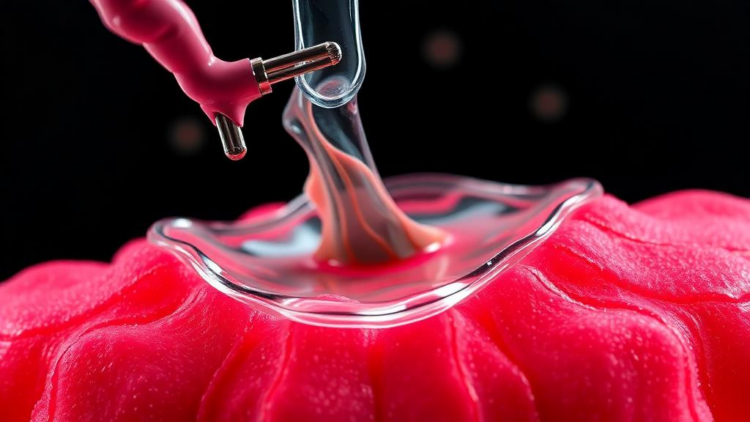
Gastrointestinal cancers remain among the deadliest malignancies worldwide, and the tools clinicians use to fight them have changed little in decades. Surgery is invasive and frequently followed by recurrence, while systemic chemotherapy inflicts dose-limiting toxicity across the whole body. Now, a team of researchers in South Korea has unveiled a radically different approach: a postage-stamp-sized, multilayered adhesive sheet that physically anchors itself to a tumor inside the gut and then releases genetically engineered Salmonella bacteria that swim deep into the tumor core, secreting an anticancer peptide as they go. The platform, described in the journal Materials Today Bio, tackles a problem that has frustrated drug developers for years — most therapies delivered to the gastrointestinal tract simply wash away before they can work.
The device, called a Bacteria-Releasing Mucoadhesive Sheet, or BRMS, was developed by Jihun Lee, Sana Ashraf, and colleagues working with Sukho Park at institutions including the Korea Institute of Science and Technology and Daegu Gyeongbuk Institute of Science and Technology. Its design responds to three formidable barriers that defeat conventional oral drug delivery in the gut: the acidic environment of the stomach, the sticky mucus layer that coats the intestinal wall, and the tight junctions that seal the epithelial lining. Rather than swallowing a pill and hoping it survives the journey, clinicians would deploy the BRMS directly onto a tumor using an endoscope or a magnetically steered capsule robot, keeping the sheet sealed and dry until the moment of release.
The sheet’s architecture is a study in layered functional engineering. An outer unrolling layer made of poly(ethylene glycol) dimethacrylate swells dramatically when it contacts intestinal fluid, generating a bending moment that causes the rolled sheet to unfurl within roughly 100 seconds and drape itself conformally over curved mucosal surfaces. Beneath it sits a guard layer of tri(ethylene glycol) dimethacrylate, a nearly impermeable polymer that blocks bacteria from escaping into the gut lumen and enforces strictly one-way release toward the tumor. The therapeutic layer itself is split into two zones: a peripheral ring of alginate and skim milk that provides powerful mucoadhesion, and a central reservoir containing freeze-dried, genetically engineered Salmonella together with the sugar L-arabinose.
The mucoadhesion is not a minor detail — it is the linchpin of the entire strategy. In the turbulent environment of the intestine, where peristaltic waves and continuous fluid flow scour the mucosal surface, free bacteria or drug particles are swept away within minutes. Quantitative tests on porcine small intestinal tissue showed that after two minutes of contact, the BRMS required a detachment force of 0.544 newtons, roughly four times greater than a gelatin control sheet commonly used in drug delivery research. The alginate-rich peripheral region achieves this grip through abundant carboxyl and hydroxyl groups that form dense hydrogen-bonding networks with mucin, the glycoprotein that gives mucus its adhesive character. Skim milk, meanwhile, serves as a cryoprotectant that shields bacterial cell membranes from ice-crystal damage during freeze-drying, allowing the bacteria to be stored dry and revived on demand.
The therapeutic payload is as sophisticated as the carrier. The researchers used an attenuated Salmonella Typhimurium strain, engineered with deletions in the aroA, aroD, rcsB, and asd genes to reduce virulence, and equipped it with a plasmid that fuses the anticancer peptide VC1 to FlgM, a protein naturally exported through the flagellar type III secretion system. VC1, also known as α-conotoxin Vc1.1, is a 16-amino-acid peptide originally discovered in the venom of the marine cone snail Conus victoriae. It blocks the α9α10 nicotinic acetylcholine receptor, a receptor implicated in cancer cell proliferation, survival, and migration. When the sheet hydrates at the target site, the co-encapsulated L-arabinose switches on the bacterial secretion machinery, and the Salmonella begin pumping out VC1 into the tumor’s extracellular space.
What sets this system apart from passive drug formulations is what happens next. Conventional nanoparticles and small-molecule drugs rely on diffusion, a process that stalls in the dense extracellular matrix and elevated interstitial fluid pressure of solid tumors. In confocal microscopy experiments on three-dimensional CT-26 colon cancer spheroids roughly 400 micrometers across, a doxorubicin-loaded control sheet delivered its payload only to the outer rim of the tumor model, with signal fading to nearly nothing beyond about 21 percent of the spheroid’s radius. The Salmonella released from the BRMS, by contrast, distributed throughout the entire spheroid, propelled by their flagella and guided by their natural preference for the hypoxic, immunosuppressed conditions found in tumor cores. In a Transwell assay simulating mucus barriers and fluid wash-out, the sheet achieved bacterial penetration roughly 130-fold higher than a free bacterial suspension of the same dose.
The cytotoxicity results under physiologically mimetic conditions were equally striking. When CT-26 colon cancer cells were separated from treatments by a motility agar barrier and subjected to a wash-out step, neither the doxorubicin-loaded sheet nor the free Salmonella suspension produced meaningful cell death — both were defeated by the physical barrier and fluid flow. The fully functional BRMS carrying VC1-induced Salmonella, however, killed the largest fraction of cancer cells, combining the bacteria’s intrinsic oncolytic activity and nutrient competition with the anticancer action of locally secreted VC1. The effect extended across species: supernatants from VC1-secreting bacteria significantly reduced viability not only in mouse CT-26 cells but also in human SW480 and HT-29 colorectal cancer lines.
Perhaps the most clinically compelling demonstrations came from the delivery experiments. Using a standard commercial colonoscope fitted with a soft Ecoflex cap that stays sealed during navigation and opens only when forceps push the sheet out, the team deployed BRMS units onto porcine intestinal tissue mounted in a 3D-printed phantom. The sheets released, self-unrolled, and adhered conformally to the mucosa within view of the endoscopic camera, and a separate test inside an intact, uncut porcine intestinal lumen confirmed the approach works under realistic anatomical conditions. The researchers also loaded four rolled sheets into a custom magnetically actuated capsule robot, steered it wirelessly using a six-coil electromagnetic actuation system, and sequentially deposited all four units at spatially distinct target sites — a capability that could allow multiple lesions to be treated in a single procedure.
In vivo, the platform delivered its most dramatic result. In BALB/c mice bearing subcutaneous CT-26 tumors, mice implanted with the fully activated BRMS — bacteria plus L-arabinose induction — showed progressive tumor regression rather than mere growth delay, ending the two-week study with markedly smaller tumors than every control group. Crucially, mice that received the same dose of VC1-secreting Salmonella as a free suspension showed tumor growth indistinguishable from untreated controls, a direct demonstration that the therapeutic benefit came from the sheet’s ability to retain bacteria at the lesion, not from the bacteria alone. Histology revealed extensive necrosis and elevated apoptotic cell populations in treated tumors, and no significant body weight loss or systemic toxicity appeared in any group.
The authors are candid about the hurdles that remain before the BRMS reaches patients. The L-arabinose inducer loaded within the sheet proved insufficient for autonomous high-level VC1 secretion in vitro, forcing daily intraperitoneal injections in the mouse study — an approach that would undermine the convenience of localized therapy in the clinic. Future iterations may engineer bacteria that secrete VC1 constitutively or respond to tumor-specific cues such as hypoxia or acidity, or deliver the inducer orally. The in vivo model also placed tumors under the skin rather than in the gut, so orthotopic studies in large animals will be needed to validate unrolling, adhesion, and bacterial kinetics in a real gastrointestinal environment. Biosafety, too, demands attention: although the attenuated strain caused no observable adverse effects, infection risk in immunocompromised patients may ultimately favor swapping Salmonella for clinically validated probiotic strains such as engineered E. coli Nissle 1917. Even so, the BRMS stands as a vivid example of what happens when synthetic biology, materials science, and surgical robotics converge — a living drug factory, glued to a tumor, swimming medicine into places no molecule could reach on its own.
Subject of Research: A mucoadhesive bacteria-releasing sheet for localized, penetrative therapy of gastrointestinal cancer using engineered Salmonella
Article Title: A bacteria-releasing mucoadhesive sheet for localized delivery and penetrative therapy of gastrointestinal cancer
Article References: Lee, J., Ashraf, S., Kim, E., Lee, H.-J., Park, J., Jeon, H. J., Suh, S., & Park, S. (2026). A bacteria-releasing mucoadhesive sheet for localized delivery and penetrative therapy of gastrointestinal cancer. Materials Today Bio, 41, Article 103710. https://doi.org/10.1016/j.mtbio.2026.103710
Image Credits: AI Generated
DOI: 10.1016/j.mtbio.2026.103710
Keywords: gastrointestinal cancer, Salmonella, mucoadhesive sheet, drug delivery, bacterial therapy, VC1 conotoxin, capsule robot, endoscopy, tumor penetration, biotechnology, oncology, hydrogel
Cite Scienmag News
APA MLA Chicago
Nathaniel Bowman. (September 30, 2026). Bacteria-Releasing Sticky Sheet Drives Cancer-Killing Microbes Deep Into Gut Tumors. Scienmag. https://scienmag.com/bacteria-releasing-sticky-sheet-drives-cancer-killing-microbes-deep-into-gut-tumors/
Nathaniel Bowman. “Bacteria-Releasing Sticky Sheet Drives Cancer-Killing Microbes Deep Into Gut Tumors.” Scienmag, 30 September 2026, https://scienmag.com/bacteria-releasing-sticky-sheet-drives-cancer-killing-microbes-deep-into-gut-tumors/. Accessed 30 September 2026.
Nathaniel Bowman. “Bacteria-Releasing Sticky Sheet Drives Cancer-Killing Microbes Deep Into Gut Tumors.” Scienmag. September 30, 2026. https://scienmag.com/bacteria-releasing-sticky-sheet-drives-cancer-killing-microbes-deep-into-gut-tumors/
Copy citation Download RIS
Tags: bacteria-based cancer therapybacteria-mediated anticancer therapybacterial therapybioadhesive medical implantsbiotechnologycancer-targeting drug deliverycapsule robotDrug deliveryendoscopygastrointestinal cancergastrointestinal cancer treatmentgenetically engineered Salmonellagut tumor microenvironmenthydrogelinnovative cancer treatment technologiesmicrobiome and cancermucoadhesive drug delivery systemsmucoadhesive sheetoncologyoral drug delivery challengesSalmonellatumor penetrationtumor-penetrating therapeutic devicesVC1 conotoxin