

• HOME
  • NEWS
  • EXPLORE
    • CAREER
      • Companies
      • Jobs
    • EVENTS
    • iGEM
      • News
      • Team
    • PHOTOS
    • VIDEO
    • WIKI
  • BLOG
  • COMMUNITY
    • FACEBOOK
    • INSTAGRAM
    • TWITTER
Sunday, June 28, 2026
BIOENGINEER.ORG
No Result
View All Result
  • Login
  • HOME
  • NEWS
  • EXPLORE
    • CAREER
      • Companies
      • Jobs
        • Lecturer
        • PhD Studentship
        • Postdoc
        • Research Assistant
    • EVENTS
    • iGEM
      • News
      • Team
    • PHOTOS
    • VIDEO
    • WIKI
  • BLOG
  • COMMUNITY
    • FACEBOOK
    • INSTAGRAM
    • TWITTER
  • HOME
  • NEWS
  • EXPLORE
    • CAREER
      • Companies
      • Jobs
        • Lecturer
        • PhD Studentship
        • Postdoc
        • Research Assistant
    • EVENTS
    • iGEM
      • News
      • Team
    • PHOTOS
    • VIDEO
    • WIKI
  • BLOG
  • COMMUNITY
    • FACEBOOK
    • INSTAGRAM
    • TWITTER
No Result
View All Result
Bioengineer.org
No Result
View All Result
Home NEWS Science News Health

Bacteria do not colonize the gut before birth, says collaborative study

Bioengineer by Bioengineer
May 10, 2021
in Health
Reading Time: 2 mins read
0
IMAGE
Share on FacebookShare on TwitterShare on LinkedinShare on RedditShare on Telegram

It happens during and after birth
IMAGE

Credit: McMaster University

Hamilton, ON (May 10, 2021) – It is well known that each person’s gut bacteria is vital for digestion and overall health, but when does that gut microbiome start?

New research led by scientists from McMaster University and Charité – Universitätsmedizin Berlin in Germany has found it happens during and after birth, and not before.

McMaster researchers Deborah Sloboda and Katherine Kennedy examined prenatal stool (meconium) samples collected from 20 babies during breech Cesarean delivery.

“The key takeaway from our study is we are not colonized before birth. Rather, our relationship with our gut bacteria emerges after birth and during infancy,” said Kennedy, first author of the study and a PhD student, whose findings are published in Nature Microbiology.

Recent studies have sparked controversy by claiming that we are colonized by gut bacteria before birth. But, Kennedy said, studies such as these have been criticized for the ways they control for contamination.

“By including only breech caesarean deliveries in healthy pregnant women we were able to avoid the transmission of bacteria that occurs naturally during a vaginal birth,” said Thorsten Braun, co-senior author and lead obstetric consultant and deputy director of the Department of ‘Experimental Obstetrics’ at Charité – Universitätsmedizin Berlin.

Kennedy said recent data suggest that a person’s relationship with their own gut bacteria is most important in early life, during critical stages of immunological and physiological development.

Sloboda, co-senior author, agrees.

“The fact that colonization of infants’ guts occurs during and after their births, means that not only is it vulnerable to early environmental influences, but could also offers a window of potential intervention,” said Sloboda, professor of biochemistry and biomedical sciences at McMaster and the Canada Research Chair in perinatal programming.

“While many of the exact mechanisms surrounding gut bacteria and their role in our early development is unclear, discovering when and how we are colonized is a key first step.”

###

External funding for the study came from the Canadian Institutes of Health Research.

Editors:

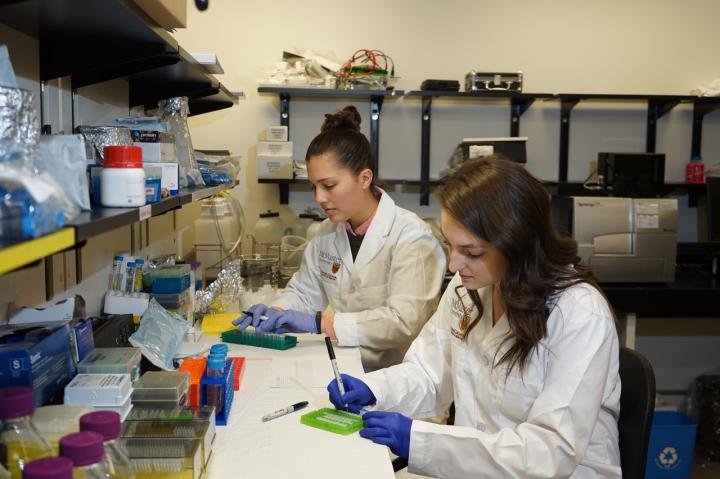
A photo of the first author of the study PhD student Katherine Kennedy (left) and PhD student Patrycja Jazwiec is attached.

The paper is available at https://go.nature.com/3tDd5ky

For information, please contact:

Veronica McGuire

Media Relations

Faculty of Health Sciences

McMaster University

289-776-6952

[email protected]

Media Contact
Veronica McGuire
[email protected]

Tags: GastroenterologyMedicine/HealthPediatrics
Share12Tweet8Share2ShareShareShare2

Related Posts

Tracking Lanthanide-Labeled Microplastics in Plants

June 25, 2026

Neural Design Enables Zero-Shot Drug-Binding Proteins

June 25, 2026

Genomic Insights into Human Skin Fungi Diversity

June 25, 2026

Chiral Laser Gyroscopes Surpass Lock-In Limit

June 25, 2026
Please login to join discussion

POPULAR NEWS

  • Saying Goodbye to PGY-6: Pediatric Fellowship Realities

    103 shares
    Share 41 Tweet 26
  • Multi-Hospital Study Reveals Long Covid Burden Is Twice as High as Current Estimates

    92 shares
    Share 36 Tweet 23
  • Detection of EDCs in Breast Milk and Infant Urine Up to Six Months Highlights Early Exposure Risks

    77 shares
    Share 31 Tweet 19
  • New Drug Candidate Developed at McMaster Shows Potential for Treating Brain Cancer

    58 shares
    Share 23 Tweet 15

About

We bring you the latest biotechnology news from best research centers and universities around the world. Check our website.

Follow us

Recent News

Tracking Lanthanide-Labeled Microplastics in Plants

POSTECH Researchers Slash Cost of Reconstituted Cell-Free Systems by 95%

AI and Physics Collaborate to Design Advanced Hydrogen Storage Materials

Subscribe to Blog via Email

Success! An email was just sent to confirm your subscription. Please find the email now and click 'Confirm' to start subscribing.

Join 82 other subscribers
  • Contact Us

Bioengineer.org © Copyright 2023 All Rights Reserved.

Welcome Back!

Login to your account below

Forgotten Password?

Retrieve your password

Please enter your username or email address to reset your password.

Log In
No Result
View All Result
  • Homepages
    • Home Page 1
    • Home Page 2
  • News
  • National
  • Business
  • Health
  • Lifestyle
  • Science

Bioengineer.org © Copyright 2023 All Rights Reserved.
