Breakthrough research has found that Group A Streptococcus (GAS) infections are more likely transmitted from asymptomatic throat carriage than skin-to-skin contact in communities with high rates of infection.
Credit: Doherty Institute
Breakthrough research has found that Group A Streptococcus (GAS) infections are more likely transmitted from asymptomatic throat carriage than skin-to-skin contact in communities with high rates of infection.
This major discovery has far-reaching implications for public health approaches, vaccine development and future research as it challenges previous understanding of how the bacterium is spread.
GAS (Streptococcus pyogenes), commonly found on the skin and in the throat, can cause infections ranging from sore throats and impetigo (skin infections) to deadly bloodstream infections. In places like remote First Nations communities where the pathogen is widespread, constant exposure to GAS can lead to severe and life-threatening conditions such as rheumatic heart disease.
In this study, published in the journal The Lancet Microbe, the team of scientists shed new light on GAS transmission dynamics in high-risk settings where the bacteria are prevalent, to inform the development of more effective strategies for prevention and control.
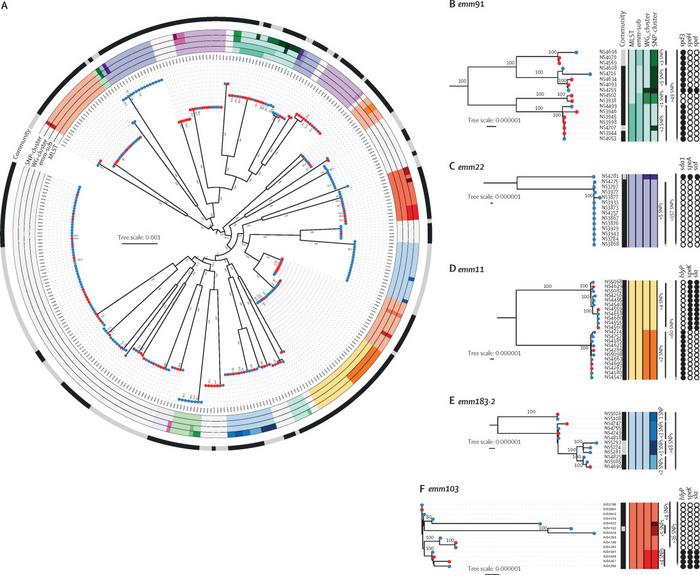
Researchers, led by the Peter Doherty Institute for Infection and Immunity (Doherty Institute), in collaboration with Menzies School of Health Research and Telethon Kids Institute, analysed the genetic makeup of hundreds of GAS bacterial samples collected 20 years ago from throats and impetigo lesions in remote First Nations communities in the Northern Territory, Australia.
Lead author Dr Jake Lacey, a University of Melbourne researcher at the Doherty Institute, explained that genome sequencing played a pivotal role in determining the contribution of impetigo and asymptomatic throat carriage to GAS transmission.
“Our analysis revealed direct connections between isolates recovered from the skin and throat, challenging common thinking that skin-to-skin contact is the primary mode of transmission. In fact, we found that bacteria found in the throat of people who are not showing any symptoms of infections were the likely source of infection in 63 per cent of cases,” Dr Lacey explained.
Professor Bart Currie, from the Global and Tropical Health Division at Menzies School of Health Research, said that these insights provide valuable clues for better controlling skin infections in remote communities, where limited knowledge of bacterial transmission had posed challenges until now.
“With this new genome knowledge we have been able to map out the spread of the bacteria within and between households. This transmission mapping exercise is particularly important for addressing the disproportionate burden of GAS infections on First Nations Australians in remote communities,” Professor Currie said.
The Royal Melbourne Hospital’s Professor Steven Tong, Infectious Diseases Physician at the Doherty Institute and senior author of the research paper, underscored the implications of the findings.
“Our research suggests that public health approaches should not solely focus on skin infections but also consider the role of throat carriage in GAS transmission. For instance, vaccines targeting bacteria in the throat may offer greater efficacy in preventing the spread of infection compared to those that only target disease,” Professor Tong said.
“The burden of GAS infection documented in this study also reiterates the fundamental role of primordial prevention in First Nations health initiatives.
“Importantly, this work also prompts researchers to now consider the importance of throat carriage when assessing the transmission dynamics of GAS.”
Journal
The Lancet Microbe
DOI
10.1016/S2666-5247(23)00068-X
Method of Research
Observational study
Subject of Research
People
Article Title
Evaluating the role of asymptomatic throat carriage of Streptococcus pyogenes in impetigo transmission in remote Aboriginal communities in Northern Territory, Australia: a retrospective genomic analysis
Article Publication Date
18-May-2023
COI Statement
All authors declare no competing interests.