• HOME
  • NEWS
  • EXPLORE
    • CAREER
      • Companies
      • Jobs
    • EVENTS
    • iGEM
      • News
      • Team
    • PHOTOS
    • VIDEO
    • WIKI
  • BLOG
  • COMMUNITY
    • FACEBOOK
    • INSTAGRAM
    • TWITTER
Saturday, June 27, 2026
BIOENGINEER.ORG
No Result
View All Result
  • Login
  • HOME
  • NEWS
  • EXPLORE
    • CAREER
      • Companies
      • Jobs
        • Lecturer
        • PhD Studentship
        • Postdoc
        • Research Assistant
    • EVENTS
    • iGEM
      • News
      • Team
    • PHOTOS
    • VIDEO
    • WIKI
  • BLOG
  • COMMUNITY
    • FACEBOOK
    • INSTAGRAM
    • TWITTER
  • HOME
  • NEWS
  • EXPLORE
    • CAREER
      • Companies
      • Jobs
        • Lecturer
        • PhD Studentship
        • Postdoc
        • Research Assistant
    • EVENTS
    • iGEM
      • News
      • Team
    • PHOTOS
    • VIDEO
    • WIKI
  • BLOG
  • COMMUNITY
    • FACEBOOK
    • INSTAGRAM
    • TWITTER
No Result
View All Result
Bioengineer.org
No Result
View All Result
Home NEWS Science News Chemistry

Bacteria convince their squid host to create a less hostile work environment

Bioengineer by Bioengineer
November 19, 2020
in Chemistry
Reading Time: 2 mins read
0
IMAGE
Share on FacebookShare on TwitterShare on LinkedinShare on RedditShare on Telegram

IMAGE

Credit: Moriano-Gutierrez, et al. 2020

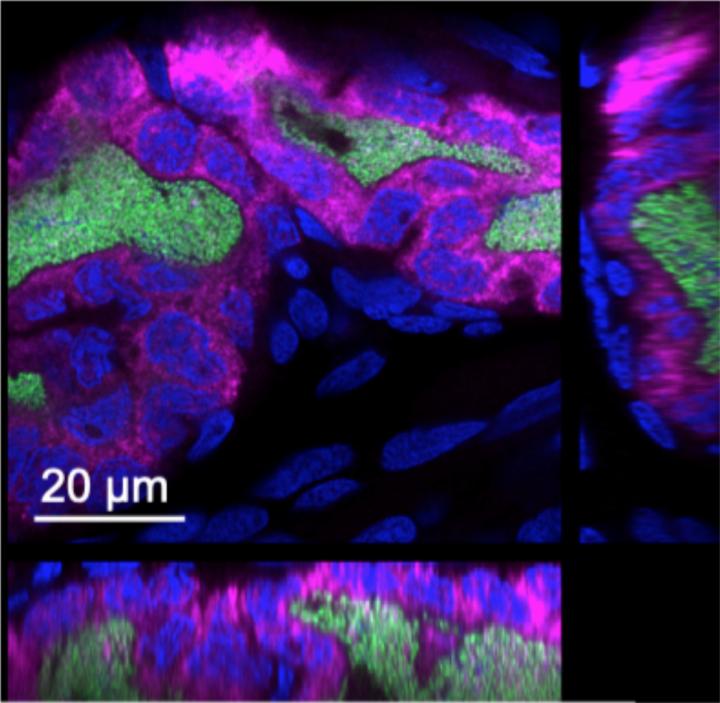
Bacteria living symbiotically within the Hawaiian bobtail squid can direct the host squid to change its normal gene-expression program to make a more inviting home, according to a new study published in PLoS Biology by researchers at the University of Hawai’i (UH) at Mānoa School of Ocean and Earth Science and Technology (SOEST).

Nearly every organism and environment hosts a collection of symbiotic microbes–a microbiome–which are an integral component of ecological and human health. In bacteria, small RNA (sRNA) is a key element influencing gene expression in the microscopic organisms, however, there has been little evidence that beneficial bacteria use these molecules to communicate with their animal hosts.

In the new study, lead author Silvia Moriano-Gutierrez, a postdoctoral fellow in the Pacific Biosciences Research Center at SOEST, and co-authors found a specific bacterial sRNA that is typically responsible for quality control of the production of protein in the bacterium plays an essential role in the symbiosis between Vibrio fischeri and the squid.

The Hawaiian bobtail squid recruits V. fischeri to inhabit the squid’s light-organ, as the bacterium are luminescent and camouflage the squid during its nighttime hunting.

Through RNA-sequencing, the scientists found in squid’s blood sRNA sequences that were produced by bacteria inhabiting the light-organ and found a high concentration of a specific sRNA within the host cells lining the crypts where the bacteria live.

“The presence of this particular sRNA results in a ‘calming’ the immune reaction of the squid, which will increase the opportunity for the bacteria to persistently colonize the host tissue, and deliver their beneficial effects,” said Dr. Moriano-Gutierrez. “This work reveals the potential for a bacterial symbiont’s sRNAs not only to control its own activities but also to trigger critical responses that promote a peaceful partnership with its host.”

The researchers, including co-author and UH Mānoa undergraduate Leo Wu, determined the bacteria load sRNA into their outer membrane vesicles, which are transported into the cells surrounding the symbiont population in the light organ–decreasing the squid’s antimicrobial activities in just the right location.

“It was unexpected to find a common bacterial sRNA that had evolved for a house-keeping function in the bacterium to be specifically recruited into a bacterium-host communication during the initiation of symbiosis,” said Dr. Moriano-Gutierrez.

“We anticipate that a host’s recognition and response to specific symbiont sRNAs will emerge as a major new mode of communication between bacteria and the animal tissues they inhabit,” said Dr. Moriano-Gutierrez. “Other symbiont RNAs that get into host cells remain to be explored.”

###

Media Contact
Marcie Grabowski
[email protected]

Original Source

https://www.soest.hawaii.edu/soestwp/announce/news/bacteria-convince-their-squid-host-to-create-a-less-hostile-work-environment/

Related Journal Article

http://dx.doi.org/10.1371/journal.pbio.3000934

Tags: BacteriologyBiochemistryBiologyCell BiologyDevelopmental/Reproductive BiologyEcology/EnvironmentGeneticsMarine/Freshwater BiologyMicrobiologyOceanography
Share13Tweet8Share2ShareShareShare2

Related Posts

AI and Physics Collaborate to Design Advanced Hydrogen Storage Materials

June 25, 2026

International Team Including Dresden Scientists Develops Novel Designer Proteins for Advanced Study of Living Tissue

June 25, 2026

New Study Uncovers Key Factors Driving Water Chemistry in Nanoscale Environments

June 25, 2026

Plasma Technology Extends Catalyst Lifespan in Hydrogen Production

June 24, 2026
Please login to join discussion

POPULAR NEWS

  • Saying Goodbye to PGY-6: Pediatric Fellowship Realities

    103 shares
    Share 41 Tweet 26
  • Multi-Hospital Study Reveals Long Covid Burden Is Twice as High as Current Estimates

    92 shares
    Share 36 Tweet 23
  • Detection of EDCs in Breast Milk and Infant Urine Up to Six Months Highlights Early Exposure Risks

    77 shares
    Share 31 Tweet 19
  • New Drug Candidate Developed at McMaster Shows Potential for Treating Brain Cancer

    58 shares
    Share 23 Tweet 15

About

We bring you the latest biotechnology news from best research centers and universities around the world. Check our website.

Follow us

Recent News

Tracking Lanthanide-Labeled Microplastics in Plants

POSTECH Researchers Slash Cost of Reconstituted Cell-Free Systems by 95%

AI and Physics Collaborate to Design Advanced Hydrogen Storage Materials

Subscribe to Blog via Email

Success! An email was just sent to confirm your subscription. Please find the email now and click 'Confirm' to start subscribing.

Join 82 other subscribers
  • Contact Us

Bioengineer.org © Copyright 2023 All Rights Reserved.

Welcome Back!

Login to your account below

Forgotten Password?

Retrieve your password

Please enter your username or email address to reset your password.

Log In
No Result
View All Result
  • Homepages
    • Home Page 1
    • Home Page 2
  • News
  • National
  • Business
  • Health
  • Lifestyle
  • Science

Bioengineer.org © Copyright 2023 All Rights Reserved.