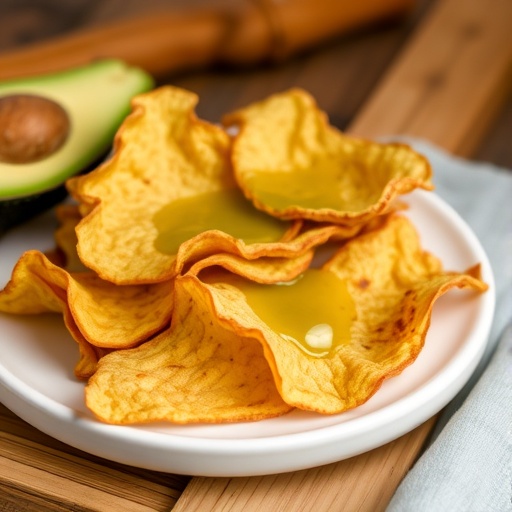
Grocery shoppers seeking chips, mayonnaise, or salad dressing labeled “made with avocado oil” may not be getting the real thing. A new study from the University of California, Davis tested processed foods marketed as containing avocado oil and found widespread adulteration with cheaper oils. The findings raise questions about how authenticity is verified across a supply chain where avocado oil is newer, less studied, and more expensive than many alternatives.
Researchers purchased products in 2025 and 2026 from online retailers and stores in California, sampling items labeled as containing avocado oil. Of 54 avocado oil–labeled products, 48 were adulterated. The work was published in Applied Food Research and adds to a growing body of UC Davis results indicating problems with both bottled and private-label avocado oil.
The pattern varied by product category. Among chips, 93% contained oils other than authentic avocado oil. Mayonnaise showed a 71% failure rate, while salad dressings labeled as authentic avocado oil failed at a striking 100%. In a comparison, the team tested 20 olive oil–labeled processed foods; only one failed, underscoring the much greater historical scrutiny devoted to olive oil authenticity.
To verify oil identity, the researchers measured fatty acids and sterols—chemical “fingerprints” linked to specific oil types. They also assessed how processing could distort these signatures, testing whether steps such as deep frying, blending, or emulsifying materially changed the fingerprints. Results suggested that fatty acids and sterols shifted only minimally, supporting the validity of the authenticity approach.
Because natural variables can affect chemical profiles—such as geographic origin and avocado variety—the researchers applied conservative evaluation criteria. They included a 10% margin of deviation, yet 89% of avocado-containing products still did not meet authenticity requirements. This design aimed to avoid false positives while remaining sensitive to adulteration.
Lead author Selina Wang noted that brands may be unaware of adulteration if oils are sourced from third-party brokers and multiple suppliers. Without rigorous supplier testing, adulterated oils may pass undetected until laboratory verification is performed. Wang suggested that some adulteration may occur upstream, potentially hidden behind layers of distribution.
The study also frames a consumer problem: avocado oil–based products often command premium prices comparable to or higher than olive oil products, yet deliver authenticity far less reliably. With avocado oil items now more prominent in mainstream grocery displays, the mismatch between label promises and chemical evidence could become increasingly costly for shoppers.
Other authors include Natalie Lopez-Alvarez, Xueqi Li, and Benjamin Vizgordiski. The study received no outside funding.
Keywords
avocado oil authenticity; adulteration; fatty acids; sterols; UC Davis; processed foods
Subject of Research: Not applicable
Article Title: Authenticity of avocado and olive oils used as ingredients in commercially processed foods
News Publication Date: 11-Jul-2026
Web References: https://www.sciencedirect.com/science/article/pii/S2772502226007274?via%3Dihub
References: 10.1016/j.afres.2026.102389
Image Credits: Natalie Lopez-Alvarez / UC Davis
Tags: Avocado oil authenticity testingavocado oil in processed foodschallenges in authenticating avocado oilcomparison of avocado oil and olive oil in food productsfood adulteration with cheaper oilsgrocery product labeling accuracyimpact of oil adulteration on consumer trustmethods for detecting oil fraud in food industryprevalence of oil adulteration in chips and dressingssupply chain issues for premium oilsUC Davis study on processed food ingredient authenticityverification of oil purity using chemical analysis