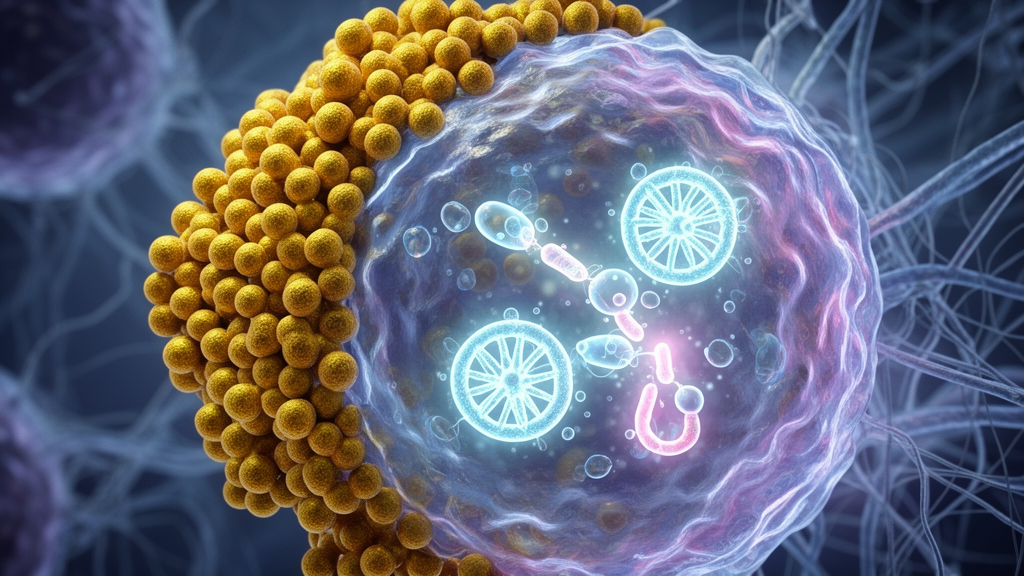
A newly identified biochemical mechanism reveals that the host cell-cycle enzyme Aurora kinase A worsens antibiotic-resistant Staphylococcus aureus infections by directly phosphorylating the adaptor protein ASC, driving uncontrolled inflammasome assembly and severe tissue pathology in preclinical models. In a study published in EMBO Reports, researchers demonstrated that methicillin-resistant Staphylococcus aureus, or MRSA, triggers a kinase cascade within host macrophages that activates Aurora A through upstream c-Jun N-terminal kinase signaling. Once activated, Aurora A directly attaches phosphate groups to specific serine residues on ASC, accelerating the formation of macromolecular complexes known as ASC specks. These specks then coordinate excessive activation of both NLRP3 and AIM2 inflammasomes, catalyzing the cleavage of pro-caspase-1 and triggering the mass release of inflammatory cytokines interleukin-1 beta and interleukin-18. While innate immune activation is fundamentally required to combat invading pathogens, this research illustrates how excessive inflammasome activity driven by Aurora A intensifies disease severity, elevates bacterial loads in vital organs, and drives fatal sepsis in infected laboratory mice.
Staphylococcus aureus represents a leading cause of hospital-acquired and community-acquired infections worldwide, producing a broad array of clinical conditions ranging from superficial cutaneous lesions to fulminant bacteremia, necrotizing pneumonia, and septic shock. A major challenge in controlling Staphylococcus aureus infection is the rapid and continuous emergence of antimicrobial resistance, including methicillin-resistant and vancomycin-resistant strains. These resistant pathogens cause severe and refractory infections in community and healthcare settings, underscoring an urgent need for alternative therapeutic strategies that do not rely solely on conventional antibiotics. Previous studies have documented that Staphylococcus aureus engages host pattern-recognition machinery and toxins to stimulate inflammasome multiprotein complexes, but the molecular mechanisms responsible for converting protective immune defense into destructive, hyperinflammatory pathology have remained poorly resolved.
The NLRP3 inflammasome is activated by hemolysins, potassium efflux, and extracellular vesicles, while AIM2 serves as a sensor for intracellular DNA. While early investigations established that tyrosine phosphorylation at residue Y144 by spleen tyrosine kinase is required for ASC function during inflammasome assembly, the contribution of serine and threonine phosphorylation in controlling ASC speck nucleation remained largely uncharacterized. The investigation sought to determine whether additional kinase families directly modify ASC during live bacterial challenge, thereby modulating the magnitude of the downstream inflammatory response.
To screen for candidate enzymes capable of phosphorylating ASC on non-tyrosine residues, the research team employed the computational platform KinasePhos 3.0 to evaluate the primary amino acid sequence of murine ASC. The predictive algorithm identified serine residues S92 and S100 as high-probability targets for phosphorylation by Aurora kinase, an enzyme traditionally studied for its role in mitosis. To validate these predictions experimentally, the investigators challenged immortalized and primary bone marrow-derived macrophages expressing tagged ASC with live Staphylococcus aureus. Immunoblot assays confirmed robust serine phosphorylation of ASC following infection, an event that was suppressed when cells were treated with the selective Aurora A inhibitor alisertib. Subsequent liquid chromatography-tandem mass spectrometry performed on purified recombinant ASC incubated with active Aurora A identified phosphorylation at serine 105 in addition to the computationally predicted serine residues.
The functional relevance of these phosphorylation events was systematically tested using immortalized macrophages lacking endogenous Pycard, the gene encoding ASC, that were reconstituted with wild-type ASC or alanine-substituted point mutants. Macrophages expressing ASC with alanine substitutions at either serine 100 or serine 105 released substantially lower levels of interleukin-1 beta following Staphylococcus aureus infection compared with cells reconstituted with wild-type ASC or control S16A and S92A mutants. Microscopic quantification revealed a parallel reduction in the formation of fluorescent ASC specks in macrophages harboring the S100A or S105A mutations. Furthermore, engineering a double-mutant construct carrying both S100A and S105A substitutions led to an even greater impairment of interleukin-1 beta secretion, confirming that phosphorylation at both sites cooperatively stabilizes the oligomeric adaptor complex. Notably, chemical inhibition of Aurora kinase did not produce any further suppression of cytokine production in cells carrying the S100A or S105A variants, demonstrating that Aurora A acts specifically through these two serine sites.
Investigating the upstream signaling events that activate Aurora A inside infected immune cells, the authors treated macrophages with a panel of pharmacological inhibitors directed against major intracellular kinase pathways. While inhibitors of MEK, ERK, p38, and Syk exhibited minimal effect on Aurora A phosphorylation, the selective c-Jun N-terminal kinase inhibitor SP600125 caused a marked, dose-dependent decrease in Aurora A activation and downstream interleukin-1 beta release. Macrophages genetically deficient in JNK1, encoded by Mapk8, exhibited pronounced deficits in Aurora A phosphorylation, pro-caspase-1 cleavage, and pro-interleukin-1 beta induction upon exposure to Staphylococcus aureus. Proximity ligation assays performed in intact macrophages demonstrated close physical interactions between active phosphorylated JNK1 and Aurora A following bacterial contact. Subsequent cell-free kinase assays using purified proteins confirmed that recombinant JNK1 directly phosphorylates Aurora A in an ATP-dependent manner. Crucially, treating macrophages with Aurora kinase inhibitors did not alter JNK phosphorylation, confirming that Aurora A acts downstream of JNK rather than operating upstream or in a reciprocal feedback loop.
The research team next clarified which specific inflammasome sensors rely on the JNK-Aurora A axis during staphylococcal challenge. When primary bone marrow-derived macrophages isolated from wild-type, Nlrp3-null, and Aim2-null mice were infected with Staphylococcus aureus strains 8325-4 or the clinical MRSA isolate NUMR101, both knockout strains showed marked reductions in pro-caspase-1 cleavage and interleukin-1 beta release compared to wild-type controls, with Aim2 deficiency yielding an even greater reduction than NLRP3 deletion. Macrophages stimulated with the potassium ionophore nigericin, a selective NLRP3 activator, or transfected with synthetic poly(dA:dT), an established AIM2 agonist, showed significant reductions in interleukin-1 beta secretion when treated with the Aurora A inhibitor alisertib. Similarly, macrophages rendered deficient in Aurora A via CRISPR-Cas9 genome editing displayed impaired cytokine responses to both stimuli. These combined findings demonstrate that Aurora A-mediated ASC phosphorylation is not restricted to a single sensor pathway, but instead functions as a shared regulatory hub that amplifies activation across both NLRP3 and AIM2 inflammasomes.
Because the activation of AIM2 by Staphylococcus aureus has historically received less attention than NLRP3 activation, the investigators probed how the bacterium exposes its genetic material to this cytosolic receptor. Monitoring infected macrophages over time using the DNA-binding fluorophore Hoechst 33342 revealed distinct, well-defined bacterial contours at one and three hours post-infection, which progressively transitioned into diffuse, blurred fluorescent patterns by twelve hours, indicating intracellular bacterial processing and cytosolic DNA dispersion. Subcellular fractionation of infected macrophage lysates followed by polymerase chain reaction amplification demonstrated the presence of the staphylococcal ltaS gene in cytosolic and membrane fractions, whereas nuclear fractions remained negative. This physical escape of staphylococcal DNA into the cytoplasm coincided with the kinetics of interleukin-1 beta secretion, establishing that phagocytosed bacteria shed genetic fragments into the host cell cytoplasm, directly engaging AIM2 to drive inflammatory assembly.
In vivo experiments using murine infection models confirmed that excessive inflammasome activation actively impairs host survival during systemic MRSA infection. Following intravenous challenge with a lethal dose of Staphylococcus aureus NUMR101, eighty percent of wild-type mice succumbed within one hundred hours, whereas one hundred percent of Aim2-deficient mice survived the challenge. On day two post-infection, Aim2-null mice exhibited significantly reduced bacterial colony-forming units in both liver and lung tissue alongside dramatically lower serum concentrations of interleukin-1 beta and interleukin-18 compared to wild-type mice.
Therapeutic studies evaluated whether pharmacologically interrupting the JNK-Aurora-ASC pathway could rescue mice from antibiotic-refractory bacterial infection. While administration of the penicillin-class antibiotic piperacillin successfully cured mice inoculated with methicillin-sensitive Staphylococcus aureus, it provided zero protection against the resistant NUMR101 strain, resulting in total mortality. In contrast, intraperitoneal administration of the Aurora kinase inhibitor tozasertib conferred eighty percent survival in mice infected with the identical MRSA inoculum, reducing viable bacterial counts in the liver by approximately tenfold and blunting serum interleukin-1 beta and interleukin-18 elevations. Consistently, adoptive transplantation of Aurora A-deficient macrophages into Pycard-null hosts and treatment with the JNK inhibitor SP600125 both significantly decreased bacterial loads and inflammatory cytokine production.
The authors emphasize that although these findings establish Aurora kinase A as an attractive target for host-directed immunotherapy, important biological qualifications apply to the interpretation of the results. Because Aurora kinases have broad cellular effects including roles in cell cycle regulation, the improved survival observed in vivo may include indirect effects unrelated to inflammasome regulation, suggesting that strategies may be needed to deliver Aurora inhibitors specifically to phagocytic cells such as macrophages.
Subject of Research: Aurora kinase A regulation of ASC phosphorylation and inflammasome hyperactivation during antibiotic-resistant Staphylococcus aureus infection
Article Title: Aurora A exacerbates antibiotic-resistant Staphylococcus aureus infection through ASC phosphorylation
Article References: Yamauchi, H., Sakamoto, K., Matsuda, Y., Tanishita, Y., Ariyoshi, A., Sasaki, D., Shimoyama, Y., Hasegawa, A., Yamauchi, T., Iwakura, Y., Okamura, H., Taniguchi, S., Takahashi, M., Yoshimura, A., Yanagihara, K., Nuñez, G., & Hara, H. (2026). Aurora A exacerbates antibiotic-resistant Staphylococcus aureus infection through ASC phosphorylation. EMBO Reports, 27(20), 5881-5903. https://doi.org/10.1038/s44319-026-00918-x
Image Credits: AI Generated
DOI: 10.1038/s44319-026-00918-x
Keywords: Staphylococcus aureus, MRSA, Aurora kinase A, ASC adaptor, Inflammasome, NLRP3, AIM2, Caspase-1, Interleukin-1 beta, Interleukin-18, JNK signaling, Tozasertib, Alisertib, Macrophages, Host-directed therapy, Bacterial DNA sensing, Antimicrobial resistance
News Source: Kristina Jarvis. (November 14, 2026). Aurora Kinase A Drives Lethal MRSA Infection by Hyperactivating Host Inflammasomes. Scienmag.