In a groundbreaking study that could redefine our understanding of adolescent idiopathic scoliosis (AIS), researchers have unveiled a crucial molecular pathway driving the progression of this complex spinal deformity. Published recently in Experimental & Molecular Medicine, the work highlights the asymmetric interplay of reactive oxygen species (ROS), the RNA methyltransferase METTL3, and the estrogen receptor ESR1 within paraspinal muscle progenitor cells, shedding light on how cellular and molecular imbalances in muscle tissue contribute to scoliosis development.
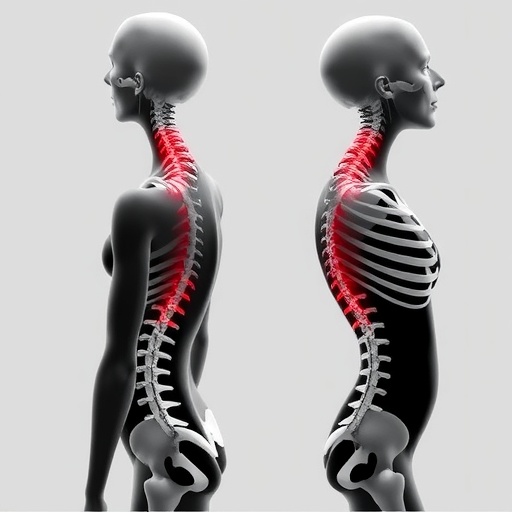
Adolescent idiopathic scoliosis, characterized by an abnormal lateral curvature of the spine during growth spurts in adolescence, has long remained enigmatic. Despite extensive clinical investigation, its underlying etiology has eluded clear mechanistic explanation. This new research provides compelling evidence pinpointing dysregulated oxidative stress and epigenetic modification in muscle progenitor cells as central contributors to the asymmetric muscular environment that facilitates spinal curvature progression in affected youths.
The study’s lead investigators meticulously analyzed paraspinal muscle samples from patients exhibiting varying degrees of AIS severity. Their investigation revealed striking asymmetry in ROS levels between the convex and concave sides of the scoliotic curve. Elevated ROS accumulation specifically on the convex side triggered downstream molecular events disrupting normal muscle progenitor cell function. This localized oxidative imbalance appears to prime the muscle microenvironment for pathological remodeling.
Central to this molecular cascade is METTL3, an enzyme responsible for adding methyl groups to RNA molecules, thereby modulating gene expression post-transcriptionally. The team discovered that heightened oxidative stress on the convex side resulted in altered METTL3 activity, leading to differential m6A RNA methylation patterns between the two sides of the spine. Such epigenetic modifications profoundly influenced muscle progenitor cell behavior by affecting transcriptional networks critical for muscle repair and regeneration.
Further downstream, the altered activity of METTL3 impacted the expression and function of ESR1, the estrogen receptor alpha isoform, which is known to regulate muscle physiology and growth. Remarkably, ESR1 expression was dampened on the convex side in a ROS- and METTL3-dependent manner. This localized suppression of ESR1 disrupted normal estrogen signaling pathways, causing asymmetric muscle development that likely exacerbates spinal curvature.
The elucidation of this asymmetrical ROS–METTL3–ESR1 axis provides a compelling explanation for the mechanical imbalance characteristic of AIS. It links oxidative stress-induced epigenetic reprogramming within paraspinal muscle progenitors to aberrant estrogen receptor availability and signaling, culminating in the progressive deformity of the spine observed in adolescents. Such molecular asymmetry not only advances fundamental understanding of AIS pathogenesis but also pinpoints potential therapeutic targets.
Innovatively, the research team utilized advanced RNA sequencing techniques coupled with oxidative stress assays and immunohistochemical analyses to delineate this pathway with exceptional spatial resolution. Their data demonstrate the necessity of METTL3’s enzymatic activity in maintaining balanced ESR1 expression and muscle progenitor cell homeostasis, spotlighting METTL3 as a potential molecular switch modulating scoliosis progression.
Importantly, these findings suggest that therapeutic strategies aimed at restoring redox balance or modulating METTL3 function could arrest or even reverse the progression of spinal curvature in AIS patients. Pharmacological interventions to enhance ESR1 signaling on the affected convex side might normalize muscle growth dynamics, thereby correcting the asymmetrical forces contributing to deformity advancement.
The implications of this discovery extend beyond AIS, offering new insights into how oxidative stress can epigenetically sculpt tissue-specific phenotypes during critical developmental windows. It underscores the intricate crosstalk between environmental factors, epigenetic regulators, and hormone signaling, advancing the emerging paradigm that musculoskeletal pathologies arise from multifactorial molecular imbalances rather than single-gene defects.
Clinically, this research opens avenues for biomarker development aimed at early detection of ROS–METTL3–ESR1 axis disruption in at-risk adolescents, potentially enabling preemptive interventions prior to severe spinal curvature manifestation. Tailored antioxidant therapies or gene-modulating approaches could become novel components of scoliosis management protocols, transforming patient prognosis.
Moreover, the study’s revelation that muscle progenitor cells, rather than solely skeletal or neural elements, play an active role in AIS progression prompts a reevaluation of therapeutic focus. Targeting the muscular milieu with molecular precision challenges existing paradigms that have emphasized spinal bone structures and physical bracing as primary treatment modalities.
Future investigations are warranted to explore how genetic predispositions interface with environmental oxidative stressors to influence METTL3 and ESR1 regulation in AIS. Longitudinal clinical studies correlating molecular signatures with progression rates could validate and refine this model, facilitating translation into personalized medicine frameworks.
This research also poses provocative questions about the role of systemic hormonal fluctuations during adolescence and their interaction with local cellular redox states, potentially explaining sex differences observed in scoliosis prevalence and severity. Hormone replacement or modulation therapies may emerge as adjunctive treatments pending further elucidation.
In essence, the asymmetrical ROS–METTL3–ESR1 axis represents a novel biological axis underpinning the complex etiology of adolescent idiopathic scoliosis. By integrating oxidative biology, epigenetics, and hormone receptor signaling, this work charts a path towards innovative molecular therapeutics that may revolutionize care for millions of adolescents worldwide affected by scoliosis.
The study’s comprehensive approach combining molecular biology, epigenetics, and clinical pathology exemplifies the power of multidisciplinary research in unraveling long-standing medical mysteries. As the field moves forward, these insights promise to transform adolescent scoliosis from a poorly understood deformity into a condition amenable to targeted, effective intervention.
With this seminal discovery catalyzing new lines of inquiry and therapeutic development, the future of adolescent idiopathic scoliosis treatment looks poised for a paradigm shift—one grounded firmly in the molecular intricacies of muscle progenitor cell biology.
Subject of Research: Molecular mechanisms underlying the progression of adolescent idiopathic scoliosis focusing on paraspinal muscle progenitor cells.
Article Title: The asymmetrical ROS–METTL3–ESR1 axis in paraspinal muscle progenitor cells determines the progression of adolescent idiopathic scoliosis.
Article References:
Li, B., Kuati, A., Sui, W. et al. The asymmetrical ROS–METTL3–ESR1 axis in paraspinal muscle progenitor cells determines the progression of adolescent idiopathic scoliosis. Exp Mol Med (2026). https://doi.org/10.1038/s12276-026-01658-7
Image Credits: AI Generated
DOI: 05 March 2026
Tags: adolescent idiopathic scoliosis molecular pathwaysasymmetrical reactive oxygen species in scoliosisepigenetic regulation in scoliosis developmentESR1 signaling in spinal deformityestrogen receptor influence on scoliosisMETTL3 role in adolescent idiopathic scoliosismolecular mechanisms of scoliosis progressionoxidative imbalance in scoliosisoxidative stress impact on muscle progenitor cellsparaspinal muscle asymmetry in AISRNA methyltransferase METTL3 in spinal disordersROS-induced muscle cell dysfunction