• HOME
  • NEWS
  • EXPLORE
    • CAREER
      • Companies
      • Jobs
    • EVENTS
    • iGEM
      • News
      • Team
    • PHOTOS
    • VIDEO
    • WIKI
  • BLOG
  • COMMUNITY
    • FACEBOOK
    • INSTAGRAM
    • TWITTER
Sunday, May 10, 2026
BIOENGINEER.ORG
No Result
View All Result
  • Login
  • HOME
  • NEWS
  • EXPLORE
    • CAREER
      • Companies
      • Jobs
        • Lecturer
        • PhD Studentship
        • Postdoc
        • Research Assistant
    • EVENTS
    • iGEM
      • News
      • Team
    • PHOTOS
    • VIDEO
    • WIKI
  • BLOG
  • COMMUNITY
    • FACEBOOK
    • INSTAGRAM
    • TWITTER
  • HOME
  • NEWS
  • EXPLORE
    • CAREER
      • Companies
      • Jobs
        • Lecturer
        • PhD Studentship
        • Postdoc
        • Research Assistant
    • EVENTS
    • iGEM
      • News
      • Team
    • PHOTOS
    • VIDEO
    • WIKI
  • BLOG
  • COMMUNITY
    • FACEBOOK
    • INSTAGRAM
    • TWITTER
No Result
View All Result
Bioengineer.org
No Result
View All Result
Home NEWS Science News Chemistry

Astronomy student discovers 17 new planets, including Earth-sized world

Bioengineer by Bioengineer
February 27, 2020
in Chemistry
Reading Time: 3 mins read
0
IMAGE
Share on FacebookShare on TwitterShare on LinkedinShare on RedditShare on Telegram

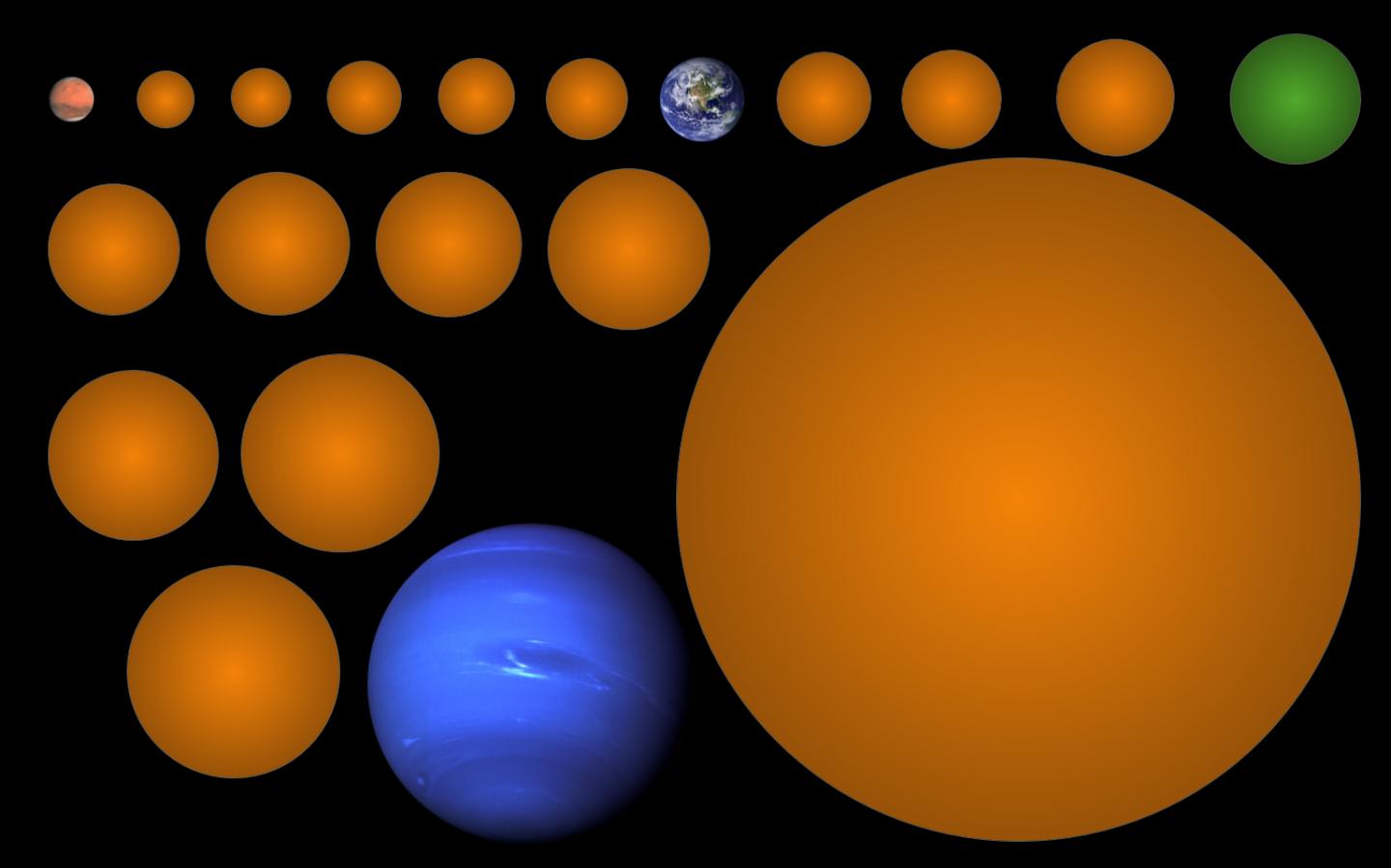
IMAGE

Credit: Michelle Kunimoto

University of British Columbia astronomy student Michelle Kunimoto has discovered 17 new planets, including a potentially habitable, Earth-sized world, by combing through data gathered by NASA’s Kepler mission.

Over its original four-year mission, the Kepler satellite looked for planets, especially those that lie in the “Habitable Zones” of their stars, where liquid water could exist on a rocky planet’s surface.

The new findings, published in The Astronomical Journal, include one such particularly rare planet. Officially named KIC-7340288 b, the planet discovered by Kunimoto is just 1 ½ times the size of Earth – small enough to be considered rocky, instead of gaseous like the giant planets of the Solar System – and in the habitable zone of its star.

“This planet is about a thousand light years away, so we’re not getting there anytime soon!” said Kunimoto, a PhD candidate in the department of physics and astronomy. “But this is a really exciting find, since there have only been 15 small, confirmed planets in the Habitable Zone found in Kepler data so far.”

The planet has a year that is 142 ½ days long, orbiting its star at 0.444 Astronomical Units (AU, the distance between Earth and our Sun) – just bigger than Mercury’s orbit in our Solar System, and gets about a third of the light Earth gets from the Sun.

Of the other 16 new planets discovered, the smallest is only two-thirds the size of Earth – one of the smallest planets to be found with Kepler so far. The rest range in size up to eight times the size of Earth.

Kunimoto is no stranger to discovering planets: she previously discovered four during her undergraduate degree at UBC. Now working on her PhD at UBC, she used what is known as the “transit method” to look for the planets among the roughly 200,000 stars observed by the Kepler mission.

“Every time a planet passes in front of a star, it blocks a portion of that star’s light and causes a temporary decrease in the star’s brightness,” Kunimoto said. “By finding these dips, known as transits, you can start to piece together information about the planet, such as its size and how long it takes to orbit.”

Kunimoto also collaborated with UBC alumnus Henry Ngo to obtain razor-sharp follow-up images of some of her planet-hosting stars with the Near InfraRed Imager and Spectrometer (NIRI) on the Gemini North 8-metre Telescope in Hawaii.

“I took images of the stars as if from space, using adaptive optics,” she said. “I was able to tell if there was a star nearby that could have affected Kepler’s measurements, such as being the cause of the dip itself.”

In addition to the new planets, Kunimoto was able to observe thousands of known Kepler planets using the transit-method, and will be reanalysing the exoplanet census as a whole.

“We’ll be estimating how many planets are expected for stars with different temperatures,” said Kunimoto’s PhD supervisor and UBC professor Jaymie Matthews. “A particularly important result will be finding a terrestrial Habitable Zone planet occurrence rate. How many Earth-like planets are there? Stay tuned.”

###

Media Contact
Sachi Wickramasinghe
[email protected]
604-822-4636

Original Source

https://news.ubc.ca/2020/02/28/ubc-student-discovers-17-new-planets-including-potentially-habitable-earth-sized-world/

Related Journal Article

http://dx.doi.org/10.3847/1538-3881/ab6cf8

Tags: AstronomyAstrophysicsExperiments in SpacePlanets/MoonsSatellite Missions/ShuttlesSpace/Planetary ScienceStars/The Sun
Share12Tweet8Share2ShareShareShare2

Related Posts

Miniature Sensor Uses Light to Detect Touch — Chemistry

Miniature Sensor Uses Light to Detect Touch

May 8, 2026
Iron Minerals Determine Whether Dissolved Organic Matter Fuels Microbes or Becomes Long-Term Carbon Storage — Chemistry

Iron Minerals Determine Whether Dissolved Organic Matter Fuels Microbes or Becomes Long-Term Carbon Storage

May 8, 2026

Kate Evans Appointed Associate Lab Director for Biological and Environmental Systems Science at ORNL

May 8, 2026

Advancing Multiscale Modeling and Overcoming Operational Challenges in Autothermal CO₂-to-Methanol Reactors

May 8, 2026
Please login to join discussion

POPULAR NEWS

  • Research Indicates Potential Connection Between Prenatal Medication Exposure and Elevated Autism Risk

    840 shares
    Share 336 Tweet 210
  • New Study Reveals Plants Can Detect the Sound of Rain

    727 shares
    Share 290 Tweet 181
  • Scientists Investigate Possible Connection Between COVID-19 and Increased Lung Cancer Risk

    68 shares
    Share 27 Tweet 17
  • Salmonella Haem Blocks Macrophages, Boosts Infection

    61 shares
    Share 24 Tweet 15

About

We bring you the latest biotechnology news from best research centers and universities around the world. Check our website.

Follow us

Recent News

Evaluating Digoxin Use in Patients with Symptomatic Rheumatic Heart Disease

Evaluating the Effectiveness and Safety of Digitalis Glycosides in Treating Heart Failure

Urdu Fall Risk Questionnaire Adapted for Elderly

Subscribe to Blog via Email

Success! An email was just sent to confirm your subscription. Please find the email now and click 'Confirm' to start subscribing.

Join 82 other subscribers
  • Contact Us

Bioengineer.org © Copyright 2023 All Rights Reserved.

Welcome Back!

Login to your account below

Forgotten Password?

Retrieve your password

Please enter your username or email address to reset your password.

Log In
No Result
View All Result
  • Homepages
    • Home Page 1
    • Home Page 2
  • News
  • National
  • Business
  • Health
  • Lifestyle
  • Science

Bioengineer.org © Copyright 2023 All Rights Reserved.