• HOME
  • NEWS
  • EXPLORE
    • CAREER
      • Companies
      • Jobs
    • EVENTS
    • iGEM
      • News
      • Team
    • PHOTOS
    • VIDEO
    • WIKI
  • BLOG
  • COMMUNITY
    • FACEBOOK
    • INSTAGRAM
    • TWITTER
Monday, May 4, 2026
BIOENGINEER.ORG
No Result
View All Result
  • Login
  • HOME
  • NEWS
  • EXPLORE
    • CAREER
      • Companies
      • Jobs
        • Lecturer
        • PhD Studentship
        • Postdoc
        • Research Assistant
    • EVENTS
    • iGEM
      • News
      • Team
    • PHOTOS
    • VIDEO
    • WIKI
  • BLOG
  • COMMUNITY
    • FACEBOOK
    • INSTAGRAM
    • TWITTER
  • HOME
  • NEWS
  • EXPLORE
    • CAREER
      • Companies
      • Jobs
        • Lecturer
        • PhD Studentship
        • Postdoc
        • Research Assistant
    • EVENTS
    • iGEM
      • News
      • Team
    • PHOTOS
    • VIDEO
    • WIKI
  • BLOG
  • COMMUNITY
    • FACEBOOK
    • INSTAGRAM
    • TWITTER
No Result
View All Result
Bioengineer.org
No Result
View All Result
Home NEWS Science News Biology

Aston University researchers ‘feed’ leftover coffee grounds to microalgae to produce low emission biodiesel

Bioengineer by Bioengineer
November 1, 2022
in Biology
Reading Time: 2 mins read
0
Microalgae
Share on FacebookShare on TwitterShare on LinkedinShare on RedditShare on Telegram

Two Aston University researchers have produced high-quality biodiesel after  ‘feeding’ and growing microalgae on leftover coffee grounds.
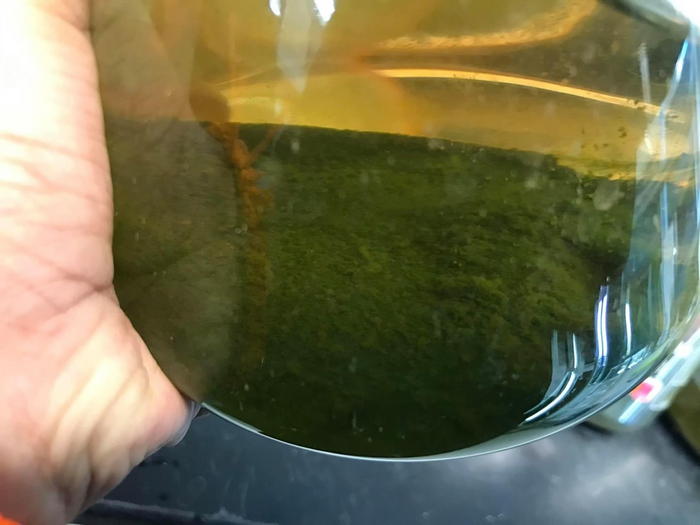
Microalgae

Credit: Aston University

Two Aston University researchers have produced high-quality biodiesel after  ‘feeding’ and growing microalgae on leftover coffee grounds.

Dr Vesna Najdanovic senior lecturer in chemical engineering and Dr Jiawei Wang were part of a team that grew algae which was then processed into fuel.  

In just the UK, approximately 98 million cups of coffee are drunk each day, contributing to a massive amount of spent coffee grounds which are processed as general waste, often ending up in landfill or incineration.

However the researchers found that spent coffee grounds provide both nutrients to feed, and a structure on which the microalgae (Chlorella vulgaris sp.) can grow.

As a result, they were able to extract enhanced biodiesel that produces minimal emissions and good engine performance, and meets US and European specifications.  

The study, Enhancing growth environment for attached microalgae to populate onto spent coffee grounds in producing biodiesel, appears in the November 2022 issue of Renewable and Sustainable Energy Reviews.

Up till now, algae has been grown on materials such as polyurethane foam and nylon that don’t provide any nutrients. However, the researchers found that microalgal cells can grow on the leftover coffee without needing other external nutrients.

They also found that exposing the algae to light for 20 hours a day, and dark for just four hours days created the best quality biodiesel.

Dr Najdanovic said: “This is a breakthrough in the microalgal cultivation system.

“Biodiesel from microalgae attached to spent coffee grounds could be an ideal choice for new feedstock commercialisation, avoiding competition with food crops.

“Furthermore, using this new feedstock could decrease the cutting down of palm trees to extract oil to produce biofuel.

“In southeast Asia this has led to continuous deforestation and increased greenhouse gas emissions.”

The research was developed in collaboration with colleagues from Malaysia, Thailand, Egypt, South Africa and India. Their work was supported by the 2020-21 Global Challenges Research Fund (GCRF) block grant funded by the UK Research and Innovation (Aston University).


Journal

Renewable and Sustainable Energy Reviews

DOI

10.1016/j.rser.2022.112940

Method of Research

Experimental study

Subject of Research

Not applicable

Article Title

Enhancing growth environment for attached microalgae to populate onto spent coffee grounds in producing biodiesel,

Article Publication Date

1-Nov-2022

Share12Tweet8Share2ShareShareShare2

Related Posts

Subtilase Maturation Key to Stomatal Patterning — Biology

Subtilase Maturation Key to Stomatal Patterning

May 4, 2026
Brown Fat May Guard Against Cardiovascular Disease in Obesity — Biology

Brown Fat May Guard Against Cardiovascular Disease in Obesity

May 4, 2026

How Plants Adjust Their Energy Balance to Cope with Stress

May 4, 2026

Key Gene Discovered in Model Plant That Controls Self-Replication

May 4, 2026

POPULAR NEWS

  • Research Indicates Potential Connection Between Prenatal Medication Exposure and Elevated Autism Risk

    834 shares
    Share 334 Tweet 209
  • New Study Reveals Plants Can Detect the Sound of Rain

    718 shares
    Share 287 Tweet 179
  • Scientists Investigate Possible Connection Between COVID-19 and Increased Lung Cancer Risk

    67 shares
    Share 27 Tweet 17
  • Salmonella Haem Blocks Macrophages, Boosts Infection

    61 shares
    Share 24 Tweet 15

About

We bring you the latest biotechnology news from best research centers and universities around the world. Check our website.

Follow us

Recent News

Immune-Metabolic Paths Reveal Pediatric Long COVID Subgroups

New Guidelines Enhance Support for Intimacy and Dignity in Long-Term Care Settings

Dynamic Hierarchical Model Enhances Nasopharyngeal Cancer Screening

Subscribe to Blog via Email

Enter your email address to subscribe to this blog and receive notifications of new posts by email.

Join 82 other subscribers
  • Contact Us

Bioengineer.org © Copyright 2023 All Rights Reserved.

Welcome Back!

Login to your account below

Forgotten Password?

Retrieve your password

Please enter your username or email address to reset your password.

Log In
No Result
View All Result
  • Homepages
    • Home Page 1
    • Home Page 2
  • News
  • National
  • Business
  • Health
  • Lifestyle
  • Science

Bioengineer.org © Copyright 2023 All Rights Reserved.