

• HOME
  • NEWS
  • EXPLORE
    • CAREER
      • Companies
      • Jobs
    • EVENTS
    • iGEM
      • News
      • Team
    • PHOTOS
    • VIDEO
    • WIKI
  • BLOG
  • COMMUNITY
    • FACEBOOK
    • INSTAGRAM
    • TWITTER
Monday, May 25, 2026
BIOENGINEER.ORG
No Result
View All Result
  • Login
  • HOME
  • NEWS
  • EXPLORE
    • CAREER
      • Companies
      • Jobs
        • Lecturer
        • PhD Studentship
        • Postdoc
        • Research Assistant
    • EVENTS
    • iGEM
      • News
      • Team
    • PHOTOS
    • VIDEO
    • WIKI
  • BLOG
  • COMMUNITY
    • FACEBOOK
    • INSTAGRAM
    • TWITTER
  • HOME
  • NEWS
  • EXPLORE
    • CAREER
      • Companies
      • Jobs
        • Lecturer
        • PhD Studentship
        • Postdoc
        • Research Assistant
    • EVENTS
    • iGEM
      • News
      • Team
    • PHOTOS
    • VIDEO
    • WIKI
  • BLOG
  • COMMUNITY
    • FACEBOOK
    • INSTAGRAM
    • TWITTER
No Result
View All Result
Bioengineer.org
No Result
View All Result
Home NEWS Science News Biology

Asthma medicine halves risk of Parkinson’s

Bioengineer by Bioengineer
August 31, 2017
in Biology
Reading Time: 2 mins read
0
Share on FacebookShare on TwitterShare on LinkedinShare on RedditShare on Telegram
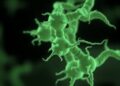
IMAGE

Credit: Kim E. Andreassen, University of Bergen.

  • By studying the effect of 1000 medicines, researchers discovered that medicine against asthma and blood pressure is linked to the risk of getting Parkinson´s disease.
  • While the use of asthma medicine halves the risk of getting Parkinson´s, one type of medicine against high blood pressure doubles the risk.
  • The researchers examined more than 100 million prescriptions ordered over the last 11 years in Norway.
  • These discoveries could be the start of a radically new treatment of Parkinson´s patients.

Parkinson´s disease is a chronic disease with unknown causes. The disease destroys the brain cells that control body movements. Shivering, stiff arms and legs and poor coordination are typical symptoms of Parkinson´s. The symptoms may develop slowly, and it sometimes takes time to make a correct diagnosis.

Researchers at the Department of Global Public Health and Primary Care (IGS) at the University of Bergen (UiB) have completed a large study that included data from the Norwegian Prescription Database, in cooperation with researchers at Harvard University.

"Our analysis of data from the whole Norwegian population has been decisive for the conclusion in this study," says Professor Trond Riise at IGS. He leads the registery study in Norway.

100 million prescriptions

Together with colleagues Anders Engeland and Kjetil Bjørnevik, Riise has analysed more than 100 million Norwegian prescriptions registered since 2004.

In the study, the treatment of Parkinson´s was linked to prescriptions of asthma medicine and the medicine for high blood pressure. It enabled the researchers to see the connection between medicine use and illness.

The UiB-researchers were able to make these comparisons by using the prescription database. The Norwegian analysis was done after researchers at Harvard University found these effects of the medicines in animal tests and in experiments with brain cells in the lab. Their results showed that these different medicines had opposite effects on the risk of Parkinson´s.

Possible new treatment

To find out if these medicines had the same effect on humans, the researchers at Harvard University started to collaborate with the Norwegian research team, and their unique resource of having access to the unique and large Norwegian database, where all Norwegian prescriptions are registered.

"We analysed the whole Norwegian population and found the same results as in the animal testing at Harvard University. These medicines have never been studied in relation to Parkinson's disease," says Riise.

Trond Riise underlines the fact that "Our discoveries may be the start of a totally new possible treatment for this serious disease. We expect that clinical studies will follow these discoveries."

###

Media Contact

Trond Riise
[email protected]
0047-918-56572
@UiB

http://www.uib.no/

Original Source

http://www.uib.no/en/med/110169/asthma-medicine-halves-risk-parkinson%C2%B4s http://dx.doi.org/10.1126/science.aaf3934

Share12Tweet8Share2ShareShareShare2

Related Posts

How Wasp Societies Conquer Intense Leadership Conflicts — Biology

How Wasp Societies Conquer Intense Leadership Conflicts

May 25, 2026
Tiny Blue Octopus from the Galápagos Islands: Small Enough to Fit in the Palm of Your Hand — Biology

Tiny Blue Octopus from the Galápagos Islands: Small Enough to Fit in the Palm of Your Hand

May 25, 2026

Rising Sightings of Blue and Fin Whales in the South East Atlantic

May 23, 2026

New Maps Reveal How European Landscapes Can Simultaneously Promote Climate Action and Biodiversity Conservation

May 22, 2026
Please login to join discussion

POPULAR NEWS

  • ESMO 2025: mRNA COVID Vaccines Enhance Efficacy of Cancer Immunotherapy

    315 shares
    Share 126 Tweet 79
  • New Study Reveals Plants Can Detect the Sound of Rain

    734 shares
    Share 293 Tweet 183
  • Research Indicates Potential Connection Between Prenatal Medication Exposure and Elevated Autism Risk

    847 shares
    Share 339 Tweet 212
  • Common Food Preservatives Associated with Elevated Blood Pressure and Increased Heart Disease Risk

    56 shares
    Share 22 Tweet 14

About

We bring you the latest biotechnology news from best research centers and universities around the world. Check our website.

Follow us

Recent News

USP35 Drives Kidney Damage via Endothelial Ferroptosis

GABA in NG2 Glia Drives Empathy-like Behavior

Breakthrough in Cell Therapy Enhances Treatment for Advanced Liver Disease

Subscribe to Blog via Email

Enter your email address to subscribe to this blog and receive notifications of new posts by email.

Join 82 other subscribers
  • Contact Us

Bioengineer.org © Copyright 2023 All Rights Reserved.

Welcome Back!

Login to your account below

Forgotten Password?

Retrieve your password

Please enter your username or email address to reset your password.

Log In
No Result
View All Result
  • Homepages
    • Home Page 1
    • Home Page 2
  • News
  • National
  • Business
  • Health
  • Lifestyle
  • Science

Bioengineer.org © Copyright 2023 All Rights Reserved.