
In a groundbreaking study published in the esteemed journal Nature Food, an international team of agronomists, including prominent researchers from the University of Nebraska-Lincoln, is advocating for a transformative approach to estimating crop yield potential and yield gaps. This pivotal research comes at a crucial time as the world faces the dual challenges of a growing population and the pressing need for increased food production on finite agricultural land. The ability to accurately assess crop yield potential is not just academic; it is foundational for strategic planning and investment in agricultural research and development.
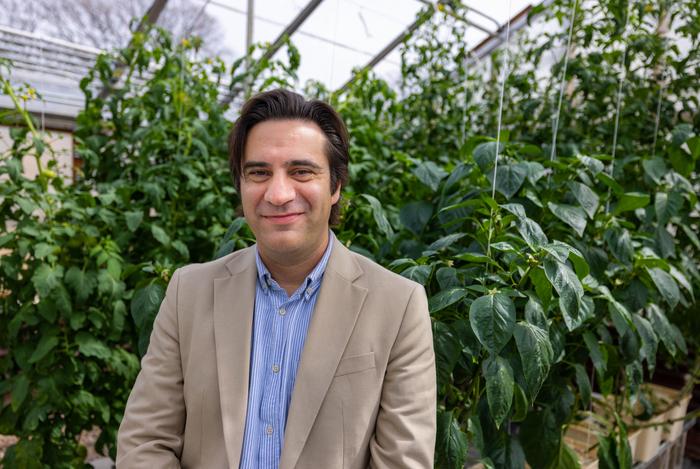
Patricio Grassini, a distinguished professor of agronomy and one of the co-authors of the paper, articulates the urgency of this issue. “We are in a race to feed the world,” he states, emphasizing the importance of understanding the difference between theoretical yield potential—governed by favorable weather and soil conditions—and actual farm yields that farmers achieve. The disparity between these two metrics, referred to as yield gaps, signifies crucial opportunities for enhancing food production. However, existing methods of estimating these figures may fall short of providing the necessary accuracy for effective agricultural planning.
Current statistical models, particularly in the United States, have shown a tendency to lean excessively on optimistic scenarios. These models often base their predictions on data from the most productive counties with the best soils during particularly favorable years, leading to overestimates of true yield potential. Grassini points out that such reference points do not reflect the average conditions experienced across diverse regions and climates. “If you use that year as a reference, you are going to be overestimating your production potential,” he cautions. This can result in a flawed understanding of agricultural capabilities, particularly in states with varied climatic conditions.
The study published in Nature Food highlights the problems with the predominant statistical approaches which often produce contradictory findings, with yield potential estimates doubling depending on the method applied. Surprisingly, these conventional methods, largely crafted by geographers and statisticians with insufficient agronomic insight, have gained widespread acceptance over the years. Grassini and his team argue that this reliance on insufficiently rigorous analytical techniques underscores the urgent need for a more nuanced and scientifically validated approach.
In stark contrast, the researchers proposed a “bottom-up” spatial scaling approach that leverages sophisticated crop modeling integrated with localized weather and soil data. This methodology, grounded in detailed evidence and long-term data collection, promises to generate more precise estimates of yield potential and gaps, addressing the critical shortcomings of current statistical practices. The Global Yield Gap and Water Productivity Atlas, developed at the University of Nebraska, exemplifies such robust data resources that can feed into these more accurate models.
The implications of adopting a scientifically rigorous methodology extend beyond academic interest. By facilitating a clearer picture of yield potential and the existing yield gaps, policymakers and agricultural researchers can direct their investments toward areas of greatest need. Identifying regions with the most significant potential for yield improvement could play a pivotal role in shaping future agricultural policies, directing research funding, and ultimately ensuring food security in an era marked by unprecedented demographic demands.
Throughout the process, the research team has encountered the possibility of controversy due to their challenge of established norms. Grassini acknowledges that upending conventional wisdom can provoke thoughtful debates, but stresses the importance of grounding these discussions in scientific validation. If practitioners plan to utilize yield estimates for policy decisions and funding allocation, the sources of information must be sound and reflect real agricultural capabilities.
The study’s findings resonate deeply within the broader agricultural research community. Collaborators from varied institutions—such as Fatima Tenorio, Fernando Aramburu Merlos, and Juan Rattalino Edreira from the University of Nebraska-Lincoln, as well as researchers from Kansas State University and Iowa State University—contributed to this impactful work. This collaborative effort underscores the necessity of diverse expertise in tackling such complex global issues.
Moreover, the research reveals that while some regions like the United States may experience overestimations in yield potential, other areas, such as parts of Africa, may suffer from significant underestimations. Farmers in these regions often face substantial resource constraints, limiting their access to essential inputs that could enable them to reach their yield potential, which the climate and soil could otherwise support. Recognizing these disparities in agricultural challenges is essential for tailoring interventions that can assist these farmers effectively.
As global food demand escalates and the implications of climate change become increasingly evident, the ability to forecast yield potential and gaps accurately will be more vital than ever. The insights offered by Grassini and his team lay the foundation for future advancements in agricultural strategies aimed at closing yield gaps and enhancing food security on a global scale.
Grassini concludes with a clarion call for a paradigm shift in agricultural yield estimation. A dramatic reexamination of existing statistical techniques is necessary, as the alignment of agricultural research with real-world data and conditions can pave the way for innovative solutions to meet the growing demands for food production.
By embracing a research-driven approach that prioritizes clarity and scientific rigor, stakeholders across the agricultural sector can reposition their focus toward the most effective paths for improving crop production. The future of global food security may well depend on how well we can understand the potential of our land and the limitations of current estimation techniques.
Subject of Research: Crop Yield Estimation
Article Title: Statistical Approaches are Inadequate for Accurate Estimation of Yield Potential and Gaps at Regional Level
News Publication Date: April 8, 2025
Web References: Nature Food
References: DOI: 10.1038/s43016-025-01157-4
Image Credits: Aaron Nix/University Communication and Marketing/University of Nebraska-Lincoln
Keywords: Crop yield, yield potential, yield gap, agronomy, agricultural research, statistical methods, food security, global food demand, environmental data, data modeling.
Tags: agricultural land use efficiencycrop yield potential estimationenhancing farm productivity strategiesfood production challenges 2023global agricultural capacity assessmentimproving food security through better datainternational agronomy research collaborationinvestment in agricultural researchprecision agriculture technologiessustainable agriculture practicestheoretical vs actual farm yieldsyield gap analysis in agriculture