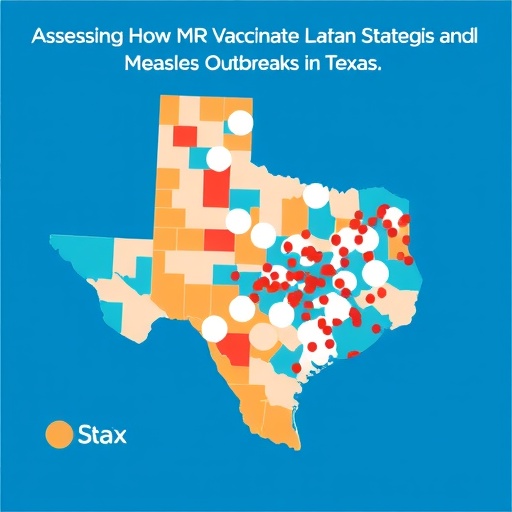
In a comprehensive new study published in the esteemed JAMA Health Forum, researchers emphasize the paramount importance of enhancing measles, mumps, and rubella (MMR) vaccination coverage as a critical strategy to avert large-scale measles outbreaks. This research comes at a crucial time when certain regions globally are experiencing alarming declines in immunization rates, raising concerns about public health resilience against these highly contagious viral infections.
Measles, a viral respiratory disease marked by high infectivity and potential for severe complications, has seen a resurgence in areas where vaccination efforts have faltered. The study meticulously outlines the epidemiological trajectory of recent outbreaks, correlating these events directly with lapses in immunization coverage. Through rigorous data analysis, the research pinpoints how suboptimal MMR vaccination rates compromise herd immunity, enabling the measles virus to re-establish transmission chains within populations previously considered protected.
Underlying the study is a detailed exploration of the immunological mechanisms triggered by MMR vaccination. The vaccine induces a robust, long-lasting adaptive immune response through the generation of neutralizing antibodies and memory T cells targeting measles, mumps, and rubella viruses. These immunological defenses are essential not only in protecting vaccinated individuals but also in curbing viral spread by reducing susceptible hosts in the community.
The ramifications of declining MMR coverage extend beyond just measles. Mumps and rubella, though often less emphasized in public discourse, pose significant health threats, including orchitis and congenital rubella syndrome, respectively. The study presents evidence supporting that comprehensive vaccination campaigns safeguard against these complications by obstructing virus circulation at the population level.
The research methodology employed combines epidemiological surveillance data with advanced statistical modeling to forecast outbreak dynamics under varying immunization scenarios. The models demonstrate that even marginal decreases in vaccination rates can precipitate exponential increases in measles incidence. These projections highlight vaccination coverage thresholds necessary to maintain community protection and prevent epidemic outbreaks.
The authors underscore that vaccination programs must incorporate targeted outreach and education, especially in underserved and vaccine-hesitant communities, to restore and sustain high coverage levels. They advocate for policy frameworks that address misinformation and barriers to vaccine access, recognizing that public trust and effective communication are as crucial as vaccine availability.
Importantly, the study sheds light on the immunization infrastructure’s role in pandemic preparedness. The temporary disruptions caused by the COVID-19 pandemic contributed to decreased routine vaccination adherence, creating immunity gaps. This interruption serves as a cautionary tale about the fragility of progress in infectious disease control and the necessity of resilient health systems.
The study further delineates the cost-effectiveness of investing in vaccination programs compared to the economic and social costs of outbreak responses, including hospitalization and long-term disability care. Measles outbreaks strain healthcare resources and disrupt societal functioning, reiterating vaccination’s role in ensuring public health sustainability.
Another critical component involves global health security. Measles remains endemic in certain parts of the world, and international travel facilitates viral importation into regions with declining immunity. The findings advocate for coordinated, multinational strategies to bolster vaccination coverage universally, mitigating risks posed by cross-border transmission.
By providing empirical data intertwined with mechanistic insights about vaccine-induced immunity and public health policy implications, the study makes a compelling case for urgent revitalization of MMR immunization efforts. The research impacts multiple disciplines including immunology, epidemiology, health policy, and global health, offering a roadmap for preventing resurgence of these vaccine-preventable diseases.
Ultimately, this study reaffirms that maintaining and improving MMR vaccination coverage remains one of the most effective tools in modern medicine to protect populations against highly transmissible viral infections. As measles outbreaks increasingly threaten to reverse decades of progress, the scientific community and health authorities are called upon to prioritize immunization initiatives to secure public health achievements for future generations.
Subject of Research: Measles, Mumps, Rubella (MMR) Vaccination Coverage and Outbreak Prevention
Web References: https://jamanetwork.com/journals/jamahealthforum/fullarticle/10.1001/jamahealthforum.2025.3992
Keywords: Measles, Mumps, Vaccination, Immunization, Disease prevention, Viral infections, Preventive medicine
Tags: adaptive immune response to MMRepidemiological analysis of measlesherd immunity and measlesimmunization coverage declineimmunological mechanisms of vaccinationmeasles outbreak preventionmeasles resurgence factorsMMR vaccination strategiesneutralizing antibodies in vaccinationpublic health implications of low vaccination ratespublic health resilienceviral transmission chains in populations